
News
Westward Tug-of-War: Former BLM Chiefs Clash Over Grand Junction HQ Relocation

As Washington reconsiders where federal land decisions should be made, the debate over the Bureau of Land Management’s permanent headquarters is once again heating up—and this time, it’s personal.
“LOCAL Act” Renews High-Stakes Relocation Fight
The Bureau of Land Management—an agency overseeing 245 million acres of public lands—may soon be packing its boxes again.
In February, Rep. Jeff Hurd (R-Colo.) introduced the Local Opportunities, Conservation, and American Lands Act, or LOCAL Act (H.R.1125), a bill that would permanently establish the BLM’s national headquarters in Grand Junction, Colorado. The proposal marks a pointed political and philosophical shift in how federal land governance is handled.
It also reignites a battle between two former BLM leaders with starkly different visions for the agency’s future.
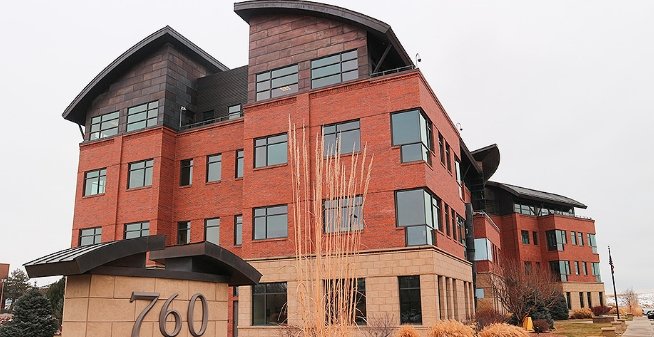
Pendley vs. Rugwell: A Tale of Two Agencies
In a recent debate hosted by the Steamboat Institute, former Trump-era BLM Director William Perry Pendley and former Biden-appointed BLM State Director Mary Jo Rugwell laid bare their opposing views.
At the core: geography, policy proximity, and what it truly means to be accessible.
“Grand Junction is close to what we call the Great Basin,” Pendley argued. “That’s where most of the BLM land is, outside of Alaska.”
Pendley sees the relocation not just as a logistical upgrade, but a philosophical correction. In his view, the agency that manages the Great American West should live in the Great American West.
By contrast, Rugwell countered with a blunt practicality: “It’s not really the best place to have headquarters because it’s so difficult to get to.”
According to her, limited air connectivity, distance from the Capitol, and barriers to inter-agency collaboration make Grand Junction an impractical hub for high-level federal leadership.
Trump Moved It, Biden Moved It Back
This isn’t a hypothetical fight.
Under President Donald Trump, the BLM headquarters was relocated to Grand Junction in 2019, in a move framed as putting decision-makers closer to the lands they oversee. At the time, critics saw it as a thinly veiled attempt to hollow out the agency and drive attrition. Indeed, many Washington-based staff resigned or declined to relocate.
When President Biden took office, his administration reversed course. By 2021, most of the top-level leadership was returned to D.C., citing the need for proximity to Congress, the Office of Management and Budget, and the Department of the Interior.
Pendley sees that reversal as emblematic of coastal elitism.
“97% of BLM employees are out West, but the decisions are still made in Washington,” he said. “That disconnect undermines trust and makes for poor policy.”
Accessibility vs. Influence: Which Matters More?
The Grand Junction debate distills into a simple but difficult question: Is it more important for BLM leaders to be near the land they manage, or the lawmakers who control their mandate?
Rugwell is adamant that policy doesn’t get made on horseback.
“You need a cadre of people in D.C.,” she said. “Working with Congress, OMB, the Secretary of the Interior, other agencies—that all happens in Washington. If BLM is cut off from that ecosystem, it suffers. And if BLM suffers, the public lands suffer too.”
Pendley, however, frames that mindset as inside-the-Beltway myopia.
“The people impacted by these decisions aren’t in D.C. They’re ranchers, miners, conservationists, and tribal leaders—people who live on or near BLM land.”
What’s at Stake: More Than Just an Address
While the LOCAL Act has yet to advance beyond the House Natural Resources Committee, the conversation it has sparked cuts across ideological lines. The BLM manages everything from oil and gas leases to recreational access and wildfire strategy. Where it’s headquartered affects:
-
How fast it responds to local emergencies
-
Who has the ear of agency leaders
-
How policies are shaped, staffed, and funded
-
Whether career civil servants remain in the job
It also affects morale. The 2019 move to Grand Junction saw a dramatic drop in BLM institutional knowledge. A Government Accountability Office (GAO) report found that only 41 of 328 employees agreed to relocate at the time.
That history looms large in today’s conversation.
Colorado Lawmakers Largely Support the Move
Rep. Hurd, a freshman Republican representing Colorado’s 3rd District, has framed the LOCAL Act as common sense.
“BLM lands are in the West. The leadership should be too,” he said in February.
He is not alone. Colorado Sens. John Hickenlooper (D) and Michael Bennet (D) previously supported efforts to keep a presence in Grand Junction, though they emphasized the need for dual leadership: one hub in D.C., another out West.
That split arrangement was adopted in 2021—but for advocates like Pendley, it doesn’t go far enough.
No Timeline, No Clear Consensus
The LOCAL Act remains in committee, with no hearings or markups scheduled. As the 2024 election cycle recedes, it’s unclear whether the bill will advance—or be used more as a talking point for broader federal decentralization.
Still, Pendley believes momentum is on his side.
“The West isn’t just scenery,” he said. “It’s where real decisions need to happen.”
For now, BLM staff remain split—both geographically and ideologically.









Spotify Running Mode hits Android and revives its old tempo experiment

Galaxy Tab S12 Ultra Renders Keep the Notch Fans Hate

Novato Spinning Round House Sells With Six Neighbors for $3.3 Million

Crop Tour Finds Indiana and Nebraska Corn Yields Lagging 2025

Best Buy 60th sale brings Android deals back to its roots

American Airlines reverses seatback screen bet years too late

Iran Hormuz Strikes Force Gulf Oil Onto Costlier Paths

Plague Tale Prequel Day One Joins Game Pass Wave 2 as Witcher Exits

NBA 2K27 opens The City to everyone and rewrites career eras

iOS 26.6.1 Patches 29 Flaws as AI Forces Faster Apple Updates

Double Fine Cuts 23 Jobs Weeks After Xbox Independence

Day-One Big Walk Lifts PS Plus August Beyond Recycled AAA

John Hight Exits Wizards After Digital Reckoning Hits

Curtis Mead’s Red Sox Debut Ends With Fractured Wrist

Red Sox Squander Hot Streak Chance in 4-3 Loss to Athletics

Moesch and Dressel Rewrite Night One at 2026 U.S. Nationals

Boutte’s Quiet Camp Takeover Forces Patriots Receiver Choices

Take-Two CEO Pushes Netflix Subs for GTA 6 Extended Look

Halo Campaign Evolved Skulls Meet Death Barriers That Kill the Hunt

Wildlands Free Update Hands Players the Tools They Already Invented
-

 TECHNOLOGY3 years ago
How to Adjust a Bulova Watch Band – An Easy Guide
-

 News3 years ago
Fred Pentland: Athletic Bilbao’s English mentor who changed the essence of Spanish football
-

 FINANCE3 years ago
Tax Planning for Every Season: Guide to Maximizing Your Tax Benefits
-

 Education3 years ago
African Ministers New Education Plan
-

 BUSINESS3 years ago
What is Entrepreneurial Operating System? A Comprehensive Guide to EOS
-

 Education3 years ago
Innovate Your Learning Journey with Technology and Enhance Education
-

 News3 years ago
Russians formally out of World Athletics Championships
-

 BUSINESS3 years ago
Top 9 Most Expensive American Cities to Rent an Apartment