
News
Colorado Leaders React to U.S. Strikes on Iranian Nuclear Sites as Tensions Rise

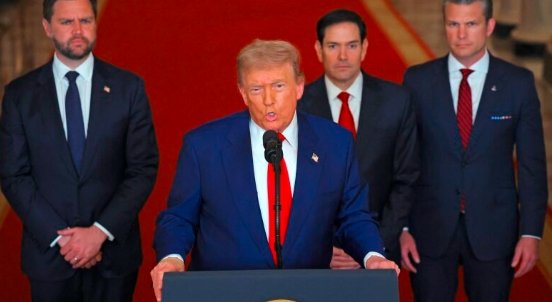
As headlines about U.S. airstrikes on Iran’s nuclear infrastructure circled the globe Saturday night, Colorado officials scrambled to coordinate a response—some urging caution, others applauding the boldness of the move.
The reactions came swiftly after President Donald Trump authorized a direct strike on Iranian nuclear sites, escalating tensions already at a boiling point in the Middle East. In Colorado Springs—a military-heavy city and home to key national defense assets—the situation hit close to home.
Polis: “Remain Vigilant”
Governor Jared Polis was among the first to respond publicly in the wake of the strikes. On X (formerly Twitter), he confirmed meeting with Colorado’s public safety team to discuss potential risks.
“I met with my public safety team this evening and directed that they coordinate with state, local and federal partners and remain vigilant against all threats to Coloradans and the state’s infrastructure and military assets,” Polis wrote. “The state is actively monitoring for any unusual or heightened activity and threats.”
That reference to “infrastructure and military assets” wasn’t vague for those in Colorado Springs. The city is home to several critical defense installations—including NORAD, Fort Carson, Peterson Space Force Base, and Schriever Space Force Base.
Officials say the governor’s office is in contact with homeland security partners and will issue alerts if needed. But for now, no known threats have been reported.
On the Ground in Colorado Springs: Confusion, Concern, and Dread
In the streets of Colorado Springs, reactions were mixed. Some residents expressed support for U.S. action. But others feared the consequences of escalation—especially with military targets in their backyard.
“I’m just a tourist,” said Alex Holmburg, visiting from Texas. “But when I heard about the strike, I got this sinking feeling in my gut. The U.S. just painted a bullseye on itself.”
Holmburg, like others, acknowledged uncertainty about the broader geopolitical picture. But he questioned the wisdom of launching pre-emptive strikes.
“It’s a tough spot, you know,” he said. “I’m no expert on foreign policy, but the less we’re killing people in the world I think the better.”
Colorado Republicans Back Trump’s Decision
State-level Republicans wasted no time throwing their support behind the strike.
Representative Jeff Crank, recently elected in Colorado’s 5th Congressional District, praised the operation. “Tonight, President Trump took decisive action to stop Iran from obtaining a nuclear weapon, protect Americans and build peace in the Middle East,” he posted on X. “Congratulations to the Department of Defense on a successful mission.”
Crank, who has aligned closely with Trump on foreign affairs, expanded on his views in an earlier interview with 11 News. While he expressed hesitation about U.S. ground involvement, he emphasized that strong deterrence is necessary.
“I would hope that we can continue to stay in a support role for Israel, I don’t want to get involved,” Crank said. “But I will say this—we can’t miss this moment.”
He reiterated his view that Iran’s nuclear capability poses a threat not just to Israel but to global security. “Iran cannot have nuclear capabilities. The president’s been very clear on that,” Crank said. “And I stand behind him on that. We’ll have to do whatever we have to do to stop that from happening.”
Bennett Echoes Long-Held Stance on Iran’s Nuclear Threat
Senator Michael Bennet, Colorado’s senior Democratic senator, has not commented yet on the latest strikes. But earlier this month—on June 13—he posted on X:
“For the sake of U.S. national security and the future of the Middle East, I have long believed that the Iranian regime must not acquire a nuclear weapon.”
Bennet’s position aligns with many in Washington who view Iran’s nuclear program as an urgent threat, regardless of party affiliation. But he’s also been vocal about the need for multilateral diplomacy and long-term solutions.
Military Precautions Quietly Ramped Up
While no official threat alerts have been issued, sources tell us that military installations in Colorado have been quietly upgrading internal protocols.
Facilities like Peterson and Schriever reportedly moved to THREATCON Bravo, a moderate-level security alert that suggests an increased risk of terrorist activity.
One former Air Force intelligence officer said that’s standard operating procedure after an international strike. “Anytime we strike a sovereign target, especially something like a nuclear facility, you’re going to see posture changes. It’s not panic—it’s preparation.”
Here’s a quick look at key military assets based in Colorado:
| Base Name | Function | Location |
|---|---|---|
| NORAD | Aerospace warning and control | Cheyenne Mountain |
| Peterson SFB | Space operations command | Colorado Springs |
| Schriever SFB | Satellite and missile tracking | El Paso County |
| Fort Carson | Army mechanized units and combat training | South of Colorado Springs |
All have been notified of potential retaliatory risks. None have reported disruptions.
What Happens Next?
No one in Colorado is pretending to know exactly how Iran will respond—or if it will respond at all. But the fear is real.
“You don’t have to be a general to know this could blow up into something bigger,” said one Springs resident. “We’re all just hoping someone, somewhere, keeps a cool head.”
Whether more action follows or diplomatic backchannels kick into gear remains to be seen. For now, the state is holding its breath—and watching closely.











Stripe Bid Shows PayPal Moat Cracked After Years of Slide

FDA Class I Tag Hits Finished Egg Recall Weeks Later

Berkshire’s Alphabet Surge Marks Abel’s Cash Deployment Shift

Aston Martin Bets 150 Valen V12s Will Print the Cash

Walmart Took Most of the Recalled Lettuce Behind Cyclospora Wave

Silver Lake Workday Talks Signal Private Floor for Software

Zuckerberg’s AI Letter Joins a Wave of Tech Manifestos

Pixel 11 Takes Battery Edge as Galaxy S26 Keeps the Power Lead

Trump Economy Faces Reckoning as Sentiment and Sales Slide

Apple’s 15% External Cut Still Faces Its Own Zero Admission

ZA/UM Lays Off 32 Staff as Zero Parades Wins Reviews, Not Players

Colby Covington Stuns Tsarukyan as Askren Retires in Tears at RAF 11

Spain’s Diaspora-Rooted Squad Wins Over New York Ahead of the Final

NHL’s Monday Matinee Push Puts Capitals Fans on the Clock

DeChambeau’s Two-Shot Penalty Rewrites the Open’s Weekend Draw

Guardians Rout Twins With Seven Homers, Leave Joe Ryan One Shy of Record

England Beats France 6-4 to Claim World Cup Bronze Medal

Rainout Gives Red Sox Two Shots at a Franchise-Record Win Streak

Caitlin Clark Skips the WNBA 3-Point Contest for a Third Straight Year

Double Fine Cuts 23 Jobs Weeks After Xbox Independence
-

 TECHNOLOGY3 years ago
How to Adjust a Bulova Watch Band – An Easy Guide
-

 News3 years ago
Fred Pentland: Athletic Bilbao’s English mentor who changed the essence of Spanish football
-

 FINANCE3 years ago
Tax Planning for Every Season: Guide to Maximizing Your Tax Benefits
-

 Education3 years ago
African Ministers New Education Plan
-

 BUSINESS3 years ago
What is Entrepreneurial Operating System? A Comprehensive Guide to EOS
-

 Education3 years ago
Innovate Your Learning Journey with Technology and Enhance Education
-

 News3 years ago
Russians formally out of World Athletics Championships
-

 BUSINESS3 years ago
Top 9 Most Expensive American Cities to Rent an Apartment