A sweeping budget bill aimed at reshaping federal spending just hit a wall — and with it, a controversial land sale proposal that sparked outrage across Colorado.
A last-minute addition to the “One Big Beautiful Bill” — a massive federal budget package — would have allowed the sale of millions of acres of federally owned public land, including over 14 million acres in Colorado. But that provision is now dead in the water.
On Tuesday, the Senate Parliamentarian ruled the land sale clause fell outside the bounds of what’s allowed under reconciliation rules. That effectively stripped it from the bill before it could even reach a vote.
Environmental groups are relieved. Western lawmakers are regrouping. And Colorado’s outdoor community is breathing a sigh of relief — for now.
The clause that almost sold the West
Buried deep in the revised version of the federal budget bill was a short but powerful clause: language that would have made vast tracts of federal land eligible for private sale or transfer.
The provision didn’t name specific parcels. But environmental advocates say the implications were massive.
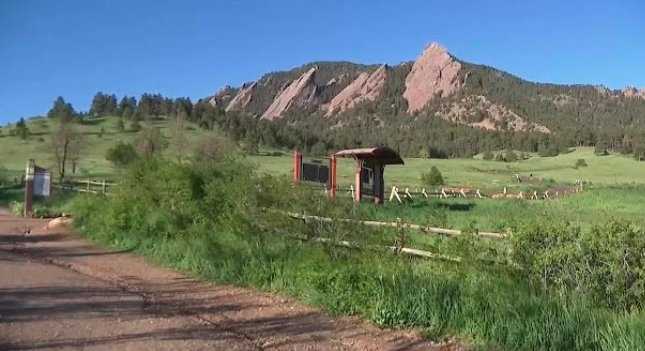
“It would’ve opened the door to selling more than 14 million acres in Colorado alone,” said Alexis Schwartz, senior field operator with Sierra Club Colorado.
That’s roughly 20% of the federal land in the state — land used for everything from hiking and hunting to vital ecological research.
Who pushed for the land sale?
It’s still unclear exactly which lawmakers inserted the land clause into the bill. Some insiders suggest it was a coalition of Western state Republicans aiming to increase state and private control over federal holdings.
The logic, according to some, was simple: raise funds by liquidating “excess” federal property.
But Schwartz says that argument misses the mark.
“These aren’t abandoned buildings or extra office supplies,” she said. “These are living ecosystems — mountains, wetlands, forests. They belong to the American public.”
Public reaction: Outrage, disbelief, and relief
The land sale language didn’t go unnoticed.
Outdoor advocacy groups sounded the alarm as soon as the text went public. Within 48 hours, over 60 organizations signed an open letter urging Congress to remove the clause.
Coloradans responded, too. In Grand Junction, Steamboat Springs, and Boulder, residents showed up to rallies in hiking boots and rain jackets, holding hand-painted signs that read “Keep Public Lands Public.”
“It felt like they tried to sneak it past us,” said a protester in Durango. “We weren’t going to let that happen quietly.”
Bullet: What was at risk?
Here’s a snapshot of what the provision could’ve affected in Colorado:
-
Over 14 million acres of federal public land made eligible for sale
-
Lands included BLM-managed recreation zones, wildlife corridors, and protected watersheds
-
Areas currently used for hiking, hunting, fishing, and camping
-
Sections of land overlapping Indigenous cultural sites and migration routes
-
Concerns over access loss, ecological damage, and fire risk management
Table: Colorado’s Federally Managed Land (Approximate)
| Federal Agency | Acres Managed in Colorado | % of State’s Land Area |
|---|---|---|
| Bureau of Land Management (BLM) | 8.3 million | 12.5% |
| U.S. Forest Service | 14.5 million | 22% |
| National Park Service | 740,000 | 1.1% |
| U.S. Fish and Wildlife Service | 168,000 | 0.3% |
Source: U.S. Department of the Interior, 2024 Public Land Statistics
Parliamentarian ruling: A technicality with major impact
So why was it removed?
Under the Senate’s reconciliation rules, provisions in a budget bill must have a direct budgetary impact — typically tax or spending-related.
Selling land might seem like a revenue measure, but the Parliamentarian decided the language went too far, especially given the size and scope of the proposal.
“They ruled it outside the scope,” Schwartz explained. “That’s their job — to keep policy out of budget trickery.”
While the decision came down to legislative procedure, it had real-world consequences. It saved millions of acres from potential sale — at least for now.
Lawmakers divided, but few are talking
Most Colorado Democrats celebrated the ruling. Senator Michael Bennet said he was “deeply relieved,” calling the attempt “a backdoor threat to Colorado’s heritage.”
But Republican leaders who supported the clause have been largely silent. No one has publicly taken credit for drafting it.
That’s not stopping speculation.
Insiders believe the push for land sales will resurface — just not in this bill.
“There’s always someone trying to privatize what belongs to everyone,” one senior staffer said off-record. “They’ll be back with another name, another angle.”
“We’re watching.”
For now, environmental advocates say they’ll remain vigilant.
“This isn’t over,” Schwartz said. “They tried it once. They’ll try again.”
She pointed out that the lands at stake include sensitive habitats, tribal lands, and climate-critical ecosystems. Selling them off, she warned, could have “irreversible consequences.”
Whether the public land sale push returns next year or next month, Coloradans say they’ll be ready.