
News
Catch-a-Heifer Program Opens Doors to Agriculture for Mesa County Youth

For kids in Mesa County, stepping into agriculture doesn’t have to be a dream whispered across fences or seen from a passing truck. Thanks to the Catch-a-Heifer program, it’s something they can live, breathe, and muck boots into—literally.
This isn’t some summer camp or token gesture. It’s a real cattle program. With real calves. Real producers. Real expectations. And the rewards? Also real.
Not just about showing cows—it’s about growing producers
Matt Nichols, a board member with the Mesa County Cattlemen’s Association, puts it plainly: “We need more people feeding folks in the world.”
And that’s the whole point. The Catch-a-Heifer program isn’t just teaching young people how to groom or show animals. It’s building the next wave of beef producers from the ground up.
The program gets its name from its unique twist: participants are selected through an application process, and those who qualify are paired with a producer and assigned a heifer. That’s a young female cow, for those not familiar with the lingo.
But here’s the thing—it’s not a handout.
Students are expected to:
-
Complete homework on breeding, nutrition, and herd management
-
Deliver presentations
-
Volunteer 10 hours annually with their assigned producer
-
Attend field trips to feedlots and processing facilities
They’re also responsible for the daily care and well-being of their animal. Rain or shine.
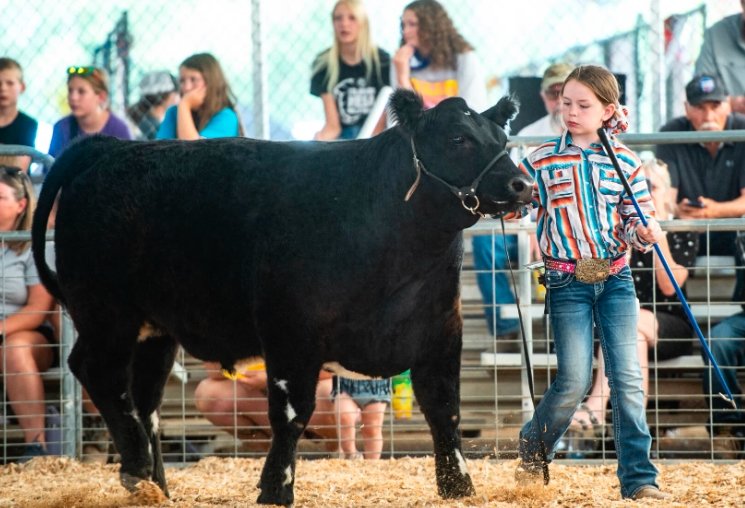
From birthday party to barn life
Gracie Young didn’t grow up on a ranch.
She stumbled into agriculture the way a lot of good stories start—by accident. “I learned about the livestock industry at a friend’s birthday party,” she laughed. “Next thing I knew, I was showing calves.”
Now two years into the program, Young is a first-generation beef producer. She started with steers and decided to stretch her skills into breeding production through the heifer program. It’s been eye-opening.
“The heifer side focuses on more than just meat. You learn about long-term herd growth, breeding cycles, sustainability,” she said.
And yes, it’s hard work.
“I found that you just got to go the extra mile and it gets you a lot. I think I learned a lot and I think it’s just really a great program and a great opportunity.”
A deeper curriculum—on and off the ranch
While the image of a kid walking a cow around a ring might stick in people’s minds, the Catch-a-Heifer program runs much deeper than that. Nichols and others at the Cattlemen’s Association have deliberately shaped it to offer academic and career-building layers.
This isn’t fluff.
Homework assignments ask kids to calculate feed ratios. Presentations must be researched and delivered to adult producers. Field trips aren’t just for fun—they’re technical.
Participants visit places like:
-
Processing plants, to see how livestock moves from farm to fork
-
Feedlots, to understand large-scale animal nutrition
-
Breeding operations, to learn about genetics and herd management
And they aren’t there to just watch—they’re expected to ask questions, take notes, and understand what they’re seeing.
Not your typical youth program
It’s worth saying: most youth programs don’t hand you a 600-pound animal and expect you to thrive. But that’s exactly what makes Catch-a-Heifer so different—and so valuable.
These kids aren’t just observers. They’re participants. They get their hands dirty. They make decisions that matter. And they learn what it means to be responsible for another living thing, day in and day out.
Let’s be honest—raising cattle isn’t for everyone. But that’s kind of the point.
“Some kids do it and realize this isn’t their thing,” Nichols admitted. “But some? They fall in love. And they become the next generation of ranchers. That’s what we’re after.”
Applications are open—but it’s selective
The Mesa County Cattlemen’s Association is currently accepting applications for the next cycle of Catch-a-Heifer.
Not everyone gets in.
Kids are asked to write about why they want to join, what their goals are, and what they hope to learn. They also go through interviews. There’s a limited number of heifers available, and producers are looking for commitment—not curiosity.
Here’s a quick overview:
| Program Component | Requirement |
|---|---|
| Application deadline | Mid-July 2025 |
| Volunteer hours | 10 per year with producer |
| Academic component | Required presentations & homework |
| Field experience | Processing plants, feedlots |
| Producer mentorship | One-on-one pairing |
Gracie Young says it’s worth it, even with the early mornings and endless chores. “It’s pretty cool to be the first one in my family to do it,” she smiled. “And I’m not stopping anytime soon.”











Spotify Running Mode hits Android and revives its old tempo experiment

Galaxy Tab S12 Ultra Renders Keep the Notch Fans Hate

Novato Spinning Round House Sells With Six Neighbors for $3.3 Million

Crop Tour Finds Indiana and Nebraska Corn Yields Lagging 2025

Best Buy 60th sale brings Android deals back to its roots

American Airlines reverses seatback screen bet years too late

Iran Hormuz Strikes Force Gulf Oil Onto Costlier Paths

Plague Tale Prequel Day One Joins Game Pass Wave 2 as Witcher Exits

NBA 2K27 opens The City to everyone and rewrites career eras

iOS 26.6.1 Patches 29 Flaws as AI Forces Faster Apple Updates

Double Fine Cuts 23 Jobs Weeks After Xbox Independence

Day-One Big Walk Lifts PS Plus August Beyond Recycled AAA

John Hight Exits Wizards After Digital Reckoning Hits

Curtis Mead’s Red Sox Debut Ends With Fractured Wrist

Moesch and Dressel Rewrite Night One at 2026 U.S. Nationals

Red Sox Squander Hot Streak Chance in 4-3 Loss to Athletics

Boutte’s Quiet Camp Takeover Forces Patriots Receiver Choices

Take-Two CEO Pushes Netflix Subs for GTA 6 Extended Look

Halo Campaign Evolved Skulls Meet Death Barriers That Kill the Hunt

Wildlands Free Update Hands Players the Tools They Already Invented
-

 TECHNOLOGY3 years ago
How to Adjust a Bulova Watch Band – An Easy Guide
-

 News3 years ago
Fred Pentland: Athletic Bilbao’s English mentor who changed the essence of Spanish football
-

 FINANCE3 years ago
Tax Planning for Every Season: Guide to Maximizing Your Tax Benefits
-

 Education3 years ago
African Ministers New Education Plan
-

 BUSINESS3 years ago
What is Entrepreneurial Operating System? A Comprehensive Guide to EOS
-

 Education3 years ago
Innovate Your Learning Journey with Technology and Enhance Education
-

 News3 years ago
Russians formally out of World Athletics Championships
-

 BUSINESS3 years ago
Top 9 Most Expensive American Cities to Rent an Apartment