Mesa County is stepping up its fight against opioid overdoses with a fresh move: installing three more Naloxone kiosks in public libraries. Officials say it’s about saving lives — no questions asked, no stigma attached.
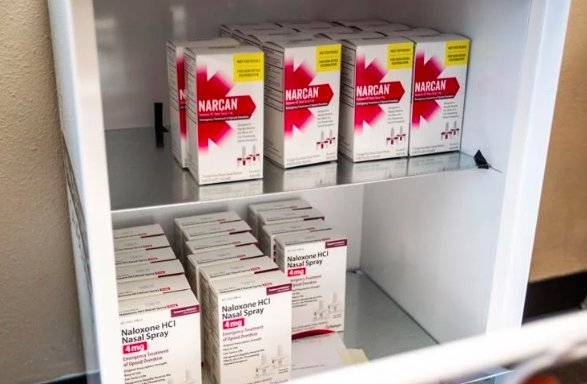
The free boxes of the overdose-reversing drug, also known as Narcan, are now available at libraries in Orchard Mesa, Palisade, and Collbran, bringing the countywide total to 12.
A Community Push With Quiet Urgency
It’s been less than a year since Mesa County launched its public Naloxone kiosk program in December 2024. In that time, the response has been… urgent, and personal.
Over 3,000 boxes have already been taken from the kiosks. That’s not just a number — each box could mean a life saved. Maybe someone’s neighbor. Maybe a brother. Maybe your coworker’s kid.
“We wanted to make it free and accessible because not everyone can afford it,” said Chhavi Attri, Community Health Planner at Mesa County Public Health. “And because of the stigma around substances, people don’t always feel safe asking for help.”
She’s not wrong. In a place like Grand Junction, where community ties run deep but silence runs deeper, these kiosks offer a quiet lifeline — no forms, no shame.
Where the Kiosks Are — And Why It Matters
The locations for the three newest kiosks were not chosen at random. Officials wanted high-traffic, community-trusted spots where people of all walks come and go.
One-sentence paragraph here: Places where no one would ask why you’re there.
The latest drop-off points include:
-
Orchard Mesa Library
-
Palisade Library
-
Collbran Library
Libraries, as it turns out, make perfect hosts. They’re public, safe, and stigma-free.
The county says it’ll keep assessing needs and foot traffic to determine future expansion. But for now, each library kiosk can hold several dozen boxes, refilled as often as needed.
Opioid Deaths: Mesa County vs. the State
It’s easy to lose the human side of this in statistics, but the numbers still matter.
In 2024, Mesa County’s age-adjusted opioid overdose death rate was 9.02 per 100,000, according to Mesa County Public Health. Statewide, the rate was almost double — 16.0.
Here’s a quick side-by-side:
| Metric | Mesa County | Colorado (Statewide) |
|---|---|---|
| Opioid Overdose Death Rate (2024) | 9.02 | 16.0 |
| Total Naloxone Kiosks (as of July) | 12 | N/A |
| Naloxone Boxes Distributed Since Dec | 3,000+ | N/A |
Mesa County officials say the lower-than-average death rate is no accident. It’s due in part to community outreach, early intervention, and programs like this.
The Stigma Still Lingers — Quietly
Even with the kiosks out in the open, talking about opioids remains tricky in smaller towns.
“People still whisper the word ‘overdose’ like it’s a secret,” said a Grand Junction resident who’s used Narcan to save a friend. “But they’re grateful the boxes are there. They just wish they didn’t have to be.”
Attri agrees. “Stigma is still very real,” she says. “But if one box saves one life, that’s a life that might otherwise be lost. We’re not going to stop.”
One small paragraph again: And the team isn’t just dropping off supplies — they’re trying to change minds.
Why Naloxone?
Naloxone works fast — usually within minutes — by blocking the effects of opioids like fentanyl, heroin, and oxycodone. It’s safe, non-addictive, and easy to use, even by someone with no medical training.
Yet it’s often surrounded by misunderstanding.
Some think it enables addiction. Others worry about “inviting” drug use. But public health experts, including the CDC, insist Naloxone doesn’t make opioid use more likely — it just stops people from dying.
Mesa County’s public health campaign focuses on education and harm reduction. Here’s what you’ll find on flyers near the kiosks:
-
Naloxone doesn’t get someone high — it saves lives
-
You can’t hurt someone by using it incorrectly
-
It’s legal to carry and administer in Colorado
-
Overdose symptoms include slowed breathing and unresponsiveness
That last one? It’s what makes Narcan so critical. By the time help arrives, it might be too late. With Narcan on hand, it doesn’t have to be.
What’s Next for the Program?
County officials say they’re watching kiosk use closely. If demand keeps rising, more sites could pop up by fall.
“We want to go where the need is,” Attri explained. “That could mean schools, community centers, or even retail locations.”
One hurdle remains: awareness. Some residents still don’t know the kiosks exist. Others don’t know what Narcan is or how to use it.
Public health teams plan to step up outreach this fall — both online and in person.
But ultimately, they say the program’s success doesn’t depend on big numbers. It depends on whether people feel safe enough to walk up to a box, take what they need, and walk away.
That, more than anything, is the goal.