
News
North Rim of Black Canyon Reopens as South Rim Fire Winds Down

With the fire’s intensity fading and a new team now leading containment efforts, park rangers have reopened the North Rim of Black Canyon—just in time for summer crowds.
Type 3 Team Takes Command, Signals Fire Is Under Control
Visitors were turned away from one of Colorado’s most dramatic landscapes last week. The South Rim Fire burning through Black Canyon of the Gunnison National Park had forced closures and rerouted hikers, campers, and curious tourists.
But now, things are shifting.
On July 26, the Rocky Mountain Complex Incident Management Team 3, which had been overseeing fire suppression efforts, officially handed things off to a Type 3 Incident Management Team—a move that tells its own story. Type 3 teams usually step in when a fire is calming down and fewer national resources are needed.
In plain terms: the worst appears to be over.
“The objectives for the fire management are being met, fire behavior is lower, and the needs are something that local resources can handle themselves,” explained Niki Carpenter, Public Information Officer for the South Rim Fire.
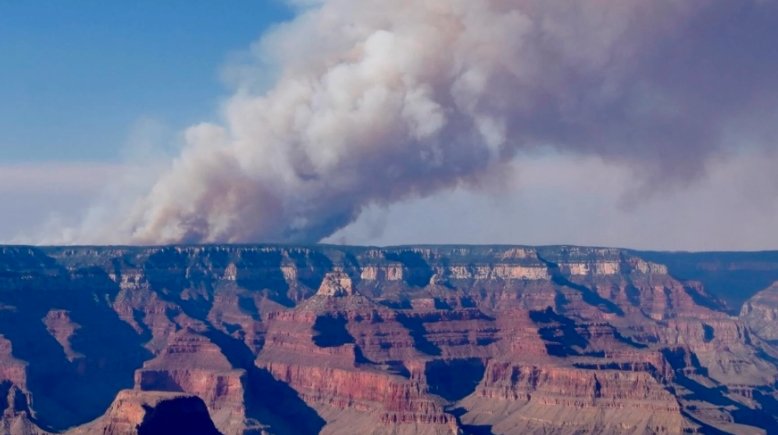
North Rim Reopens, Bringing Tourists Back
Just four days after the command transition, officials gave the green light to reopen the North Rim.
On July 30, rangers officially removed closures and welcomed visitors back to one of the quieter, less developed—but equally breathtaking—sections of the park.
“They felt comfortable opening the North Rim… because the threat of spread from the south canyon is very low,” Carpenter said. “Functions on the North Rim will proceed as normal.”
That means:
-
Hiking trails are open
-
Camping spots are back online
-
Scenic views are accessible again
-
Park services are running on their regular schedule
And with August just around the corner, timing couldn’t be better.
From CIMT to Type 3, Now a Type 4 on Deck
The shift in fire management teams is more than just a bureaucratic change. It’s a signal to residents and visitors that conditions have stabilized enough to return to mostly local control.
Here’s what the transitions look like:
| Incident Team Type | Description | Current Status |
|---|---|---|
| CIMT (Type 1 or 2) | National team with extensive resources | Concluded July 26 |
| Type 3 | Regional/local team with moderate resources | In charge since July 26 |
| Type 4 | Small local team for mop-up and monitoring | Scheduled for August 3 |
This descending scale reflects containment progress. With less active burning and improved perimeter control, fewer personnel are needed.
And while the fire hasn’t been declared fully out, it’s behaving—no erratic flare-ups, no dangerous wind shifts, and definitely no unexpected evacuations.
What Sparked the South Rim Fire?
Fire officials haven’t shared a final cause yet. As with many wildfires, it could’ve been anything: lightning, an untended campfire, even a spark from equipment.
But what’s clear is that conditions this season have been volatile. A dry spring, high temperatures, and gusty winds made for a perfect storm. When the fire started, containment wasn’t easy.
That’s why the CIMT was brought in initially—to coordinate air drops, ground crews, bulldozers, and overnight operations.
By the time the new team took over, that chaotic phase had mostly passed.
How Locals and Visitors Are Reacting
In nearby Montrose and Delta Counties, reopening the North Rim is being seen as a big win—not just for tourism but for morale.
The park is one of the biggest draws in the area. Restaurants, hotels, and gear shops depend on visitors, especially in the high summer months.
Ranger Elliot Mays, who’s been posted near the North Rim entrance for three seasons, said the energy this week was noticeably brighter.
“People were smiling again. We had families come in with fishing poles, a couple from Germany asking about stargazing. That was not the vibe last week,” Mays said.
What Happens Next
Fire officials say they’ll keep watching conditions closely. Hot spots can reignite without warning, especially in dry brush or thick timber.
But unless something changes drastically, the Type 4 Team will step in on August 3, bringing this wildfire response into its final phase.
That team’s job? Mop up, monitor, and patrol. No helicopters. No strike teams. Just staying vigilant.
So far, the South Rim Fire hasn’t caused major structural damage or injuries—a rare outcome when wildfires creep close to national parks.
And for now, both rims of Black Canyon are open. Trails await. Campgrounds are filling up again.
It’s not back to normal. But it’s close enough.









Spotify Running Mode hits Android and revives its old tempo experiment

Galaxy Tab S12 Ultra Renders Keep the Notch Fans Hate

Novato Spinning Round House Sells With Six Neighbors for $3.3 Million

Crop Tour Finds Indiana and Nebraska Corn Yields Lagging 2025

Best Buy 60th sale brings Android deals back to its roots

American Airlines reverses seatback screen bet years too late

Iran Hormuz Strikes Force Gulf Oil Onto Costlier Paths

Plague Tale Prequel Day One Joins Game Pass Wave 2 as Witcher Exits

NBA 2K27 opens The City to everyone and rewrites career eras

iOS 26.6.1 Patches 29 Flaws as AI Forces Faster Apple Updates

Double Fine Cuts 23 Jobs Weeks After Xbox Independence

Day-One Big Walk Lifts PS Plus August Beyond Recycled AAA

John Hight Exits Wizards After Digital Reckoning Hits

Curtis Mead’s Red Sox Debut Ends With Fractured Wrist

Moesch and Dressel Rewrite Night One at 2026 U.S. Nationals

Red Sox Squander Hot Streak Chance in 4-3 Loss to Athletics

Boutte’s Quiet Camp Takeover Forces Patriots Receiver Choices

Take-Two CEO Pushes Netflix Subs for GTA 6 Extended Look

Halo Campaign Evolved Skulls Meet Death Barriers That Kill the Hunt

Wildlands Free Update Hands Players the Tools They Already Invented
-

 TECHNOLOGY3 years ago
How to Adjust a Bulova Watch Band – An Easy Guide
-

 News3 years ago
Fred Pentland: Athletic Bilbao’s English mentor who changed the essence of Spanish football
-

 FINANCE3 years ago
Tax Planning for Every Season: Guide to Maximizing Your Tax Benefits
-

 Education3 years ago
African Ministers New Education Plan
-

 BUSINESS3 years ago
What is Entrepreneurial Operating System? A Comprehensive Guide to EOS
-

 Education3 years ago
Innovate Your Learning Journey with Technology and Enhance Education
-

 BUSINESS3 years ago
Top 9 Most Expensive American Cities to Rent an Apartment
-

 News3 years ago
Russians formally out of World Athletics Championships