
News
Tuesday Meetups in Grand Junction Are More Than Just Aid — They’re Building Community

It started with toilet paper and peanut butter in a pandemic. Now, every Tuesday, it’s food, haircuts, pet care, and above all—connection.
How MAP Distro Became a Weekly Ritual for Locals
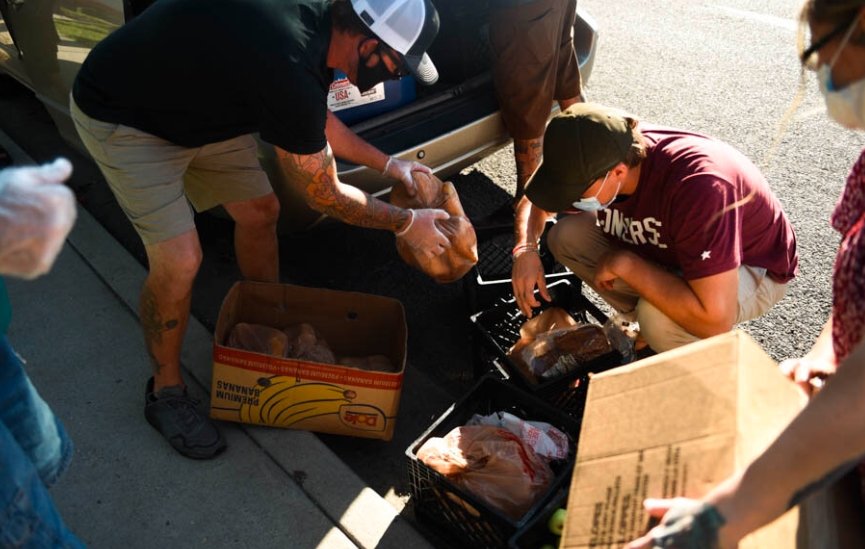
Every Tuesday in Grand Junction, something simple but powerful happens. No speeches, no politics, no price tags—just people coming together.
The event is called MAP Distro. It’s hosted by Mutual Aid Partners (MAP), a local nonprofit that’s been filling gaps and feeding hearts since 2020. Founded by Stephania Vasconez during the early days of COVID-19, what started as a few volunteers handing out essentials has become a weekly anchor for people across the valley.
Community members drop by to grab food, talk to service providers, and sometimes just sit and be seen.
From Pandemic Relief to Permanent Presence
Back when shelves were bare and nerves were shot, Vasconez gathered a few friends and just… got to work. It wasn’t about setting up a nonprofit. It was about getting people what they needed. Fast.
“I had a car. I had time. People needed stuff. So we started delivering toilet paper and food,” Vasconez recalled.
No one could’ve guessed that four years later, MAP would be a hub for dozens of partner groups — from pet clinics to therapists. They’ve become a kind of social safety net, quietly doing what bigger systems can’t always manage.
The group has no central headquarters or flashy office. Most of what they do happens outside, on folding tables and in community spaces.
One sentence from Vasconez sums it up well:
“We’ve basically grown very organically depending on what the community has asked us that they need.”
What’s Offered? A Little Bit of Everything
Each week, MAP Distro brings together an ever-changing lineup of services. It’s not just about food, though that’s a big part of it.
You might see a tent offering:
-
Free haircuts
-
Pet food and vaccinations
-
Fresh produce and pantry staples
-
Behavioral and mental health services
-
Hygiene kits and winter gear (when needed)
One of the newer partners is CEC We Care, which provides mental and behavioral health resources to attendees. They’ve added a layer of depth to the weekly event—reminding folks that taking care of your mind is just as important as taking care of your stomach.
And it’s not just about the help. It’s the vibe. People linger, they talk. Kids run around. It feels like a block party that just happens to offer life essentials.
Who Shows Up — And Why It Matters
Some come for the groceries. Others come for connection. There are working families trying to make ends meet. Seniors living alone. Parents juggling childcare and three jobs. And yes, people experiencing homelessness.
But here’s the thing — there’s no paperwork, no ID check, no judgment. You show up, you’re part of it.
One Tuesday, a young dad picked up formula and gently wiped his toddler’s nose as they waited in line. A woman with a teacup chihuahua got her pup vaccinated. A teen sat quietly while a volunteer trimmed her hair.
And in the background, you’ll usually find Vasconez chatting with everyone like she’s known them forever.
Why Mutual Aid Is Different From Traditional Charity
There’s a difference between charity and mutual aid. Charity often works top-down: one group gives, another receives. Mutual aid works side-by-side. That’s what MAP is all about.
No one’s showing up as a savior. Everyone is part of the same community. That means volunteers and guests share food, stories, laughs—even tears sometimes.
MAP doesn’t just “give out stuff.” It listens first. Then acts.
Here’s a quick comparison:
| Element | Traditional Charity | Mutual Aid Partners (MAP) |
|---|---|---|
| Decision-making | Organization-led | Community-informed |
| Structure | Formal, hierarchical | Grassroots, flexible |
| Relationships | Giver vs. receiver | Peer-to-peer |
| Access Requirements | Often includes screening | No screening or ID needed |
| Growth Model | Funding-based | Community need-based |
One Sentence Says It All
“At the end of the day, we’re all human beings and we all need to eat, and we all need access to basic needs,” Vasconez said, standing near a crate of apples on a sweltering Tuesday.
She added, “This is really a space for community members that maybe you’ve never interacted with, to be able to meet them and have a conversation with them.”
It’s not flashy. It’s not formal. But it’s real. And that might be the most important thing of all.










Spotify Running Mode hits Android and revives its old tempo experiment

Galaxy Tab S12 Ultra Renders Keep the Notch Fans Hate

Novato Spinning Round House Sells With Six Neighbors for $3.3 Million

Crop Tour Finds Indiana and Nebraska Corn Yields Lagging 2025

Best Buy 60th sale brings Android deals back to its roots

American Airlines reverses seatback screen bet years too late

Iran Hormuz Strikes Force Gulf Oil Onto Costlier Paths

Plague Tale Prequel Day One Joins Game Pass Wave 2 as Witcher Exits

NBA 2K27 opens The City to everyone and rewrites career eras

iOS 26.6.1 Patches 29 Flaws as AI Forces Faster Apple Updates

Double Fine Cuts 23 Jobs Weeks After Xbox Independence

John Hight Exits Wizards After Digital Reckoning Hits

Day-One Big Walk Lifts PS Plus August Beyond Recycled AAA

Curtis Mead’s Red Sox Debut Ends With Fractured Wrist

Red Sox Squander Hot Streak Chance in 4-3 Loss to Athletics

Moesch and Dressel Rewrite Night One at 2026 U.S. Nationals

Boutte’s Quiet Camp Takeover Forces Patriots Receiver Choices

Take-Two CEO Pushes Netflix Subs for GTA 6 Extended Look

Halo Campaign Evolved Skulls Meet Death Barriers That Kill the Hunt

Wildlands Free Update Hands Players the Tools They Already Invented
-

 TECHNOLOGY3 years ago
How to Adjust a Bulova Watch Band – An Easy Guide
-

 News3 years ago
Fred Pentland: Athletic Bilbao’s English mentor who changed the essence of Spanish football
-

 FINANCE3 years ago
Tax Planning for Every Season: Guide to Maximizing Your Tax Benefits
-

 Education3 years ago
African Ministers New Education Plan
-

 BUSINESS3 years ago
What is Entrepreneurial Operating System? A Comprehensive Guide to EOS
-

 Education3 years ago
Innovate Your Learning Journey with Technology and Enhance Education
-

 BUSINESS3 years ago
Top 9 Most Expensive American Cities to Rent an Apartment
-

 News3 years ago
Russians formally out of World Athletics Championships