
News
1,500-Year-Old Byzantine Mosaic Unearthed in Turkish Mill

Workers in Turkey’s southeastern Mardin province made a stunning find while restoring an old mill in the Midyat district. They uncovered a 1,500-year-old Byzantine mosaic hidden beneath the floor, sparking excitement among archaeologists and historians.
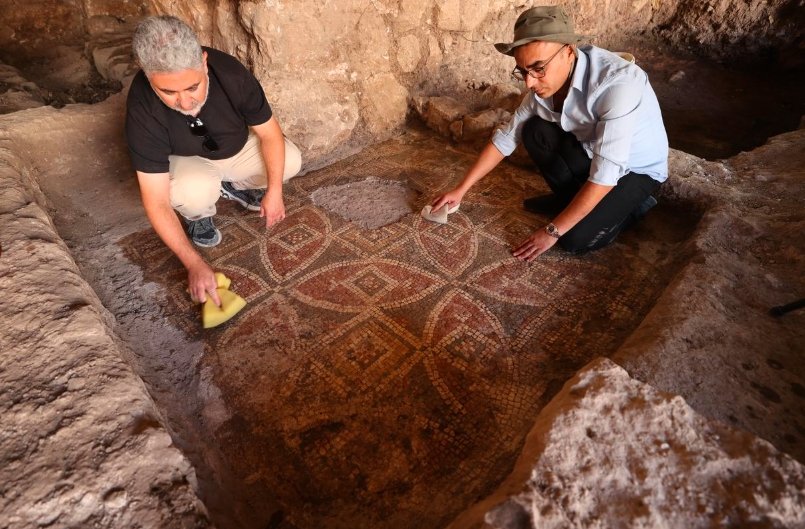
This accidental discovery happened in late 2025 during routine cleanup in the Beyazsu recreation area along the Çağ Çağ Stream Valley. The mosaic, dating back to the Byzantine era, covers about 430 square feet and includes intricate geometric designs that offer fresh insights into ancient life in the region.
How the Mosaic Was Discovered
The story started when private landowners decided to clean and restore a disused water mill on their property. As workers removed dirt and debris from the floor, they spotted colorful tiles peeking through.
They quickly alerted local authorities, and the Mardin Museum stepped in to lead an official excavation. This swift action preserved the site and allowed experts to document the find properly.
Archaeologists worked carefully to expose the mosaic without damage. So far, they have revealed two main sections inside the mill, but they suspect more lies underground in nearby areas.
This is not the first ancient treasure in the Midyat-Nusaybin corridor, known for its historic forts and trade routes. However, this mosaic stands out as the first one directly studied in this specific spot.
Key Features of the Ancient Artwork
The mosaic boasts a range of geometric patterns that showcase skilled craftsmanship from around 1,500 years ago. Experts note its use of squares, rectangles, circles, and triangles, all linked by wave-like borders and knot-shaped medallions.
One standout element is an inscription in the tiles that reads “Tittos Domestikos.” Researchers believe “Tittos” was a personal name, while “Domestikos” refers to a Byzantine title for a military or church official.
This clue suggests the site might have been part of a larger complex, possibly a residence for a local leader. The designs also include infinity motifs and cross symbols, hinting at religious or cultural meanings.
To highlight the mosaic’s details, here are some of its main patterns:
- Wave patterns that frame the edges and create a sense of movement.
- Knot-shaped medallions connecting different panels.
- Geometric shapes like triangles and circles forming repeating motifs.
- Infinity symbols woven into the design, possibly representing eternal concepts.
These elements make the mosaic a rare window into Byzantine art in this part of Turkey.
Historical Context and Significance
The Byzantine Empire ruled much of what is now Turkey from the 4th to the 15th century, blending Roman, Greek, and Christian influences. This mosaic fits into that era, likely created between the 5th and 6th centuries.
Southeastern Turkey has seen a wave of similar finds in recent years. For instance, excavations in nearby Urfa uncovered a 1,500-year-old Christian mosaic with Greek inscriptions just weeks before this one.
Such discoveries help piece together the region’s past as a crossroads of cultures. The Midyat area, part of the historic Tur Abdin region, was home to diverse communities, including early Christians.
Experts say this find could rewrite local history books. It points to organized settlements with advanced artistry, challenging ideas that the area was mostly rural back then.
To put this in perspective, consider this table of recent Byzantine mosaic discoveries in Turkey:
| Location | Year Discovered | Key Features | Estimated Age |
|---|---|---|---|
| Midyat (Mardin) | 2025 | Geometric motifs, “Tittos Domestikos” inscription | 1,500 years |
| Urfa Castle | 2025 | Christian symbols, Greek text | 1,500 years |
| Ancient City of Dara | 2025 | Military and religious scenes | 1,500 years |
| Adıyaman Province | 2017 | Farming and daily life depictions | 1,600 years |
This table shows how 2025 has been a big year for such uncovers, building on earlier finds.
What Experts Are Saying
Idris Akgül, who leads the excavation, described the mosaic as a potential sign of an administrator’s home. He noted that the title “Domestikos” appears in Byzantine records, linking it to power structures of the time.
Other historians point out the mosaic’s location in a valley once bustling with trade. This could mean it was part of a villa or public building along ancient routes.
The find also ties into broader trends. With Turkey’s growing focus on heritage tourism, sites like this draw global interest and boost local economies.
Some compare it to mosaics in places like Ravenna, Italy, known for Byzantine masterpieces. While smaller, this Turkish example adds to our understanding of how art spread across the empire.
Future Plans for the Site
The excavation team plans to expand their dig to uncover any extensions of the mosaic. They aim to map the full layout and search for artifacts that could reveal more about daily life.
Once preserved, the site might open to the public as part of Turkey’s rich archaeological network. Officials are discussing ways to protect it while allowing visitors to see it up close.
This discovery underscores the need for careful development in historic areas. It reminds us that treasures can hide just below the surface, waiting for the right moment to emerge.
As more details come to light, this mosaic could inspire new research and even school programs on Byzantine history.
What do you think about this find? Share your thoughts in the comments below, and pass this article along to fellow history buffs to keep the conversation going.













Spotify Running Mode hits Android and revives its old tempo experiment

Galaxy Tab S12 Ultra Renders Keep the Notch Fans Hate

Novato Spinning Round House Sells With Six Neighbors for $3.3 Million

Crop Tour Finds Indiana and Nebraska Corn Yields Lagging 2025

Best Buy 60th sale brings Android deals back to its roots

American Airlines reverses seatback screen bet years too late

Iran Hormuz Strikes Force Gulf Oil Onto Costlier Paths

Plague Tale Prequel Day One Joins Game Pass Wave 2 as Witcher Exits

NBA 2K27 opens The City to everyone and rewrites career eras

iOS 26.6.1 Patches 29 Flaws as AI Forces Faster Apple Updates

Caitlin Clark Skips the WNBA 3-Point Contest for a Third Straight Year

Rainout Gives Red Sox Two Shots at a Franchise-Record Win Streak

Double Fine Cuts 23 Jobs Weeks After Xbox Independence

Day-One Big Walk Lifts PS Plus August Beyond Recycled AAA

John Hight Exits Wizards After Digital Reckoning Hits

Curtis Mead’s Red Sox Debut Ends With Fractured Wrist

Moesch and Dressel Rewrite Night One at 2026 U.S. Nationals

Red Sox Squander Hot Streak Chance in 4-3 Loss to Athletics

Boutte’s Quiet Camp Takeover Forces Patriots Receiver Choices

Take-Two CEO Pushes Netflix Subs for GTA 6 Extended Look
-

 TECHNOLOGY3 years ago
How to Adjust a Bulova Watch Band – An Easy Guide
-

 News3 years ago
Fred Pentland: Athletic Bilbao’s English mentor who changed the essence of Spanish football
-

 FINANCE3 years ago
Tax Planning for Every Season: Guide to Maximizing Your Tax Benefits
-

 Education3 years ago
African Ministers New Education Plan
-

 BUSINESS3 years ago
What is Entrepreneurial Operating System? A Comprehensive Guide to EOS
-

 Education3 years ago
Innovate Your Learning Journey with Technology and Enhance Education
-

 News3 years ago
Russians formally out of World Athletics Championships
-

 BUSINESS3 years ago
Top 9 Most Expensive American Cities to Rent an Apartment