
News
Over 200 Teens Invite Math Magic at CMU Extravaganza

GRAND JUNCTION, Colo. — More than 200 high school students from nine western Colorado schools turned Colorado Mesa University’s campus into a living math playground Friday for the 28th annual Math Extravaganza, proving once again that numbers can spark joy louder than any playlist.
The energy was electric from the moment buses rolled in from Montrose, Rifle, Delta, and beyond. These kids didn’t come for extra credit. They came because math, when done right, feels like cheating at the universe.
“This Is What College Actually Feels Like”
That’s what one wide-eyed sophomore from Montrose whispered after watching CMU senior Kayla Martinez dismantle a Rubik’s cube in 47 seconds while explaining group theory.
“Most of them have never seen college students this excited about math,” said Megan Wendler, assistant professor of mathematics and one of the event’s organizers. “They expect us to be these serious, quiet nerds. Then they walk in and we’re literally racing to solve puzzles and shouting when someone cracks a problem. It flips the script.”
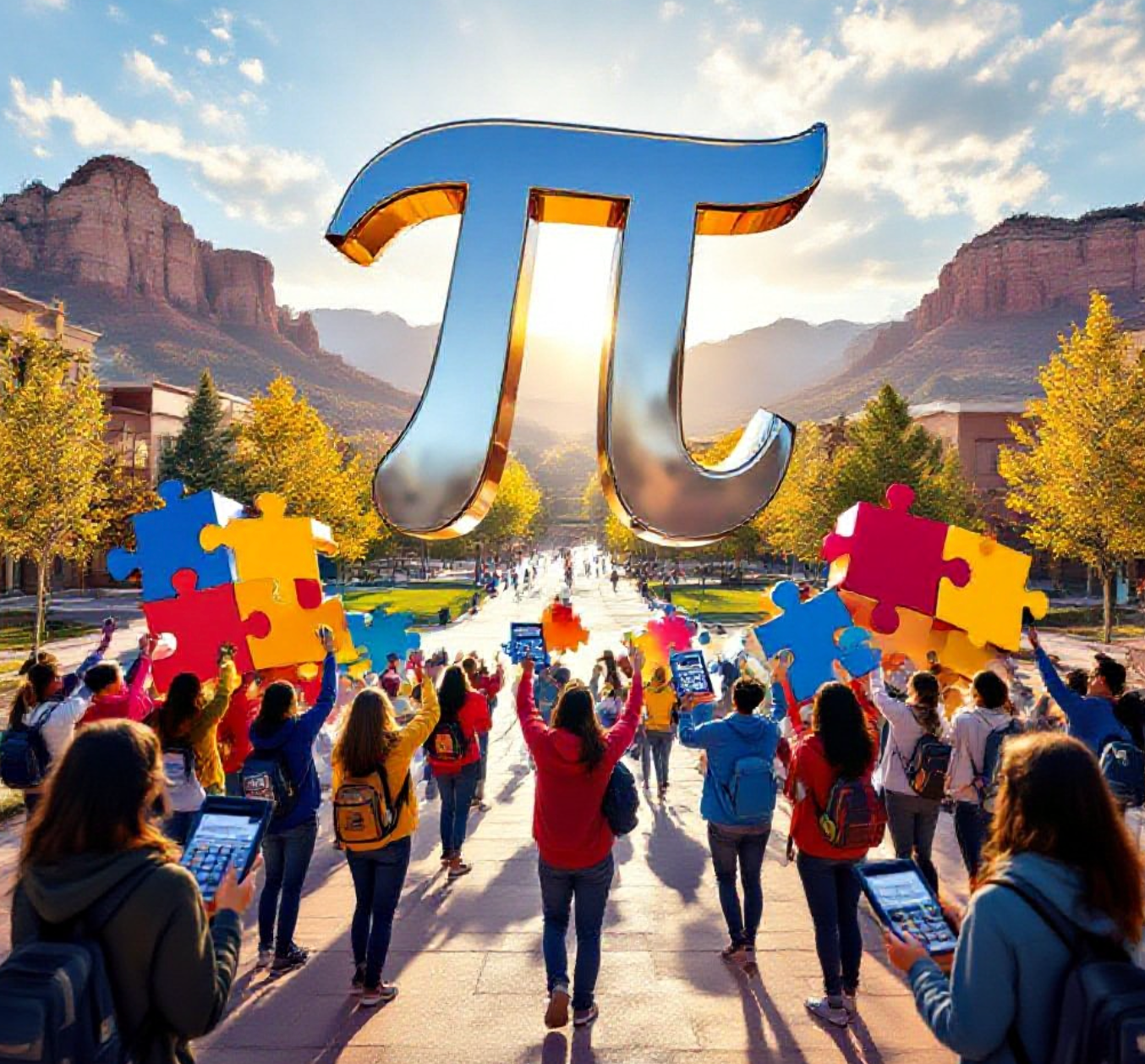
The day kicked off with campus tours led by current CMU math and computer science majors who still remember being the nervous high schooler. Students sat in on real college lectures, played with Mathematica software, and competed in everything from pi-digit recitation battles to logic puzzle death matches.
From 30 Kids to 200+ in One Generation
When the Math Extravaganza launched in 1996, fewer than 30 students showed up. Organizers had to beg local schools to send anyone at all.
Fast forward to 2024 and they’re turning schools away.
This year’s nine participating high schools represent the largest geographic spread ever. Students traveled up to three hours each way because their counselors kept hearing the same thing from last year’s attendees: “You have to go. It’s the best day of school you’ll ever have.”
Central High School brought 42 kids — their biggest group yet. Fruita Monument sent 38. Even tiny Nucla High School made the trek with eight students who spent the entire bus ride practicing speed math drills on their phones.
The Activities That Actually Blew Minds
Forget worksheets. Here’s what actually happened:
- A “Human Calculator” contest where students had 60 seconds to solve problems like 97 × 96 without paper
- A coding challenge that had teams racing to write Python programs that generate fractal art
- The legendary “Math Jeopardy” finale where the winning team from Palisade High School took home the traveling trophy for the third year running
- A guest appearance by CMU alum turned NASA engineer who showed how the math they’re learning right now literally puts rockets in space
One Rifle High School junior summed it up perfectly: “I thought I hated math because school makes it boring. This showed me math is just the world’s best video game and nobody told us the cheat codes.”
Why This Matters More Than Ever
Colorado’s Western Slope continues to struggle with STEM teacher shortages and college-going rates below the state average. Events like Math Extravaganza aren’t just fun. They’re recruitment missions disguised as parties.
Since 2019, CMU has seen a 34% increase in mathematics and computer science majors from western Colorado high schools. Organizers credit days like Friday for much of that growth.
“When these kids leave here,” Wendler said, watching a group of freshmen pose for selfies with the giant inflatable pi symbol, “they don’t just think college is possible. They think it’s going to be the most fun they’ve ever had.”
As the last bus pulled away Friday afternoon, one Delta High School teacher overheard her students making plans. Not for prom. Not for graduation parties.
They were already counting down to next year’s Math Extravaganza.
Because somewhere between the puzzles and the pizza and the college kids who look just like them but somehow cooler, over 200 teenagers discovered something dangerous:
Math isn’t something you have to do.
It’s something you get to do.












Stock Futures Wobble as Trump’s Hormuz Blockade Meets Earnings Season

Chipotle Enters Mexico, the Market That Sank Taco Bell Twice

Samsung’s Galaxy Watch 9 and Watch Ultra 2 Bet on a Borrowed Chip

Pentagon Suspends CMMC Phase 2, Relieving Small Firms, Straining Assessors

PS5 Adds a Weekly Wrap-Up Widget While Recently Played Stays Broken

A Brazilian Gamer Sued Microsoft Over a Hacked Xbox Account, and Won

Volkswagen’s CEO Confirms 100,000 Jobs Are on the Table

Assassin’s Creed Black Flag Resynced Splits Handhelds by Price

Lorde Calls Smart Glasses ‘Not Sexy’ Right on Ray-Ban’s Own Stage

Nintendo Eyes a Switch 2 OLED Model as the Memory Crisis Bites

Halo Studios Reverses PS Plus for Halo: Campaign Evolved on PS5

Black Ops 1 and 2 PS5 Ports: $40 Price Tag Has Fans Uneasy

Matt Brown Dismisses Rousey and Paul’s MVP MMA Ratings Win Over UFC

Star Wars: Galactic Racer Is a Roguelite Racer With a Podracing Skin

Julius Randle Traded to Nets as Wolves Reclaim Cap Space for Dosunmu

Sega’s $49.99 Sonic Classic and Modern Bundles Hit Switch in October

Colombia Edge DR Congo as Muñoz Books World Cup Knockout Place

Douze Dixièmes Closes Five Months After MIO: Memories in Orbit

Warriors Take Yaxel Lendeborg, the Oldest Pick in the 2026 NBA Draft

Meta’s Muse Image Lets Anyone Use Your Instagram Photos in AI
-

 TECHNOLOGY3 years ago
How to Adjust a Bulova Watch Band – An Easy Guide
-

 News3 years ago
Fred Pentland: Athletic Bilbao’s English mentor who changed the essence of Spanish football
-

 FINANCE3 years ago
Tax Planning for Every Season: Guide to Maximizing Your Tax Benefits
-

 Education3 years ago
African Ministers New Education Plan
-

 BUSINESS3 years ago
What is Entrepreneurial Operating System? A Comprehensive Guide to EOS
-

 Education3 years ago
Innovate Your Learning Journey with Technology and Enhance Education
-

 News3 years ago
Russians formally out of World Athletics Championships
-

 BUSINESS3 years ago
Top 9 Most Expensive American Cities to Rent an Apartment