
News
Grand Valley Farmers Brace for Tough Irrigation Season

PALISADE, Colo. — As western Colorado orchards and vineyards gear up for irrigation water in early April, two big worries top every grower’s list: not enough water after a bone-dry winter and the growing threat of zebra mussels clogging pipes, pumps, and sprinklers.
Local producers say the lack of snowpack feels more immediate than mussels right now, but both could hurt this year’s peach, apple, and wine grape crops.
Dry Winter Leaves Reservoirs Low
Colorado’s mountain snowpack—the region’s natural savings account for summer water—sat at just 68 percent of normal in late March, according to the Natural Resources Conservation Service.
That number has climbed a little with recent storms, but Blue Mesa, Vega, and other upstream reservoirs remain far below full. The Grand Valley Water Users Association, which diverts Colorado River water at the Cameo Dam for more than 23,000 acres, expects a shorter, tighter irrigation season.
Bruce Talbott, manager of Talbott’s Mountain Gold orchard near Palisade, put it bluntly.
“We can run out of water,” he said. “And when those around us are running out, we have to be really diligent.”
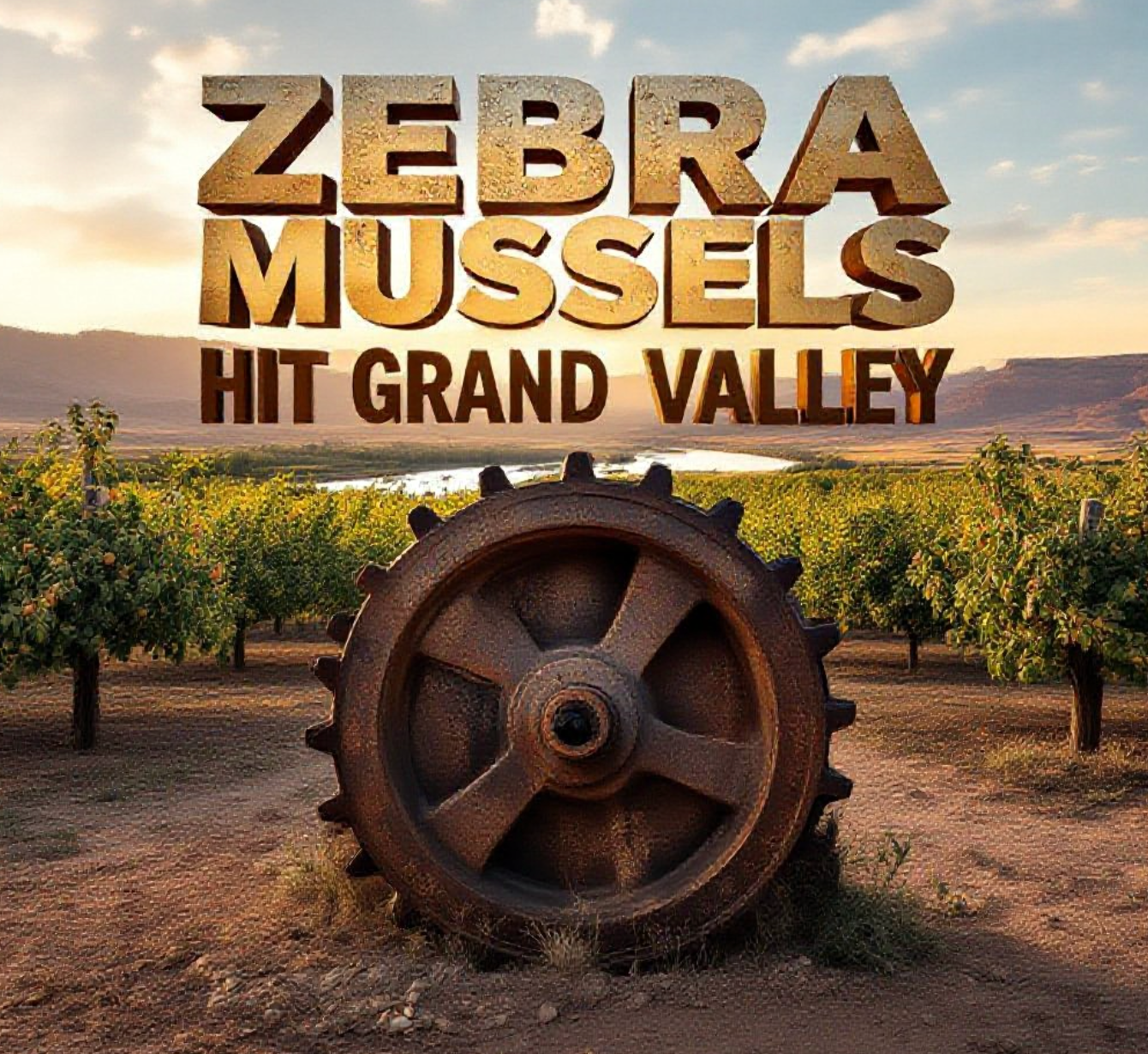
Zebra Mussels: The Silent Invader
Colorado Parks and Wildlife confirmed zebra mussel larvae in the Colorado River near Grand Junction last fall—the first detection in the state’s stretch of the river.
No adult colonies have been found yet in the Grand Valley canal system, but the tiny larvae can hitchhike on boats, equipment, or even mud and explode into billions once they settle.
Alexander West, winemaker at Varaison Vineyards & Winery, worries about the speed of spread.
“They grow very quickly and very rapidly throughout the entire system,” West said.
A single female zebra mussel can release a million eggs in a season. Once attached, they can shut down valves, clog micro-sprinklers, and cost farmers thousands in repairs.
How Local Operations Are Protecting Themselves
Talbott’s Mountain Gold is finishing the switch to micro-sprinkler irrigation on all its blocks.
“Micro sprinklers require good filtration,” Talbott said. “We want our delivery system to stay clean of mussels and other problems that would make it a headache to get water through pumps and valves.”
Varaison still uses traditional furrow irrigation in open ditches.
“We’re much less concerned about plugged emitters,” West explained. “We still filter incoming water through a micro-spinning venturi to remove silt, but big chunks pass right through the furrows.”
Both operations pull directly from the Colorado River, known for carrying heavy loads of mud and debris even without mussels.
Filtration Already in Place—But Is It Enough?
The Grand Valley canal passes all water through large fish screens at the Cameo Diversion Dam that catch bigger debris. Individual irrigation districts and many farms add their own screens and filters.
Yet experts say zebra mussel larvae are smaller than 100 microns—too tiny for most standard screens.
Colorado Parks and Wildlife now recommends 50-micron or finer filtration for anyone moving water out of the infested stretch between Palisade and the Utah line.
So far, no Grand Valley producer reports finding mussels in their headgates or pumps, but everyone is on high alert.
Old Habits Meet New Threats
Growers here have always lived with tight water and muddy river flows. What’s new is the combination of lower supplies and a biological threat that could make a bad year worse.
“Old rule of thumb is you only want to use what you need,” West said. “There’s nothing we can do about upstream conditions except make sure we have clean water and use it appropriately.”
Talbott echoed the community spirit that runs deep in Palisade fruit country.
“A good fruit crop is good for the whole valley,” he said. “We want it for ourselves, but we want it for everybody else too.”
As the first water orders go in this week, Grand Valley farmers are watching the sky, checking filters, and hoping the river stays both full and clean.










Judge Strips Google’s Last App Store Friction After Epic Demo

Fold 8 Success Makes Its Dusty Hinge Costlier Than Ever

Silver Lake Workday Talks Test PE Appetite for AI-Hit Software

Wholesale Prices Flat but Wage Lag Keeps Households Squeezed

Teen E-Motos Draw Hells Angels Label and Risk Legal Ebike Gains

Apple’s Siri Pay-Per-Use Plan Rewrites News Licensing Rules

Cramer Calls Cisco Plunge a Buy as AI Orders Surge

Play Points Platinum Quietly Cuts Pixel 11 Prices Again

Quincy Gas Station Sold the $1.04 Billion Powerball Ticket

Microsoft Scraps Failed Copilot Features in Forced App Merge

ZA/UM Lays Off 32 Staff as Zero Parades Wins Reviews, Not Players

EA’s New In-Game Ad Platform Skips the Games That Need It Most

Mortgage Rates Climb to 6.55%, the Highest Level in Nearly a Year

Colby Covington Stuns Tsarukyan as Askren Retires in Tears at RAF 11

Netflix Heads Into Earnings With Its 2022 Playbook Already Spent

Spain’s Diaspora-Rooted Squad Wins Over New York Ahead of the Final

NHL’s Monday Matinee Push Puts Capitals Fans on the Clock

DeChambeau’s Two-Shot Penalty Rewrites the Open’s Weekend Draw

Guardians Rout Twins With Seven Homers, Leave Joe Ryan One Shy of Record

England Beats France 6-4 to Claim World Cup Bronze Medal
-

 TECHNOLOGY3 years ago
How to Adjust a Bulova Watch Band – An Easy Guide
-

 News3 years ago
Fred Pentland: Athletic Bilbao’s English mentor who changed the essence of Spanish football
-

 FINANCE3 years ago
Tax Planning for Every Season: Guide to Maximizing Your Tax Benefits
-

 Education3 years ago
African Ministers New Education Plan
-

 BUSINESS3 years ago
What is Entrepreneurial Operating System? A Comprehensive Guide to EOS
-

 Education3 years ago
Innovate Your Learning Journey with Technology and Enhance Education
-

 News3 years ago
Russians formally out of World Athletics Championships
-

 BUSINESS3 years ago
Top 9 Most Expensive American Cities to Rent an Apartment