
News
Air Quality Awareness Week Spotlights Rising Health Risks

Health officials across the country are using Air Quality Awareness Week 2026 to warn families about an invisible danger sitting just outside their front doors. From wildfire smoke drifting across Colorado to asthma triggers in busy neighborhoods, the message this week is simple. The air we breathe is getting riskier, and the people most at risk often have no idea what is sneaking into their lungs.
Why Mesa County Is Sounding the Alarm
In Grand Junction, Colorado, Mesa County Public Health is leaning hard into the week to push residents to track daily air conditions.
“It’s extremely important because each one of us breathes in about 2,000 gallons of air a day,” said Chase Boddicker, environmental health specialist with Mesa County Public Health.
Boddicker said the daily forecast also helps shape whether the county allows open burning on any given day. The valley setting around Grand Junction can trap smoke, dust, and vehicle exhaust during calm weather, making bad days feel even worse.
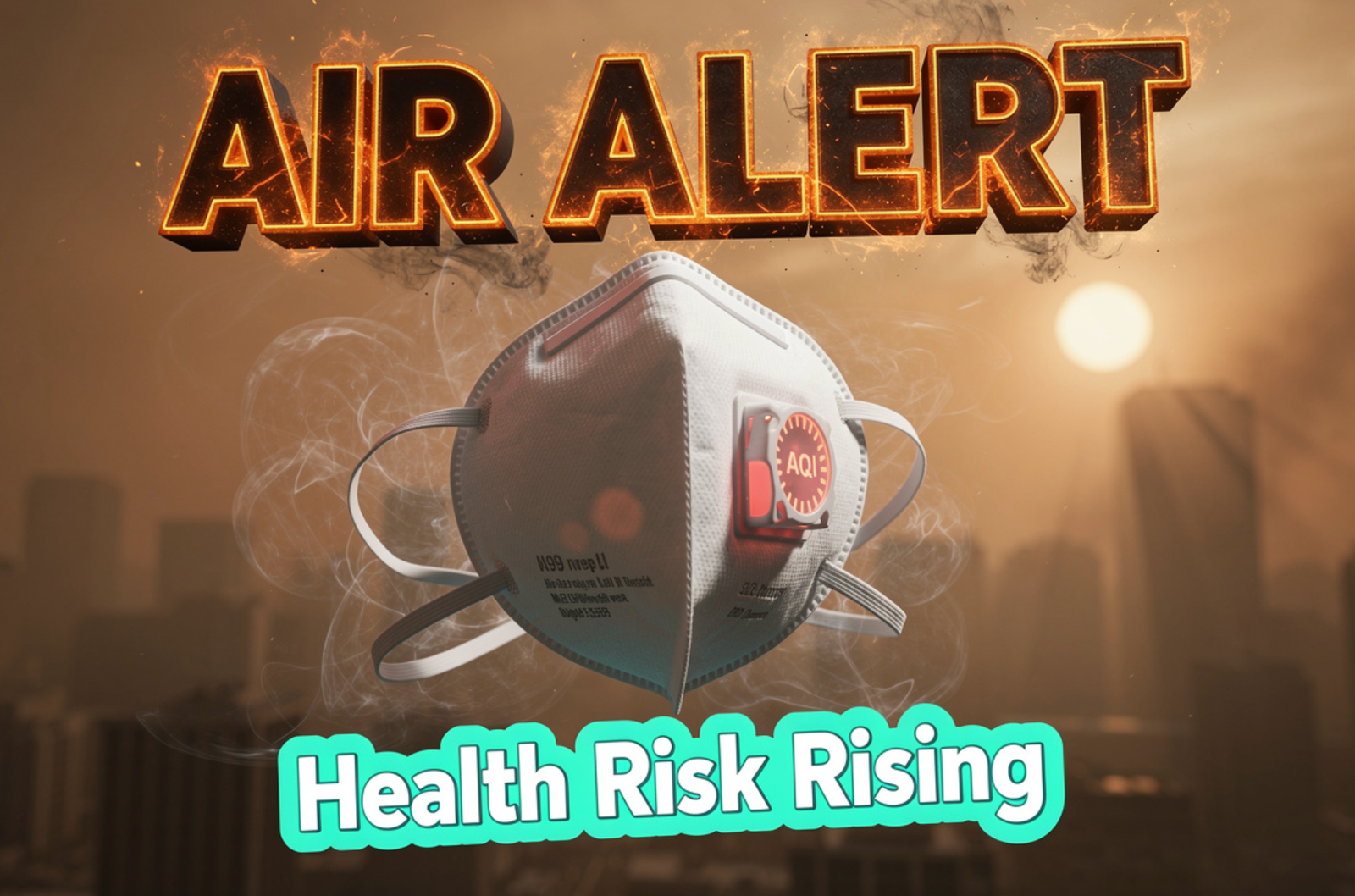
The Hidden Health Toll of Dirty Air
Poor air quality does far more than ruin a sunny afternoon outdoors.
Doctors link it to breathing trouble, fatigue, and stubborn headaches that refuse to fade. The danger climbs sharply for children, older adults, pregnant women, and anyone living with asthma or heart disease.
Long term exposure to fine particle pollution, known as PM2.5, has been tied to lung disease, heart attacks, strokes, and certain cancers.
People most at risk include:
- Children with developing lungs
- Adults over the age of 65
- Pregnant women and their unborn babies
- People living with asthma or COPD
- Outdoor workers, athletes, and delivery drivers
EPA Themes Driving the 2026 Conversation
The Environmental Protection Agency built this year’s campaign around four daily focus areas running from May 4 through May 7.
Each day pushes a different angle on how pollution touches daily life, from forest fires in the West to the dust collecting inside your living room.
| Day | Theme |
|---|---|
| Monday, May 4 | Wildland Fires and Smoke |
| Tuesday, May 5 | Asthma and Your Health |
| Wednesday, May 6 | Indoor Air Quality |
| Thursday, May 7 | Air, Animals, and Plants |
Wildfire smoke remains the biggest worry across the western states, where huge blazes have pushed unhealthy air hundreds of miles from the flames in recent years.
Indoor air, often two to five times more polluted than the air outside, gets its own spotlight on Wednesday. Cleaning sprays, gas stoves, candles, and dusty filters all add up faster than most families realize.
Simple Steps to Protect Yourself and Your Family
Boddicker and other experts say small daily habits can shrink exposure in a big way.
Check the local Air Quality Index on AirNow.gov before heading out, especially on hot, dry, or smoky days. When the AQI climbs into the orange or red range, cut back on time outdoors and skip the morning run.
“Knowing how air conditions look outside helps inform what we’re going to do with our day.” Chase Boddicker, Mesa County Public Health
Indoors, keep windows shut on bad air days and skip the swamp cooler, which pulls outside air straight into the home. A well fitted N95 mask can cut exposure for anyone who has to spend long stretches outside.
For long term protection, families can take a few easy steps at home:
- Run a HEPA air purifier in bedrooms and living areas.
- Change HVAC filters every three months, sooner during fire season.
- Avoid burning candles, incense, or wood inside the house.
- Vent gas stoves with a range hood or open window when air outside is clean.
- Keep an emergency mask supply for sudden smoke events.
Schools and workplaces are also being urged to build air quality alerts into their daily routines. Some districts in California, Oregon, and Colorado already cancel outdoor recess when the AQI passes 150, a practice public health groups want to see spread nationwide.
Pediatricians stress that children breathe faster than adults and take in more air for their body weight, which makes early protection critical. A single bad smoke season can leave lasting marks on a young set of lungs.
Air Quality Awareness Week is a quiet reminder that clean air is not a luxury. It is a daily need that shapes how we sleep, how we feel, and how long we live. Whether you live near a busy freeway, a wildfire prone forest, or a quiet suburb, the choices you make this week can protect the people you love most. What steps are you taking to keep your family safe during Air Quality Awareness Week? Share your thoughts in the comments and tell us how clean air conversations are shaping your home.













Spotify Running Mode hits Android and revives its old tempo experiment

Galaxy Tab S12 Ultra Renders Keep the Notch Fans Hate

Novato Spinning Round House Sells With Six Neighbors for $3.3 Million

Crop Tour Finds Indiana and Nebraska Corn Yields Lagging 2025

Best Buy 60th sale brings Android deals back to its roots

American Airlines reverses seatback screen bet years too late

Iran Hormuz Strikes Force Gulf Oil Onto Costlier Paths

Plague Tale Prequel Day One Joins Game Pass Wave 2 as Witcher Exits

NBA 2K27 opens The City to everyone and rewrites career eras

iOS 26.6.1 Patches 29 Flaws as AI Forces Faster Apple Updates

Double Fine Cuts 23 Jobs Weeks After Xbox Independence

Day-One Big Walk Lifts PS Plus August Beyond Recycled AAA

John Hight Exits Wizards After Digital Reckoning Hits

Curtis Mead’s Red Sox Debut Ends With Fractured Wrist

Red Sox Squander Hot Streak Chance in 4-3 Loss to Athletics

Moesch and Dressel Rewrite Night One at 2026 U.S. Nationals

Boutte’s Quiet Camp Takeover Forces Patriots Receiver Choices

Take-Two CEO Pushes Netflix Subs for GTA 6 Extended Look

Halo Campaign Evolved Skulls Meet Death Barriers That Kill the Hunt

Wildlands Free Update Hands Players the Tools They Already Invented
-

 TECHNOLOGY3 years ago
How to Adjust a Bulova Watch Band – An Easy Guide
-

 News3 years ago
Fred Pentland: Athletic Bilbao’s English mentor who changed the essence of Spanish football
-

 FINANCE3 years ago
Tax Planning for Every Season: Guide to Maximizing Your Tax Benefits
-

 Education3 years ago
African Ministers New Education Plan
-

 BUSINESS3 years ago
What is Entrepreneurial Operating System? A Comprehensive Guide to EOS
-

 Education3 years ago
Innovate Your Learning Journey with Technology and Enhance Education
-

 News3 years ago
Russians formally out of World Athletics Championships
-

 BUSINESS3 years ago
Top 9 Most Expensive American Cities to Rent an Apartment