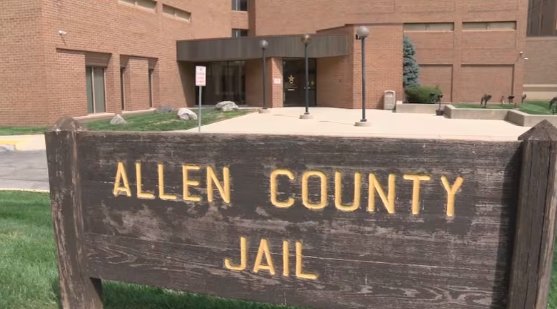
More than two decades after a man’s body was pulled from Cedar Creek in northeast Allen County, investigators are hoping new DNA technology — and community donations — can finally tell them who he was.
The victim, known only as “John River Doe,” was found in April 1999 with stab wounds. Despite years of investigation, his identity remains unknown. Now, a local business specializing in genetic genealogy is stepping in to help.
From a 1999 Creek Discovery to 2025 DNA Testing
On an overcast spring day in 1999, two men walking near the Hursh Road entrance to Metea Park stumbled across a grim scene. Floating in Cedar Creek was the body of a man later determined to have been murdered. The Allen County Coroner’s Office ruled his death a homicide, citing multiple stab wounds.
Detectives combed the area for clues, collected evidence, and ran the victim’s description through missing persons databases nationwide. Nothing matched. Over the years, forensic sketches were circulated, leads chased, and even old witnesses re-interviewed. The case stubbornly resisted resolution.
Why He’s Known as “John River Doe”
In cold case terminology, unidentified victims are often given placeholder names. In this instance, “John River Doe” reflects both the uncertainty of his name and the fact that he was found in a creek.
The victim was a Hispanic man, estimated to be between 25 and 35 years old at the time of his death. He stood about 5′4″, weighed roughly 200 pounds, and had dark hair and eyes. If alive today, he would likely be between 50 and 60 years old.
The Allen County Coroner’s Office says they’ve exhausted traditional investigative tools. That’s where IGGNite DNA comes in.
IGGNite DNA’s Track Record
IGGNite DNA is no stranger to cold cases. The business earned local recognition after assisting in the identification of a woman found dead in Fort Wayne more than 30 years after her body was discovered. Using genetic genealogy — comparing crime scene DNA to publicly available genetic databases — they were able to connect distant relatives and narrow down her identity.
For “John River Doe,” the process would work similarly:
-
Extract DNA from preserved evidence.
-
Develop a detailed genetic profile.
-
Compare that profile to entries in voluntary genealogy databases.
-
Trace family trees to identify potential relatives and, eventually, the victim.
The technology is powerful but not cheap — hence the need for community fundraising.
Funding the Effort
The Coroner’s Office and IGGNite DNA are seeking donations to cover the costs of testing, data analysis, and investigative follow-up. While exact figures haven’t been released, similar projects often run into several thousand dollars.
Supporters say the price is worth it, not just to close a file but to give the victim a name — and possibly help detectives find his killer.
“Every person deserves to be identified,” said one investigator familiar with the case. “He’s someone’s son, maybe someone’s brother or father. There’s a family out there that has no idea what happened to him.”
Why Cold Case Identification Matters
Identifying an unknown homicide victim can be the key to unlocking an entire case. Without a name, investigators often can’t trace the victim’s last movements, personal connections, or potential motives for the crime.
In many cases, once the victim is identified, new leads emerge. Friends, family, or co-workers can provide fresh details. Suspects can be placed in context. Timelines can be reconstructed.
For law enforcement, it’s not just about closure for families — it’s about reopening the investigative path.
Allen County’s Last Cold Case
The Allen County Coroner’s Office says “John River Doe” is its last remaining unidentified homicide victim. That fact adds urgency. Officials hope that solving this case will mean all known homicide victims in the county have names, identities, and a place in the public record.
The effort comes at a time when advances in forensic technology are rewriting what’s possible. Decades-old cases that once seemed unsolvable are now yielding answers, sometimes in a matter of months.
Community Involvement
Local residents can contribute directly to the fundraising drive. While officials haven’t announced a formal event schedule, similar efforts in the past have included benefit dinners, silent auctions, and online crowdfunding.
Community members who can’t contribute financially are encouraged to share information about the case. Even a small memory from 1999 — a suspicious sighting, a conversation — could be relevant.
Looking Ahead
If funding comes through quickly, IGGNite DNA could begin the genetic genealogy process within weeks. Once testing is complete, the work of identifying possible relatives could take months, depending on the size and strength of the genetic matches.
For now, the message from investigators is simple: the technology is ready, the expertise is available, and the community’s help could finally give “John River Doe” back his name.