Two climbers are safe after a harrowing night without overnight gear at 14,000 feet, thanks to a daring high-altitude rescue mission by the Colorado National Guard.
Two mountaineers were plucked from the summit of Longs Peak on Saturday afternoon following a dramatic multi-agency rescue operation in Rocky Mountain National Park. The men, who became incapacitated during a technical climb, spent an unplanned night in freezing temperatures before a Chinook helicopter crew successfully airlifted them to safety.
A Desperate Call for Help
The ordeal began late Friday night when the two climbers contacted park rangers in distress. The men, ages 47 and 50, had ascended Kiener’s Route—a technical mix of rock and snow on the mountain’s east face—but stalled near 14,000 feet.
They reported being “incapacitated” and unable to continue their route or descend on their own.
Crucially, the pair was not equipped with camping gear for an overnight stay.
Rangers maintained contact with the shivering climbers throughout the freezing night to monitor their condition. As dawn broke on Saturday, ground teams from Rocky Mountain National Park Search and Rescue and Larimer County Search and Rescue began the arduous hike toward the peak to reach the stranded men.
High Winds Ground Initial Air Rescue
Rescue coordinators immediately requested air support to reach the climbers quickly. However, the notorious winds of the Rocky Mountains proved to be a formidable barrier for standard aircraft.
- Attempt 1: A U.S. Forest Service helicopter launched but was forced to abort due to dangerous turbulence.
- Attempt 2: A Flight For Life medical helicopter also had to stand down as wind speeds exceeded safety limits.
With smaller aircraft grounded and time ticking for the exposed climbers, officials realized they needed a heavier, more powerful machine to battle the elements. They placed a call to the Colorado National Guard Army Aviation Support Facility at Buckley Space Force Base.
“Winter conditions can persist in the high country even when overall snowpack is below average.” — Kyle Patterson, Rocky Mountain National Park Spokesperson
Chinook Crew Lands on the Summit
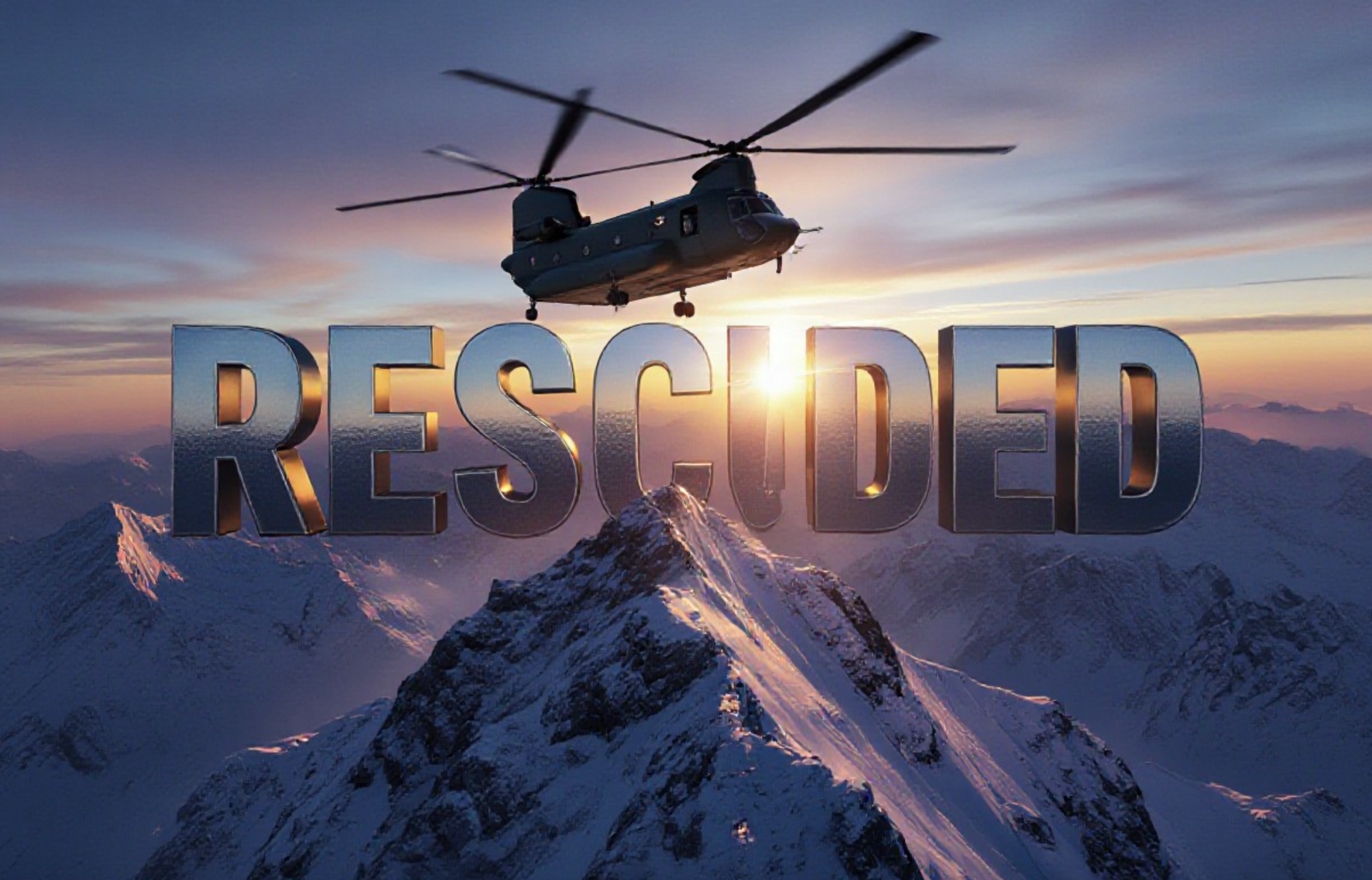
The National Guard responded with a CH-47 Chinook, a twin-engine heavy-lift helicopter capable of operating in extreme environments.
The massive aircraft, carrying a specialized flight crew and rescuers from Alpine Rescue and Rocky Mountain Rescue, approached the 14,259-foot peak. By this time, the two climbers had managed to move from their technical route up to the flatter, albeit wind-scoured, summit.
At approximately 2:15 p.m., the Chinook successfully touched down on the top of Longs Peak.
Rescuers quickly loaded the two men onto the aircraft. They were flown directly to Upper Beaver Meadows Road within the park boundaries, where medical teams were waiting to assess them.
Unexpected Hazards in High Altitude
This incident serves as a stark reminder of the unpredictable nature of Colorado’s “fourteeners,” especially in winter.
While the region has seen below-average snowpack this season, the dangers of high-altitude mountaineering remain severe. Park officials noted that dry conditions often lull climbers into a false sense of security, but ice, wind, and subzero temperatures are constant threats.
Safety Checklist for Winter Alpine Climbing:
- Prepare for the Unexpected: Always carry bivy gear, even on day trips.
- Check Wind Forecasts: Summit winds can be double the speed of valley winds.
- Know Your Route: Technical routes like Kiener’s require specific winter mountaineering skills.5
- Communication: A satellite device is critical when cell service fails.
The successful extraction highlights the critical importance of inter-agency cooperation. Without the heavy-lift capabilities of the National Guard, the ground teams would have faced a perilous and lengthy evacuation down technical terrain.
Two lives were saved this weekend because a specialized team refused to give up when the winds turned against them. We are reminded that the mountains command respect, regardless of the season or snow levels.
What are your thoughts on this incredible rescue mission? Should mandatory gear lists be enforced for winter climbs? Share your opinion in the comments below.