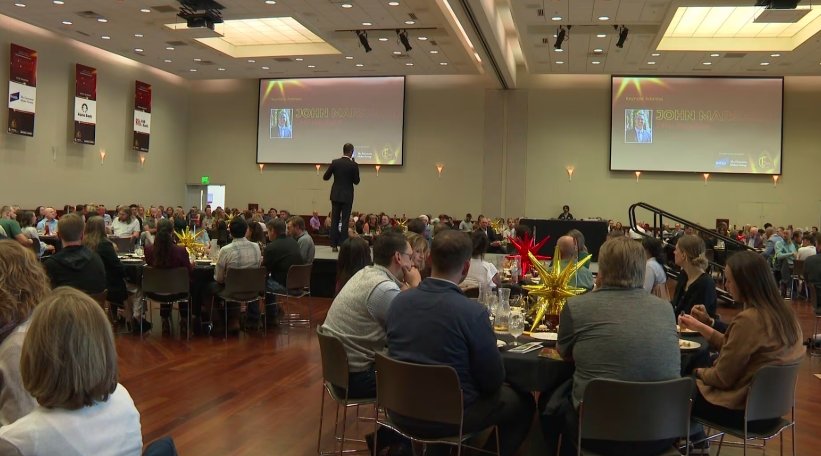
GRAND JUNCTION, Colo. — On Thursday, Colorado Mesa University once again transformed theory into tangible ambition as it hosted its 18th annual Entrepreneurship Day luncheon, welcoming students, alumni, and business leaders for a full afternoon of connection, inspiration, and real-world insight.
The event, held on May 1, brought together a diverse mix of aspiring student entrepreneurs and seasoned professionals, united under one roof to exchange stories of startup struggles, triumphs, and lessons learned. For CMU students — many of them first-generation college attendees — the day served not just as a networking event, but as a powerful affirmation: a successful business career is within reach.
18 Years of Local Impact
Now in its 18th year, CMU’s Entrepreneurship Day has grown into a cornerstone of the university’s business program. The luncheon is designed to bridge the classroom and the boardroom — offering students rare access to the lived experiences of business founders, CEOs, and industry veterans.
“It’s really great, because they get to see what other people have done to go into business,” said Georgann Jouflas, a longtime Instructor of Business at CMU. “They get to learn about entrepreneurship a little bit deeper by talking to the people that have actually done it.”
For Jouflas, who has helped steward the event for years, the value goes beyond classroom learning. It’s about making the abstract tangible — and the intimidating, achievable.
Lessons from the Ground Up
Throughout the afternoon, business leaders from across the Grand Valley and beyond shared candid stories of their career journeys — some bootstrapped from scratch, others grown from mentorship, trial, and persistence.
These stories resonated deeply with the students in attendance — especially those still exploring what their own business paths might look like.
“A lot of our students are first generation or, you know, just starting out not really knowing what they want to do,” Jouflas said. “And a lot of our business owners here have started the same way. They pulled themselves up from the bootstraps and just learned on their own and had mentors that really helped them.”
That parallel — between successful entrepreneurs and the students just beginning their professional journey — is what CMU believes makes the event so critical.
“It’s really good for our students to see that that’s happened for everybody and not just them,” she added.
Students See Themselves in the Speakers
One of the underlying goals of Entrepreneurship Day is demystifying success — showing students that entrepreneurial journeys often begin with uncertainty, setbacks, and hard-earned growth. For business students at CMU, many of whom balance school with part-time jobs or family responsibilities, seeing successful professionals with similar origin stories provides a dose of realism — and hope.
Students mingled at lunch tables, pitched ideas, asked questions about funding and partnerships, and traded contact information with mentors. A few attendees even received internship offers on the spot — a testament to the high level of engagement and mutual interest.
A Curriculum-Enhancing Experience
The event is tightly integrated with the university’s broader business curriculum, which places increasing emphasis on experiential learning, leadership development, and community partnerships. According to CMU, Entrepreneurship Day helps reinforce the core values of resilience, innovation, and adaptability — all critical attributes for modern business leaders.
The university has also seen the event act as a springboard for real-world ventures. In recent years, several students have launched small businesses after attending Entrepreneurship Day and securing mentors from the event. Others have used the contacts made at the luncheon to land their first post-graduation jobs.
CMU’s Entrepreneurship Club, business pitch competitions, and hands-on classes in finance and marketing all benefit from the momentum created during the event.
Looking Ahead: Business with a Human Touch
While startups and business models dominated the discussion, many speakers also addressed the deeper purpose of entrepreneurship — using innovation to meet community needs.
Topics included:
-
Social entrepreneurship in rural areas
-
Building resilience in post-COVID business environments
-
Funding strategies for small-town startups
-
The importance of mentorship in early-stage development
Several entrepreneurs highlighted how their companies were born not from market gaps, but from personal problems they aimed to solve — further grounding the event in the human element of business creation.
Realistic Role Models
As economic uncertainties continue to challenge younger generations, CMU’s decision to anchor its entrepreneurship programming in lived experience — rather than idealized success stories — appears to be striking the right chord.
“The speakers today didn’t sugarcoat it,” said Talia Martinez, a junior in CMU’s business program. “They talked about failure, about pivoting, about self-doubt. That was more helpful than any textbook.”
For Martinez and many others, the stories shared weren’t just motivational — they were instructional.
Community Connections that Last
CMU administrators say they intend to keep growing the event in the coming years. Plans are already underway to introduce breakout sessions, expand to include technology and arts entrepreneurship, and possibly host pitch showcases that allow students to win startup seed funds.
But the core mission — human connection — will remain unchanged.
“Career fairs are great, but this is something different,” said Jouflas. “This is about creating meaningful conversations — the kind that stick with you long after graduation.”