
Colorado Parks and Wildlife just unveiled aggressive, large-scale restoration plans following the most destructive wildfire season in state history. Over 265,000 acres went up in flames last summer, and now crews are racing against winter to bring the land back to life before invasive weeds take over.
The Lee Fire and Elk Fire alone scorched more than 274,000 acres combined, destroyed homes, and wiped out critical winter range for mule deer and sage-grouse. CPW says the clock is ticking. Fast action this fall and spring will decide whether these landscapes recover in years or decades.
Oak Ridge Wildlife Area Already Seeing New Growth
At Oak Ridge State Wildlife Area, hit hardest by the massive Elk Fire, restoration teams have already treated 860 acres and counting.
Crews focused on soil stabilization first, then seeded aggressive native grasses and forbs to out-compete cheatgrass and other invasives. Biologists report the first green shoots are already showing up in treated areas, even after the brutal burn.
Another 200 acres are scheduled for spring seeding, with CPW coordinating every pound through the Escalante State Wildlife Area Seed Warehouse, one of the biggest native seed banks in the West.
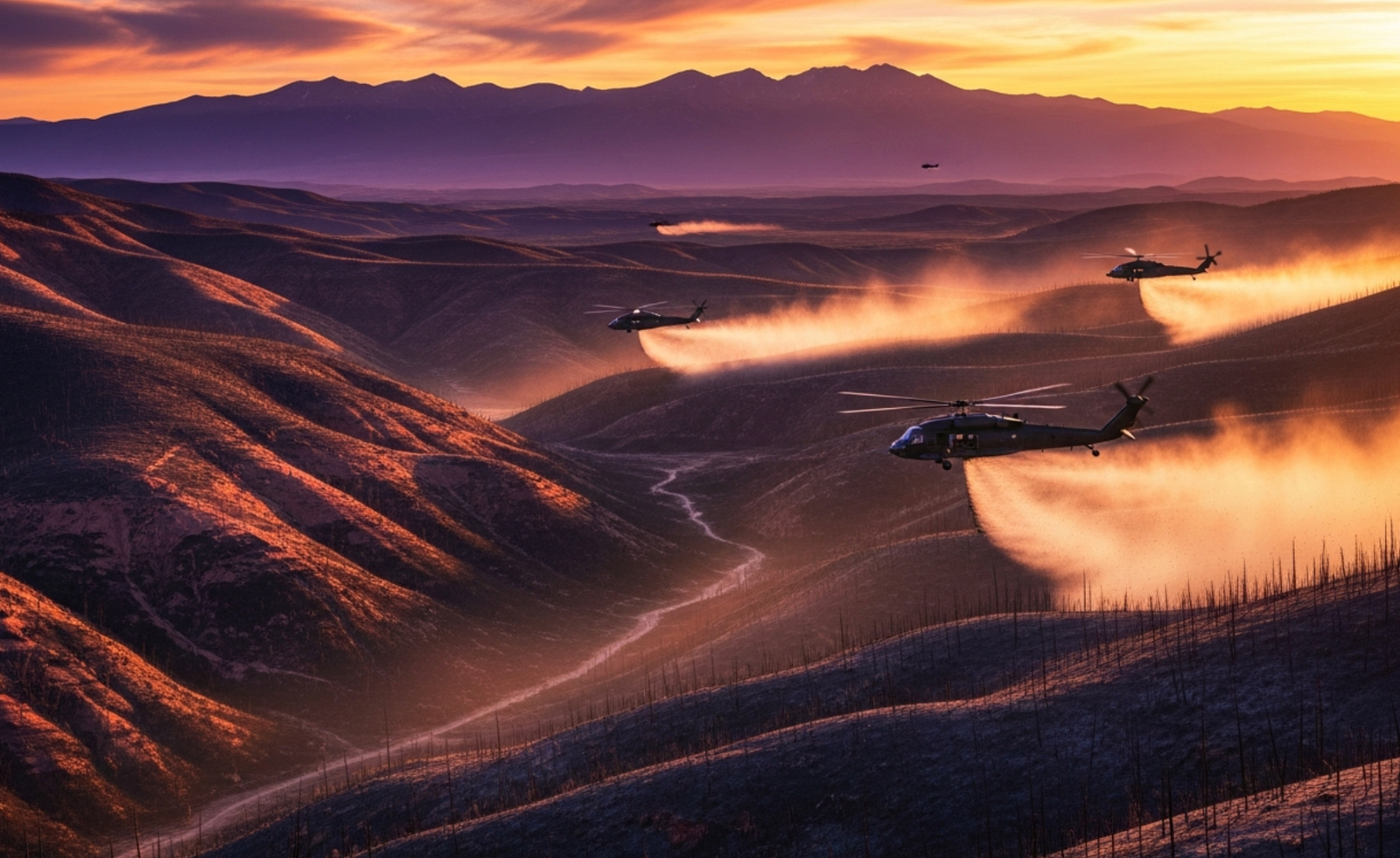
Biggest Aerial Seeding Operation in Years Set for Lee Fire Scar
Starting this month, helicopters will drop 300,000 pounds of seed across 24,000 acres of the Lee Fire burn scar in one of the largest aerial reseeding efforts Colorado has ever attempted.
Nearly 7,000 of those acres are designated critical winter range for mule deer. Another large chunk is prime habitat for Greater Sage-Grouse, a species already hanging on by a thread in western Colorado.
“If we don’t get native plants established fast, cheatgrass will own this landscape for the next 50 years,” said CPW habitat coordinator Tanya Banulis. “We’re throwing everything we have at it right now.”
The operation targets the worst-burned pinyon-juniper woodlands, where bare soil is now sliding into creeks and gullies every time it rains.
Private Landowners Get Major Help Through State Program
Colorado’s Habitat Partnership Program is stepping up big for ranchers and private landowners who lost fences, grass, and soil stability.
So far, the program has funded:
- Aerial seeding on 200 private acres
- Mechanical seeding on another 1,080 acres
- Thousands of dollars in native seed mixes tailored to each ranch’s elevation and soil type
Many landowners say without this help they would have been forced to sell or watch their places turn into weed fields.
Why This Recovery Matters to Every Coloradan
These aren’t just empty acres. This is winter range that feeds the deer and elk herds millions of us hunt and watch every year. It’s watershed that supplies water to the Colorado River. It’s soil that keeps dust out of the Grand Valley’s air.
One bad monsoon storm on these scars next summer could send mud and ash sliding into rivers for weeks.
CPW officials admit they can’t restore every single acre, but they’re putting burned land on the best possible trajectory. Early reports from treated sites show native bunchgrasses already winning the race against invasives in many places.
After a summer that saw Colorado’s fourth- and fifth-largest wildfires in recorded history, the state is proving it can fight back, hard and fast. The helicopters are already warming up. The seed is loaded. And for the first time since the fires finally died, there is real, tangible hope growing out there on the black.
What do you think, Colorado? Have you seen the burn scars healing yet? Drop your thoughts below and tag #ColoradoStrong2025 if you’re sharing photos of the recovery on X or Instagram. Let’s show the rest of the country how we come back.