
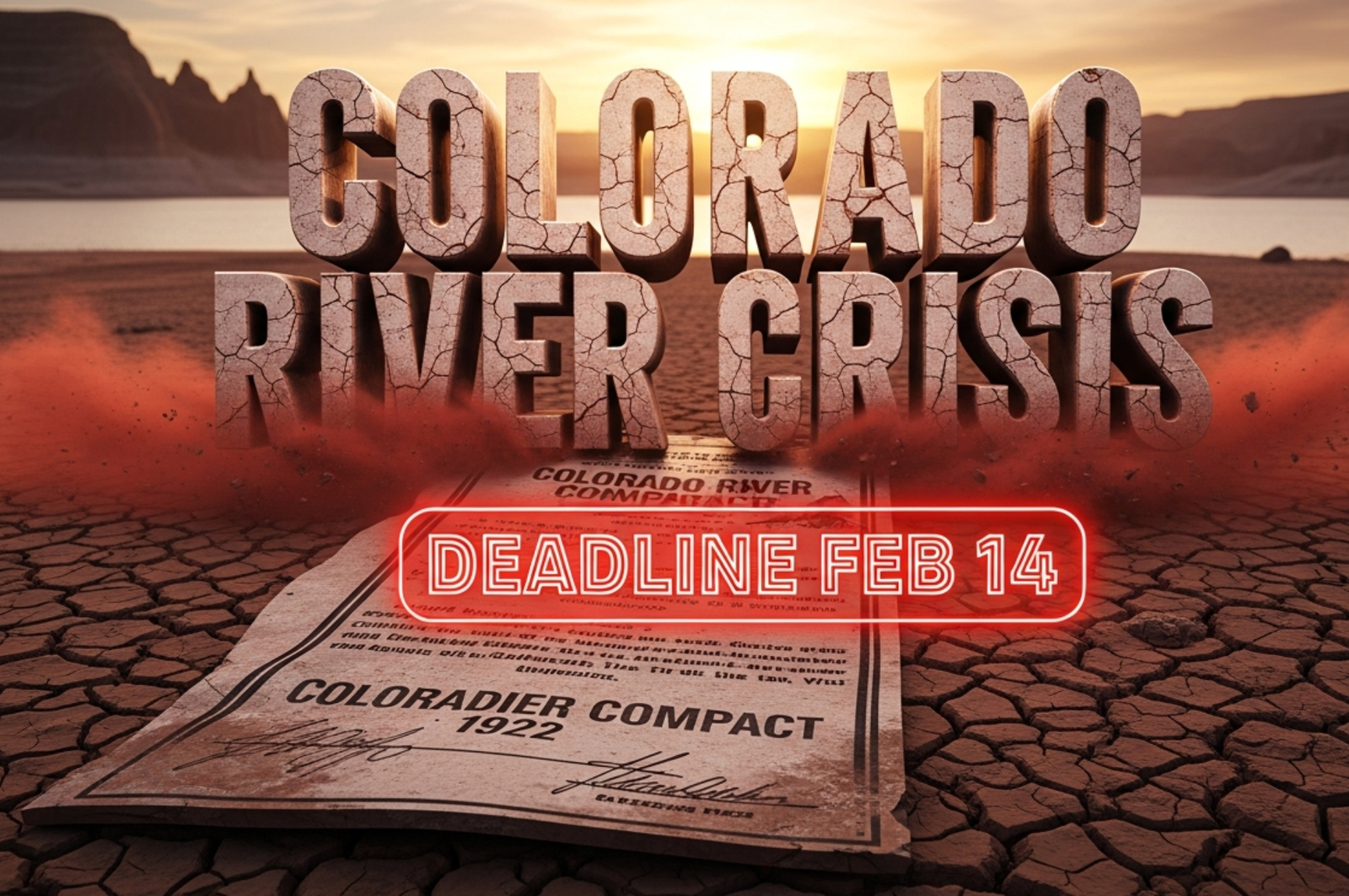
Water negotiations for the Colorado River reached a make-or-break moment Friday as governors from six states and a California representative met in Washington, D.C. If the seven basin states miss the February 14 deadline, the U.S. Bureau of Reclamation will impose its own rules on a river that supplies 40 million people.
The stakes could not be higher. Lakes Mead and Powell sit at historic lows. Farms, cities, and tribes all face cuts. And Colorado, the river’s largest source state, refuses to accept mandatory reductions without a fight.
Governors Race Against February 14 Cutoff
Colorado Governor Jared Polis joined leaders from Arizona, Nevada, New Mexico, Utah, Wyoming, and California’s top water official at the Capitol on Friday. North Dakota Governor Doug Burgum, tapped by President Trump as Interior Secretary, hosted the closed-door session.
Polis called the talks “productive” in his newsletter, thanking Burgum for pulling everyone together. Yet behind the polite words lies a simple truth: the seven states remain deadlocked after years of talks.
The Bureau of Reclamation has drawn a hard line. Reach consensus by February 14, or federal officials will write the post-2026 operating rules themselves. That outcome terrifies upper basin leaders who fear unilateral cuts could devastate Colorado’s Western Slope economy.
Why Colorado Refuses to Blink
The Colorado River starts in Colorado’s mountains. The state sends roughly 70 percent of its water downstream under the 1922 Compact. Yet Colorado uses only about half of its legal share because most of its big cities sit east of the Continental Divide.
Now lower basin states want upper basin states to take deeper cuts when reservoirs drop. Colorado says no.
“We can’t be afraid of the possibility that we need to defend our rights,” Colorado Attorney General Phil Weiser told the Colorado Water Congress last week. “And if it comes to that, Colorado is not going to be a sucker.”
That tough talk signals litigation is on the table if federal rules favor California, Arizona, and Nevada.
Two Competing Plans Still Divide the Basin
The seven states actually submitted two separate proposals last year:
Lower Basin (Arizona, California, Nevada): Cut deliveries based on Lake Mead levels, protect their own agriculture and cities first.
Upper Basin (Colorado, New Mexico, Utah, Wyoming): Share shortages based on actual water availability, not fixed percentages that ignore drought in headwater states.
Neither side has budged. Friday’s meeting produced no public breakthrough.
What Happens After February 14
If no deal emerges, the Bureau of Reclamation will draft its own guidelines and open them for public comment later this year. Environmental groups have already promised lawsuits whichever way the feds lean.
Real people will feel the pain fast. Las Vegas could lose 13 percent of its water. Arizona farmers already fallowed thousands of acres in 2024. Colorado ski towns and ranchers worry about future growth limits.
The river’s two giant reservoirs now hold just 27 percent of capacity. Lake Powell sits only 40 feet above the level needed to generate hydroelectric power for millions of homes.
Western leaders know the old system is broken. Climate change has slashed the river’s flow by an estimated 20 percent since 2000. Population keeps growing. Demand keeps rising.
Governor Polis left Washington sounding hopeful but realistic. “This moment requires seriousness,” he wrote. Translation: time is almost up.
The Colorado River has survived droughts before. But never with 40 million people depending on it. The next two weeks will decide whether western states control their own future or hand the keys to federal officials in Washington.
What do you think happens on February 15 if no deal is reached? Drop your take in the comments and tag #ColoradoRiverDeadline if you’re talking about it on social media.