Unique Craftsmanship Revealed Through Advanced Scientific Analysis
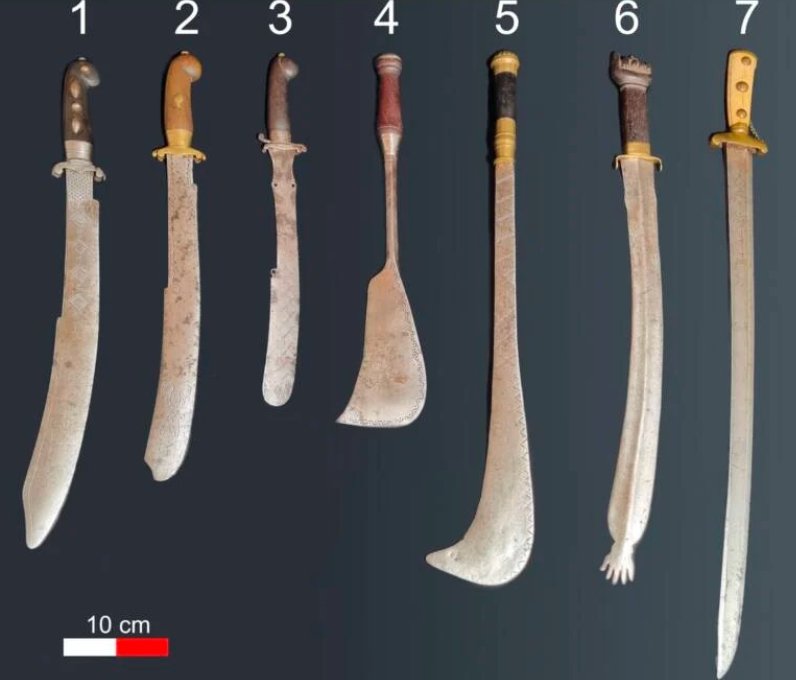
A new study has revealed that the intricately designed swords, known as hwi, used by the legendary Kingdom of Dahomey were crafted locally by skilled African smiths—debunking long-held beliefs that they were imported from Europe. Using advanced neutron tomography and other non-invasive techniques, scientists from the Australian Nuclear Science and Technology Organisation (ANSTO) uncovered the secrets behind these 19th-century weapons, showcasing an extraordinary blend of metallurgy and artistry unique to the region.
The Kingdom of Dahomey and Its Fearsome Female Warriors
The Kingdom of Dahomey, located in present-day southern Benin, thrived for about 300 years starting in the early 1600s. By the 18th and 19th centuries, Dahomey had become a powerful and influential kingdom with a heavily militarized society. The kingdom’s military included the renowned Mino, or Dahomey Amazons—an elite all-female regiment famed for their combat prowess and use of distinctive weaponry.
The hwi swords were not only tools of war but also objects of ritual and cultural significance, reflecting the rich craftsmanship of Dahomey’s metalworkers.
Unveiling the Sword-Making Process
The ANSTO team analyzed six hwi swords through neutron tomography, powder diffraction, and residual stress measurements. These cutting-edge methods allowed scientists to peer inside the swords without damaging them, revealing how they were made by blending multiple types of iron and folding them together into delicate, swirling patterns.
This process created blades of striking beauty and complexity—patterns never before documented in any other culture’s weaponry.
Dr. Floriana Salvemini, a specialist in historical metallurgy, highlighted the importance of the findings:
“The combination of neutron tomography images and neutron diffraction analyses provide a wealth of new insights into the manufacture of African swords. It sheds new light on African craftsmanship and technological sophistication.”
Challenging Old Assumptions About Metal Origins
Although the exact sources of the metals used remain uncertain, possible origins include the Bassar region (modern Togo), Sweden, the Ruhr Valley in Germany, or even Brazil. Regardless, the definitive proof that the swords were forged locally challenges the old narrative that Dahomey’s weapons were European imports.
This discovery restores recognition to West African smiths for their advanced metallurgical skills and contributions to their kingdom’s martial strength.
Broader Historical Context
The Dahomey Kingdom was heavily involved in the Atlantic slave trade, which shaped its economy and social structure. The kingdom traded enslaved people for firearms and other goods, strengthening its military power. The Mino female warriors were a symbol of this strength and sophistication, and their distinctive swords were both practical weapons and cultural icons.
By proving the hwi swords’ local manufacture, this research enriches our understanding of Dahomey’s independence, technological innovation, and artistic traditions in a global context.
Key Points Summary:
| Aspect | Details |
|---|---|
| Period | 19th century |
| Location | Kingdom of Dahomey (modern southern Benin) |
| Weapon Type | Hwi swords |
| Users | Dahomey Mino (female warriors) |
| Craftsmanship | Local forging using multiple irons folded into patterned blades |
| Scientific Methods | Neutron tomography, powder diffraction, residual stress measurement |
| Metal Origins | Possible sources include Togo, Sweden, Ruhr Valley, Brazil |
| Historical Significance | Disproves European import theory; highlights African metallurgical skill |