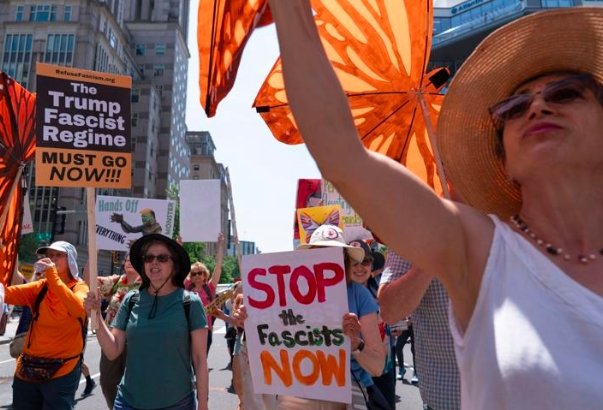
A loud, colorful, and defiant crowd filled downtown Grand Junction as hundreds marched in the city’s largest May Day demonstration in recent memory.
Tensions, chants, and handmade signs collided in a whirlwind of voices calling for labor justice, social equity, and political accountability. What started as a peaceful gathering at City Hall quickly transformed into a pulsing human wave of protest, surging through the heart of the city.
Protesters March for Rights, Wages, and a Say in the System
They came with signs. They came with drums. Some even came with kids in tow.
Protesters began the route along Rood Avenue, filtered down First Street, stormed up Main, and circled back to Fifth, shouting into the cool spring air. The causes were as varied as the people — workers’ rights, minimum wage, immigration, reproductive freedom, climate change. You name it, someone there was fighting for it.
“This isn’t about one issue. It’s a pressure cooker,” said Boz Bosworth, standing amid a sea of handmade placards. “Everyone here has a reason. And honestly, most of them have more than one.”
It didn’t feel like just another protest. It felt like the city had something to say.
Grand Junction Shows Up, Loud and United
The turnout? Big. Really big for a town like Grand Junction.
People shoulder to shoulder. Many wore red. Others waved union flags or carried banners from local nonprofits. A few elderly veterans walked slowly at the back of the line, while teens shouted slogans at the front with unfiltered energy.
Mike Dirsmith, who said he hasn’t been to a protest since the early 2000s, called it “the only thing that makes sense anymore.” He added, “Folks need somewhere to put their frustration. This is it.”
One woman, voice cracking from chanting, summed it up: “I’ve never seen this much Grand Junction in one place.”
Not Everyone Agreed, and That’s the Point
Two men showed up waving Trump flags. MAGA hats. Bold as ever.
They weren’t violent. Just present. And clearly unwelcome by some in the crowd.
“We had a few folks get angry, tried to yell them down or push them off the route,” said a protest organizer who asked not to be named. “But others stepped in and said, ‘Let them stay. We can handle disagreement.’ That’s part of what we’re asking for — real conversation.”
Becca Steinbrecher, holding a sign that read “Talk to Me, Not Over Me,” appreciated the tension. “It proves the point. We’re too polarized. But we have to be able to stand near each other and talk.”
One sentence. One spark of empathy.
May Day: A History That’s Still Writing Itself
May Day isn’t just a holiday for European countries or old-school Marxist rallies. In America, it still burns with meaning — especially for those in working-class jobs who feel like they’ve been left behind.
Here’s a quick breakdown of what May Day means and why it matters:
-
Origins: Sparked by U.S. labor strikes in the late 1800s, especially the 1886 Haymarket Affair in Chicago.
-
Focus: International Workers’ Day, demanding better wages, safe workplaces, and fair hours.
-
Modern Day: Protesters now expand the scope to include immigration reform, racial justice, climate action, and civil liberties.
Still relevant? Absolutely. Probably more than ever.
From Fear to Hope: Protesters Share What’s Driving Them
There was anger, sure. But underneath that, a fragile but powerful hope — that showing up might actually change something.
Bobbie Cleave, eyes welling up as she held her daughter’s hand, said she feared for their future. “We’re really worried about our democracy. About our rights disappearing while we scroll.”
She wasn’t alone. One sign read, “This is not normal.” Another: “Rights aren’t up for debate.”
But it wasn’t all doom and gloom. There was music. Dancing. Free snacks handed out by local co-ops. People laughed between chants. Someone passed out homemade cookies with “Union Strong” written in frosting.
One guy with a guitar sat on the courthouse steps and played Woody Guthrie’s “This Land Is Your Land.” Dozens sang along.
What’s Next? For Some, It’s More Than One Day a Year
It wasn’t just a parade. It was a signal. Many of the attendees said they were ready to stay active beyond the march.
Different groups tabled outside City Hall, offering sign-up sheets for community boards, local elections, and strike funds. The Grand Junction Mutual Aid network handed out pamphlets and water. A few teachers were collecting signatures for pay equity campaigns.
Here’s a look at some of the local demands being raised by organizers:
| Demand | Description |
|---|---|
| $20 Minimum Wage | Advocates say inflation has crushed low-income workers. |
| Rent Stabilization | Rent hikes have displaced dozens in the past year alone. |
| Climate Emergency Declaration | A push for stronger city-led environmental action. |
| Immigration Legal Aid | Expanded local support for undocumented workers and families. |
| Local Police Oversight Board | Calls for civilian review of misconduct and complaints. |
One woman in her sixties, standing quietly behind the crowd with a handmade sign reading “Still Marching,” said she’s been doing this since 1971. “You show up. You keep showing up. That’s how it starts.”
A Moment of Protest, a Flash of Possibility
The streets are quiet again now. The signs are packed away. But something lingered.
People who hadn’t seen each other in years stopped to talk. Strangers clapped shoulders. There was tension, no doubt. But there was also something else — like the first few notes of a song that might still be written.
Even if not everyone agreed on everything, they agreed that being silent wasn’t an option anymore.