
A little-known Italian engineer just turned 200 years of Egyptology upside down with a single unpublished paper.
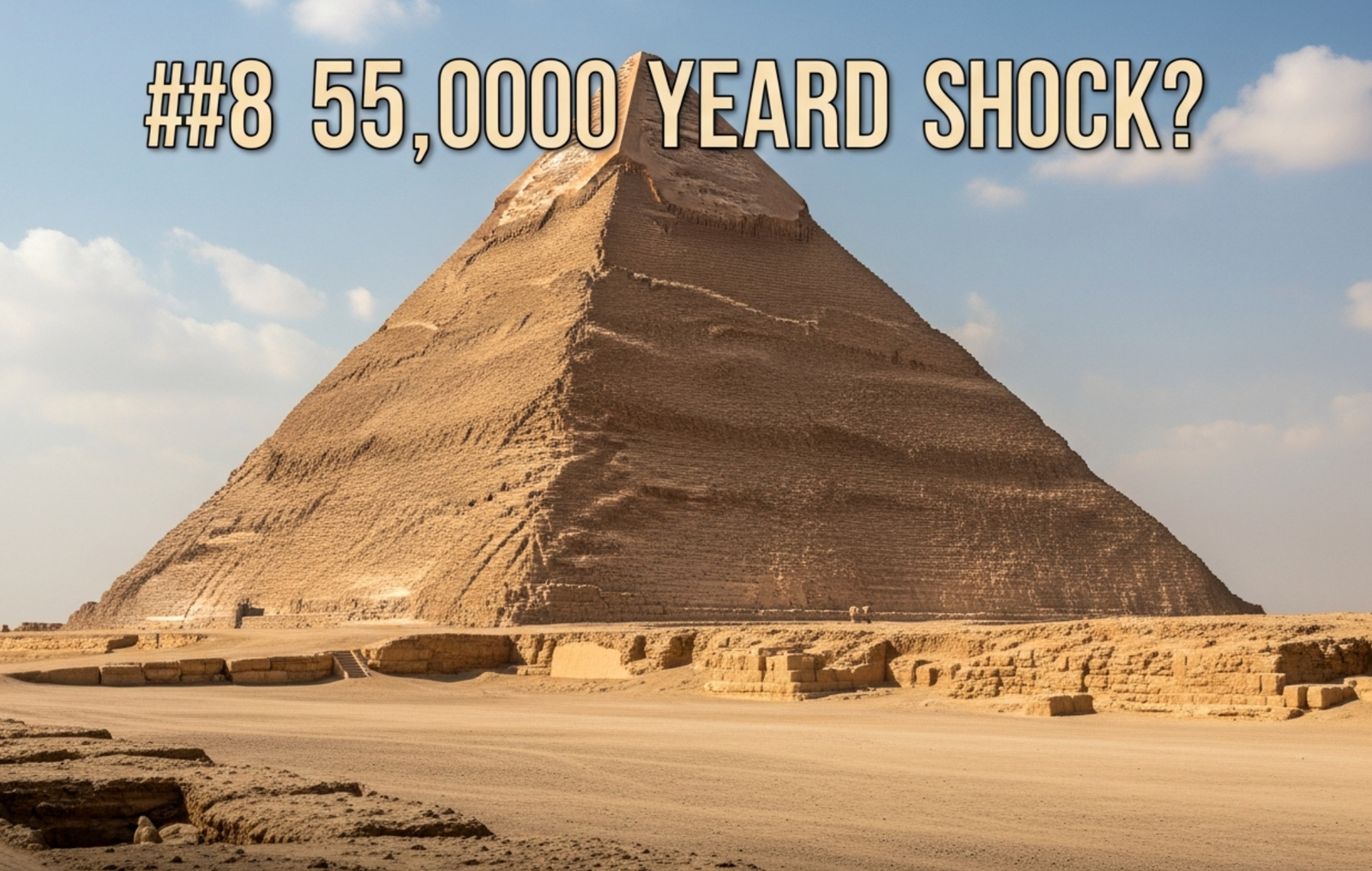
Alberto Donini says his new way of measuring stone erosion proves the Great Pyramid of Giza was built around 23,000 B.C. — roughly 20,000 years earlier than every textbook says. If he’s right, humans were stacking two-million-ton monuments before the end of the last Ice Age.
Who Is Alberto Donini and What Did He Actually Do?
Donini is a civil engineer from the University of Bologna, not an archaeologist. In late 2025 he quietly uploaded a 38-page preliminary report titled “Relative Erosion Method Applied to the Khufu Pyramid.”
He picked 12 spots at the pyramid’s base where the original core blocks are still exposed. Then he compared how much those blocks have worn down since 1303 (when an earthquake knocked off most of the smooth white casing stones) against the wear on blocks that were always protected by casing until modern times.
His math is simple in concept: measure erosion rates on the “newly” exposed casing zone for the last 720 years, then extrapolate backward to see how long it would take the always-exposed base blocks to reach their current level of damage.
The answer he got: about 25,000 years.
Donini’s own conclusion is blunt: “Around 20,000 years before Christ there existed a civilization in Egypt capable of constructing at least the Khufu Pyramid.”
Why This Makes Mainstream Experts Want to Scream
Every single dating method used in the last century points to 2580–2560 B.C.
- Workers’ graffiti inside the relieving chambers mentions Khufu by name
- Radiocarbon dates on charcoal in the mortar cluster tightly around 2600–2480 B.C.
- The pyramid aligns with Khufu’s two other known construction projects (a small temple at Giza and quarries at Tura dated to his reign)
- Inventory stelae from his daughter’s tomb reference the pyramid as already standing
In other words, the evidence is not thin. It is mountainous.
So when someone claims the same building is 20,000 years older, the burden of proof is enormous.
The Big Problems With Erosion Dating
Erosion is not a clock. It is a drunk driver.
Rates change wildly depending on:
- Rainfall (North Africa was much wetter 10,000–15,000 years ago)
- Temperature swings (freeze-thaw cracking was stronger during the Ice Age)
- Wind-blown sand intensity (varies with vegetation cover)
- Pollution (modern acid rain eats limestone faster than ancient rain)
- Tourist feet (millions of people climbing and touching since 1850)
Donini tries to correct for some of these variables, but he admits in his own paper that increased foot traffic and pollution since the Industrial Revolution would make his age estimate too young, while heavier ancient rainfall would make it too old.
In short, he is using a method that even he says contains huge error bars to overturn a date backed by direct historical evidence.
Has Anyone Else Ever Claimed an Ice-Age Pyramid?
Yes, but never with this specific method.
Geologist Robert Schoch famously argued water erosion on the Sphinx enclosure means it dates to 7000–5000 B.C. or earlier. John Anthony West and Graham Hancock have pushed similar “lost civilization” ideas for decades.
What is different here is Donini is claiming the pyramid itself — not just the Sphinx — is pre-Ice Age, and he is doing it with measurements instead of speculation.
Where Things Stand Right Now
As of February 2026, Donini’s paper has zero peer reviews. No major journal has accepted it. No Egyptologist has endorsed it.
A spokesperson for the Ministry of Tourism and Antiquities told Italian media: “The age of the pyramids is not in question. Claims otherwise are not supported by scientific evidence.”
Zahi Hawass, never one to hold back, called the study “fantasy” and said erosion cannot be used for precise dating.
Yet the paper is spreading like wildfire online. Reddit threads, TikTok videos, and X posts are racking up millions of views with headlines screaming “Pyramids Built Before Humans Existed?”
What Happens If He’s Even Partly Right?
Almost nothing in human history survives.
A civilization able to move 2.3 million blocks averaging 2.5 tons each — some weighing 80 tons — in 23,000 B.C. would mean everything we think we know about the development of technology, writing, and society is wrong.
It would not just push back the timeline. It would shatter it.
That is why the stakes are so high, and why most experts are dismissing the claim out of hand until someone replicates the measurements under controlled, peer-reviewed conditions.
For now, the Great Pyramid still officially belongs to Khufu, built around 2570 B.C.
But one Italian engineer with a measuring tape and a calculator just made millions of people wonder: what if the history books are off by 20,000 years?
What do you think — solid science or wild speculation? Drop your take in the comments.