
LIFESTYLE
How to Clean Raw Diamonds: Loose Crystals and Set Rings
How to clean raw diamonds with mild dish soap and lukewarm water. The haze is grease on an uncut face, and loose stones, rock, and rings need different care.

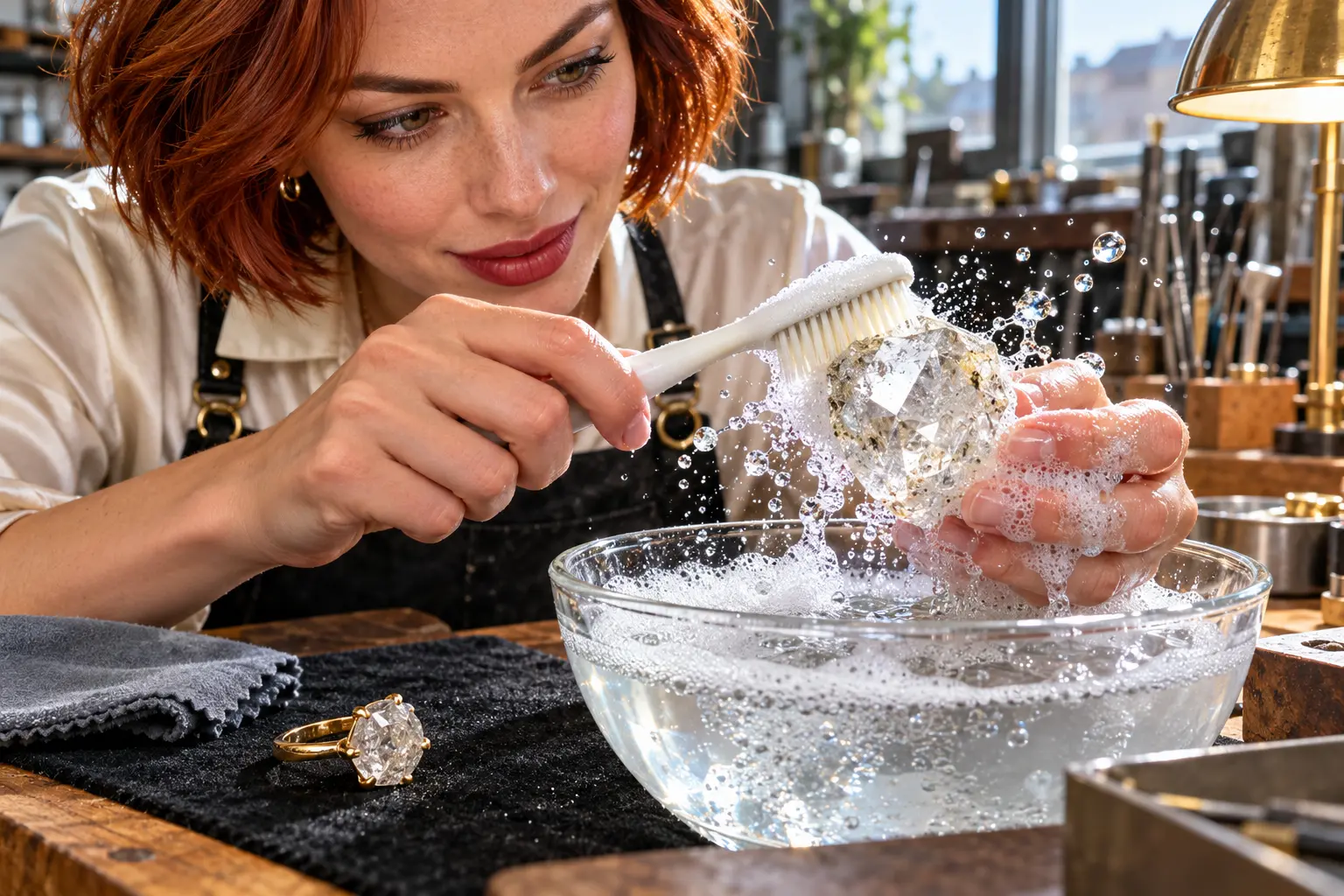
You picked up a raw diamond and the surface looks milky, as if the shine had sunk into the stone. How to clean raw diamonds starts with lukewarm water, a few drops of mild dish soap, a soft brush, a full rinse, and a lint-free cloth. The haze is usually grease sitting on an uncut crystal.
This clean lifts oil and dirt, and it leaves the natural faces as they grew. A loose crystal, a crystal still stuck in rock, and a raw diamond set in a ring do not take the same soak. You can sort the piece you actually hold, then see which cleaners and knocks put the stone or the setting at risk.
What Is a Raw Diamond?
A raw diamond is a diamond crystal that has not been cut and polished into facets. The flat areas you see grew that way underground. Many stones are partly clear, partly frosted, or lightly tinted, with pits, ridges, and a skin that looks oily even when the crystal is dry. That surface is the diamond, not a polish someone skipped.
A cut diamond is the same mineral after a cutter grinds facets so light bounces back toward your eye. A raw stone can flash on one flat face and still look quiet beside a round brilliant. Longer scrubbing will not add those facets. If a seller used a trade name instead of the word diamond, have a jeweler name the stone before it goes into any cleaner.
Workshops that set rough diamonds rate the mineral 10 on the Mohs scale, so another diamond is what scratches it, and they still call the stone extremely fragile. A hard blow can chip it along a cleavage plane, the direction where the crystal splits. Two diamonds knocked together in a box can mark each other. The Mohs number only tells you what can scratch the face, so the wash stays gentle on a crystal that chips when it is hit.
Why Does a Raw Diamond Look Cloudy?
Diamonds are pure carbon, and oil clings to that surface. In a January 9, 2023 note, GIA Education says oil and grease stick to diamonds very easily, because they are attracted to surfaces that do not contain oxygen, and fingers on the stone are enough to change how it looks. On a ring, hold the band, not the crystal.
Mines sort rough with that same habit. Diamonds shed water and stick to grease, so they adhere to a greased surface while the rest of the gravel moves on, which is the job of grease-belt recovery described in mining research. A gemology dictionary still describes the grease table used in diamond sorting, a sloping belt that holds the diamonds while wet rock washes away.
On a raw diamond the film settles in pits and along the natural skin. Hand cream, perfume, ordinary soap scum, and skin oil all leave that cloud. A few drops of mild dish soap break the grease. Toothpaste, baking soda, and other gritty pastes do not uncover a hidden polish, because the uncut faces are already the surface this stone is meant to keep.
You can check which haze you have before you buy a second product. Note one face in daylight, run the soap wash once, and look again when the crystal is dry. If the milkiness fades, it was film. If the frost looks the same, that is the natural skin, and more pressure will not turn it into a brilliant cut.
Raw Diamonds Loose, Set, or in Rock
Match the clean to the object in front of you. The crystal can take a short wash. The thing it is attached to is what usually sets the limit.
| What you are holding | What you are protecting | Home clean |
|---|---|---|
| Loose raw crystal | Natural faces and any small chips | Soap soak, soft brush, air dry |
| Crystal still in rock | The join between crystal and host rock | Dry brush first, water only on the crystal |
| Raw diamond in solid metal, alone | Prongs or bezel, and the pits at the join | Soap soak and a soft brush under the setting |
| Raw diamond with pearls, opals, wood, resin, or glue | The softer material next to the stone | Damp cloth on the diamond only |
Use the row that matches, then follow only that path below. A soak that is fine for a loose crystal is too much for a pearl sitting beside it. A wash that is fine for a gold bezel is the wrong way to treat a crystal cemented into soft rock.
How to Clean Raw Diamonds at Home
Work away from an open drain. A bowl on a folded towel keeps a stone from sliding into the sink, the loss that matters as much as the film you are trying to lift. If the sink is the only place you can work, close the drain and lay down a rubber mat so a drop does not chip the crystal.
Clean a Loose Raw Diamond
A loose crystal is the plain case: nothing but diamond, no metal, and no neighbor gem sharing the bowl. Give the stone its own space so it does not tap the glass hard when you swirl the water.
- Fill a glass or ceramic bowl with lukewarm water and a few drops of mild dish soap that has no bleach and no added lotion.
- Let the crystal sit for 10 to 20 minutes so the soap can loosen grease in the pits.
- Brush with a new, soft toothbrush that you keep for this job, using light strokes along the faces and into crevices.
- Move the crystal to a second bowl of clean lukewarm water and rinse until it no longer feels slick.
- Set it on a lint-free cloth and let it air dry. Skip paper towels, which leave fibers in the pits.
If a gray film remains after drying, rinse again before you decide the dirt is still there. Soap itself leaves a haze when the rinse is short. Because the crystal sheds water, the faces can look dry while a pit still holds soap, so give it time on the cloth. If true dirt remains, repeat the soak instead of pressing harder. If your tap water spots the faces, a last splash of distilled water is the rinse mineral collectors use on a specimen. Skip window cleaner on a loose crystal. There is no setting for it to deep-clean, and the soap already does the grease work.
Clean a Raw Diamond Still in Rock
KEEP THE HOST ROCK INTACT
- Dry dust: Hold the piece over a tray and sweep loose dirt with a soft paintbrush so a knocked-off grain is caught.
- Crystal only: Wipe the diamond faces with a cloth dampened in mild soapy water, then wipe again with clean water.
- No prying: Leave host rock where it is, because a knife or dental pick can chip the crystal or snap it off its base.
- No home acid: Trade shops use stronger baths on mined rough, and those baths do not belong in a kitchen.
Stones locked in kimberlite or lamproite carry more stuck debris than many alluvial crystals, and workshops treat that debris as a heavier job than a water rinse. Your job at home is to take off loose dust and surface oil without separating the crystal from the rock. If clay is packed into a crack, a wooden toothpick can lift it while the piece is still dry. Stop when the tool meets the crystal. Some parcel shops rinse loose rough with water and then alcohol, and some photos show that alcohol burned off to dry a batch. Do not copy the flame. One specimen dries on a cloth.
Clean a Raw Diamond Ring
A raw diamond in a ring collects film where the crystal meets the metal, in the same places a cut stone hides oil on its back. The soak matches the loose crystal: lukewarm water, a few drops of mild fragrance-free dish soap, and the same 10 to 20 minutes. The extras are all about the setting. The same bowl works for a raw-diamond pendant or a pair of studs.
Before the brush touches metal, look at the prongs or the bezel in bright light. If the crystal rocks or a claw looks thin, do not scrub. A jeweler should tighten it first. Diamonds work loose when a setting is already tired, and a toothbrush will not close that gap. Brush with an extra-soft toothbrush, spending the time in the gap under the crystal and around the base. Rinse over the bowl, or in a mesh strainer, until no soap remains. Pat dry with a lint-free cloth rather than a bath towel, which can catch a prong in a loop of thread. Pieces with many small stones need a patient rinse, because soap trapped between them dries as a new haze.
Say the ring looks dull by the end of a workweek. Fill the bowl, add the soap, and leave the ring for the full soak while you stay in the kitchen. The soak is what loosens the grease. The brush only moves what the soap has already lifted. Put the ring on last, after lotion, perfume, hairspray, and sunscreen have dried, and take it off first when you come home. Those products are what cloud a rough surface between washes. Take it off for gardening, for housework with strong cleaners, and for a pool or hot tub.
Cleaners That Harm a Raw Diamond
The stone is hard. The metal, the glue, and the rock around it are not. That split is why a cleaner can leave a loose crystal unharmed and still ruin a ring.
| Cleaner or tool | Where it goes wrong |
|---|---|
| Chlorine bleach, pool water, hot tub water | Can eat into setting metals until prongs loosen or the metal fails |
| Toothpaste and scouring powder | Grit that wears metal, banned on diamond jewelry |
| Baking soda and lemon | Abrasive to the setting, useless as a facet-maker |
| Window cleaner left overnight | A jewelry soak, not a bath for loose crystals or stones in rock |
| Home ultrasonic or steam | A bench tool, after someone has checked that the stone is tight |
Household bleach and chlorine belong nowhere near the piece. Abrasive household powder and toothpaste sit on the same ban in GIA’s guide to cleaning diamond jewelry, because they can erode the metals used in settings and may loosen prongs or dissolve the metal. Baking soda and lemon show up online as a shine trick. A jeweler who sets rough diamonds treats both as abrasive to the metal, while the diamond itself is not the part they are warning about. You still do not need them. Soap is the degreaser.
That same GIA jewelry guide, published May 23, 2012, describes a different rhythm for ordinary diamond jewelry: an overnight soak in an ammonia household cleaner such as window cleaner, once a week, then a soft toothbrush kept only for the diamond, with extra attention where oil collects. That plan assumes a diamond already in a setting. Use it only if your raw diamond sits alone in solid metal, with no porous gem, enamel, or glue in the bowl, and rinse until no cleaner smell remains. Do not leave a loose crystal, or a crystal in rock, in window cleaner overnight. Bottle formulas also differ from a plain ammonia mix, so the soap method is the one to repeat.
Ultrasonic machines and steam are jeweler tools. An ultrasonic cleaner sends high-frequency sound waves through a liquid. A steam cleaner uses high-pressure steam. Both can reach film a brush misses. A workshop that sets rough diamonds keeps ultrasonic cleaning with the professional, because careless use can damage the diamond or the piece for good. A home machine is a poor match for a thin bezel, a stone that already shifts, or a mount of wood, resin, or leather. A rock tumbler is a grinder, not a wash. Keep a crystal you want left raw out of a tumbler and off a polishing wheel.
Safe Storage for a Raw Diamond
After the cloth is dry, the crystal needs its own spot. Keep it in a soft pouch or a padded slot, not loose in a dish with other diamonds. Diamond is what scratches diamond, and a raw edge will also mark gold and softer gems beside it. A ring can live in a fabric-lined box compartment of its own.
Skip the open bathroom shelf, where hairspray and steam settle back onto the stone you just washed. For travel, the pouch goes inside a hard case so a bump in a bag does not land on a cleavage plane. If you will not wear the ring for a while, a quick look at the claws before you put it away tells you whether the next trip is to the sink or to the bench.
When Should a Jeweler Clean a Raw Diamond?
Home soap is for film. It is not for a stone that shifts, a cracked mounting, or debris you cannot reach without force. A deeper clean belongs with a trained jeweler, which is where GIA’s guide to cleaning diamond jewelry sends you, for steam or an ultrasonic bath after the piece has been looked at.
Book that visit if dirt remains after two gentle soaks, if the setting is old or very fine, or if you inherited the ring and have never had the claws checked. Say that the center is raw, not brilliant-cut, so the bench does not treat natural pits as grime to grind out. A specimen still in rock goes to a mineral dealer or a cutter you trust, not through a jewelry ultrasonic beside a tray of rings.
Ask what the clean will touch. You want oil and dirt gone, and you want the natural skin, the crystal edges, and any host rock left as they are. Polishing a raw diamond into facets is a cutting job, with a different price and a different stone at the end. A wash does not include that step.
Frequently Asked Questions
Can You Clean a Raw Diamond With Vinegar?
Vinegar is the wrong liquid for this job. Mild dish soap is what cuts the grease film, and the rough-diamond washes stay with soapy water. Vinegar is a mild acid, the sort of liquid mineral guides use on carbonate crusts, and it can etch host rock if your crystal is still attached. Keep it out of the bowl.
What If a Raw Diamond Has a Coating?
Ask whether the stone was coated before you reach for ammonia. GIA’s note on coated diamond jewelry allows a mild ammonia solution on most diamond jewelry unless the diamond carries a non-permanent coating. You will not see that coating by eye. If a report or a jeweler mentioned one, stay with the mild soap rinse and let the shop do anything stronger.
Can You Wash Several Raw Diamonds Together?
Yes, if they are all loose crystals and you set them so they do not knock together. Diamond scratches diamond, so give each crystal room in the bowl. Do not drop a raw diamond into water that already holds a softer gem or a piece with glue. Wash set rings one at a time so a loose prong cannot take a neighbor stone with it.
Can You Use Rubbing Alcohol on a Loose Raw Diamond?
Parcel cleaners sometimes follow a water rinse with alcohol. For one crystal at home, a clean water rinse and time on a lint-free cloth are enough. Do not pour alcohol over the stone and light it to speed the drying. That shortcut shows up in workshop batches, and it is a fire risk on a kitchen counter.
Is Boiling Water Safe for a Raw Diamond?
No. The home methods here all use lukewarm water. Boiling does not cut grease better than a soap soak, and it adds heat those washes never call for. Heat the water until it feels warm on your wrist, then stop.
Look at the piece in daylight when it is fully dry. Clear faces that still show the pits and frost you started with mean the grease is gone. A stone that shifts in the setting, or a fresh chip along an edge, is a jeweler visit, not another pass with the brush.

Final Fantasy Resonance Turns a Dead Gacha Into HD-2D

PHP2Shell Forced Sites Offline While Exploits Stalled

Kindle+ Folds AI Audiobooks Into the Page-Read Fund

Chip Stocks Fall as the Bond Rally Cheapens AI Spend

Comcast’s Record Odyssey Quarter Doubles as the Exit

Microsoft 365 Auth Fault Took Down Exchange and Teams

Xbox Caps Game Pass Cloud Gaming at 15 Hours

OpenClaw 2.0 Ships a Team Workplace With Host-Trust Defaults

OpenAI Unveils GPT-6 Astra With a Critical Cyber Label

Squishy Dumpling Toys Recalled After Hiding Illegal Water Beads
-
 NEWS2 months ago
Microsoft 365 Auth Fault Took Down Exchange and Teams
-
 GAMING2 months ago
Xbox Caps Game Pass Cloud Gaming at 15 Hours
-
 NEWS2 months ago
OpenAI Unveils GPT-6 Astra With a Critical Cyber Label
-
 NEWS2 months ago
OpenClaw 2.0 Ships a Team Workplace With Host-Trust Defaults
-
 LIFESTYLE2 months ago
Squishy Dumpling Toys Recalled After Hiding Illegal Water Beads
-

 BUSINESS2 months ago
Diesel Breaks Its Record as the White House Claims Credit
-

 BUSINESS2 months ago
ChargePoint Stock Rally Prices Wilmer’s Three-Year Cash Plan
-

 NEWS2 months ago
IFA 2026’s Weird Gadgets Are Building a Sensor Home