A slice of medieval history just resurfaced in the unlikeliest of places: under an old ice cream parlor in the heart of Gdańsk, Poland. Archaeologists working the city’s most precious dig site have uncovered a limestone tombstone depicting a medieval knight, believed to date back to the 14th century — and possibly even earlier.
It’s the latest treasure from an excavation that’s been rewriting the story of Gdańsk’s medieval past one stone at a time.
A Rare Find Hidden in Plain Sight
The discovery was made at Śródmieście I — widely considered Gdańsk’s archaeological crown jewel. Excavations there have been ongoing since 2023. But according to ArcheoScan’s lead archaeologist, Sylwia Kurzyńska, this knight’s tombstone stands out from hundreds of earlier finds.
In just one sentence: It’s not every day you stumble on a knight buried beneath your favorite gelato stop.
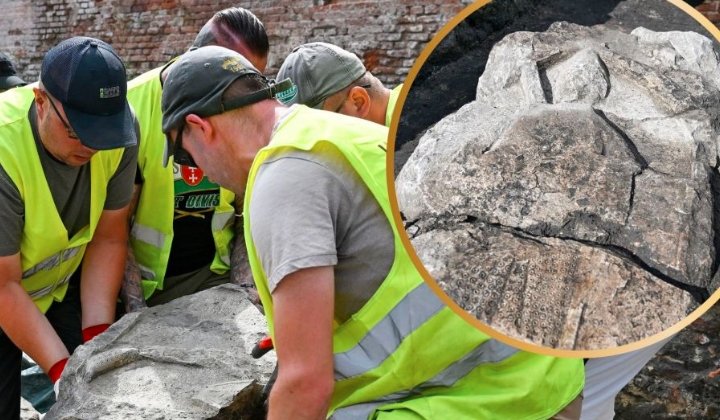
Roughly five feet long, the limestone slab features a knight in chainmail boots, sword in hand, standing tall beneath arched frames. These details hint the marker could be from the late 13th or early 14th century.
Chainmail, Swords, and a Glimpse of Medieval Power
What makes this find so remarkable isn’t just its age — it’s the story carved into the stone. The level of detail suggests the buried figure was no ordinary soldier.
“Considering the value of the chainmail armor, the sword, and the depiction of the knight’s posture — standing erect with his sword raised — he was likely a commander or ruler,” Kurzyńska told Science in Poland.
One sentence: This was someone who commanded respect — and probably armies too.
The team hasn’t yet removed the slab from the ground, but they’re hopeful the knight’s remains lie preserved beneath it.
A Tombstone Teetering on the Edge
While the excitement is palpable, the team’s racing against time — the limestone is delicate, and sharp edges are already flaking.
Kurzyńska didn’t mince words: “What we are unearthing here is madness.”
Archeologists plan to lift the slab this week. If they’re lucky, the grave will reveal more clues about who this medieval warrior was and how he fit into the power structure of Gdańsk’s turbulent past.
Dig Site Reveals Layers of History
This knight’s gravestone isn’t the only treasure to surface at Śródmieście I. So far, the dig has yielded:
• 250 burials — a silent testament to centuries of life and death
• 6 gravestones, each with its own story
• Foundations of a wooden church from 1140
In the same area, the team recently found a sandstone tombstone, another echo from a medieval past that still clings to the city’s cobbled streets.
The Castle That Once Was
To understand the significance, you have to picture Gdańsk back in the 14th century — then called Danzig — a fortress city bustling with Teutonic Knights, a German religious and military order born from the Crusades.
Between 1335 and 1341, the Knights built a sturdy brick castle right where today’s excavation is underway. It stood watch over the city until 1454, when locals tore it down during an uprising.
This “castle” is what gave the Śródmieście I site its nickname. Digging here is like peeling back the city’s layers — each artifact adding a line to the story of knights, crusaders, and common folk.
What Happens Next?
If the burial remains intact beneath the knight’s marker, experts believe it will offer a rare window into medieval life — from battle scars to burial customs.
Kurzyńska’s team hopes to conserve the tombstone before further weathering chips away more history. Once preserved, the stone will find a new home at the Archaeological Museum in Gdańsk, where it can be studied up close.
Locals and visitors alike may soon stand face-to-face with the stone silhouette of a knight who once rode through Gdańsk’s bustling streets, sword raised high.
One short line: Some secrets stay buried for centuries — until they don’t.