
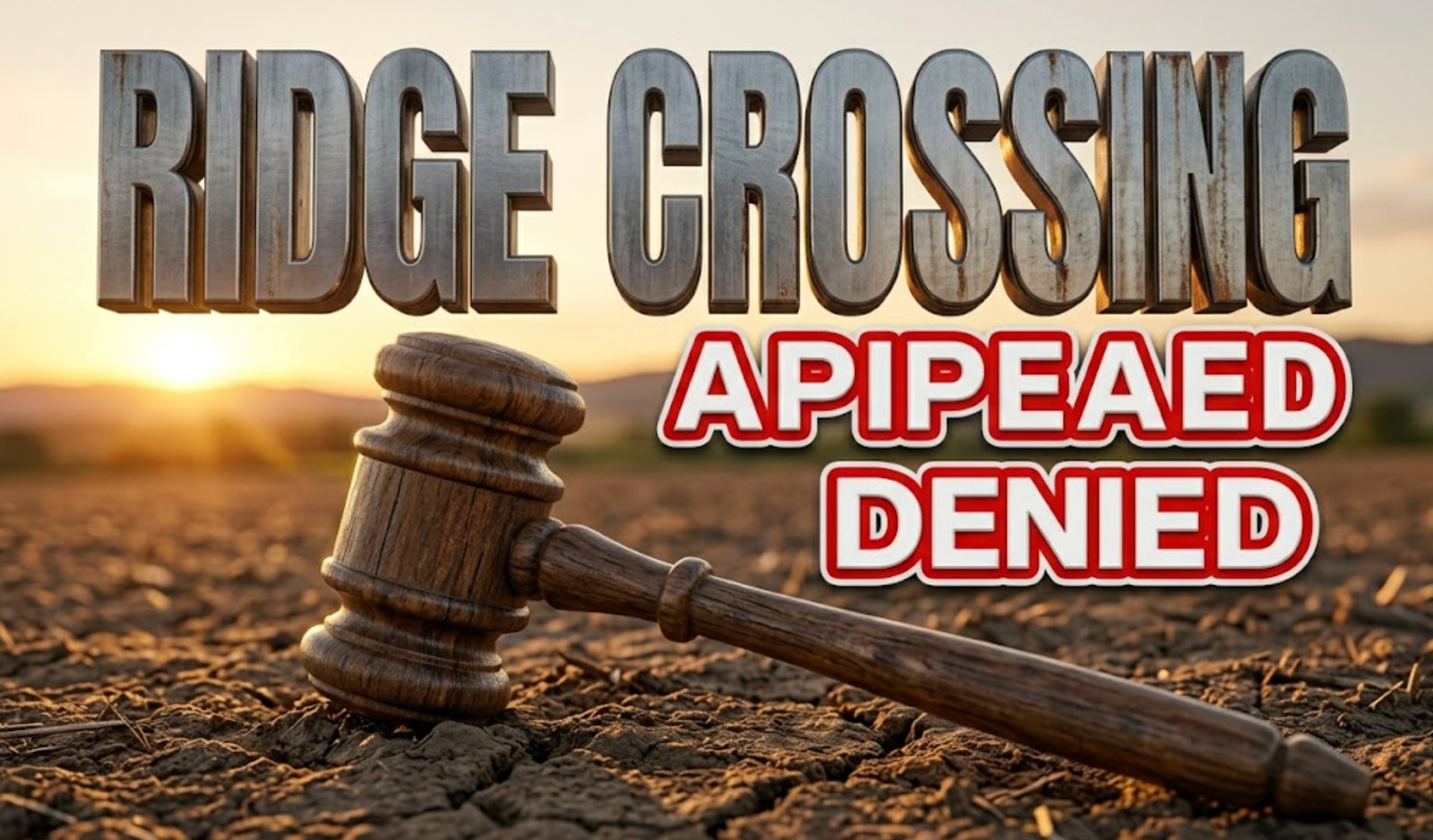
Mesa County commissioners have officially denied an appeal to stop the Ridge Crossing subdivision in Fruita. The unanimous decision on March 31 clears the path for new housing on 19 Road. But local farmers worry this growth threatens their agricultural way of life. This ruling highlights a growing battle between rapid housing development and rural preservation in Western Colorado.
The Clash Over Rural Development
The Ridge Crossing development project has sparked heavy debate across Fruita. The plan involves splitting a massive 230 acre parcel of land into multiple sections for different uses. The original project proposal was submitted in June of last year and gained official approval in January.
Shortly after the approval, a formal appeal was filed by Samantha DeCosta. She is a dedicated Fruita farmer and a resident living on 19 Road. DeCosta raised several valid concerns regarding public safety and local infrastructure.
She strongly questioned if the county had properly evaluated the infrastructure surrounding the new development area. Her main argument focused on a severe disconnect between the county master plan and the actual land development code.
DeCosta believes the current land development code is simply not restrictive enough. She feels this legal loophole is creating an unsustainable level of rapid growth. This growth is slowly consuming the rural parts of Mesa County.
Here is an infographic style look at the Ridge Crossing project details:
PROJECT SNAPSHOT: RIDGE CROSSING
- Total Land Area: 230 sprawling acres
- Housing Zone: 24 custom residential lots
- Ranching Zone: 167 acres reserved for a potential ranch
- Conservation Space: 7 acres dedicated to wildlife and water drainage
Bridge Safety and Infrastructure Fears
A major focal point of the recent hearing was an old bridge located directly adjacent to the new subdivision. Residents claim this specific bridge on 19 Road has desperately needed serious repairs for over a decade. 19 Road is a dead end street, which makes traffic flow extremely limited.
DeCosta warned that bringing heavy construction vehicles and new residents to this dead end road is dangerous. She stated it could put entirely too much strain on the aging bridge. Her family has already experienced severe property issues due to this exact structure.
DeCosta explained that the bridge currently acts as a severe constriction point for water. This bottleneck effect is causing active flooding around the neighboring farm areas. However, the actual property owner of the new development sees things very differently.
Property owner Wylie Miller stated he has not noticed any major structural issues with the bridge. He does not anticipate the road failing or collapsing anytime soon. Miller believes that if the county was truly concerned, they would have replaced the bridge years ago.
[PULL QUOTE] “With development, that bridge is going to rise to the level of importance.” – Commissioner Cody Davis
Mesa County Public Works officials also weighed in on the safety debate. Public Works Director Scott Mai confirmed the bridge is currently in fair condition. He noted it does not have any significant structural issues that require immediate emergency closure.
Mai even admitted that the bridge is in such decent shape that it would not qualify for repair grants. Despite this, the bridge is officially listed on the capital improvement schedule for Mesa County. Commissioners promised they will closely monitor traffic when the subdivision breaks ground.
Navigating Complex Land Use Laws
The board of commissioners faced a tough legal reality during the appeal hearing. Their primary job was to find a specific legal error in how the county staff applied the land development code. They reviewed the documents but simply could not identify any mistakes made by the planning division.
Commissioner Cody Davis explained the strict standard by which they must judge these appeals. He openly stated that he did not see where the county staff made any personal or legal errors. Their hands were tied by the existing laws written in the county books.
[CALL OUT BOX]
Understanding Local Property Laws
Master Plan: A guiding vision document that suggests how a county should ideally grow over time.
Land Use Code: The strict, legally binding rules that actually dictate what developers are allowed to build.
The planning division clarified that the master plan is merely a helpful guide. It does not have the legal power to stop a housing project. Only the specific land development code has the authority to regulate new construction.
Because the developers followed the current land development code perfectly, the county had no legal right to block them. This legal reality is frustrating for many longtime residents who feel the laws favor outside developers.
Protecting A Rich Farming Legacy
This controversial hearing arrives right as the busy agricultural season begins in the valley. Local farming families base their entire annual income on these essential spring and summer months. DeCosta hopes that large residential developments do not ultimately destroy their traditional way of life.
Fruita owes its strong community spirit and beautiful landscape to this rich agricultural heritage. DeCosta passionately pleaded that if the town does not start preserving this heritage, it will be lost forever.
Below is a table breaking down the different viewpoints on this community issue:
| Stakeholder Group | Primary Goal | Biggest Concern |
|---|---|---|
| Local Farmers | Preserving farm land | Traffic safety and property flooding |
| Developers | Building new homes | Passing county code inspections |
| County Officials | Following the law | Balancing growth with old infrastructure |
Thankfully, local residents still have a chance to shape the future of their town. The current Mesa County land use code is currently under official revision. The county has opened this revision process to public comment so citizens can share their thoughts.
DeCosta plans to keep having serious conversations with county leaders about the 19 Road bridge. She wants to ensure the area remains completely safe for both existing farmers and new residents. Currently, there is no official timeline for when the Ridge Crossing subdivision will actually break ground.
The dirt roads and open fields of Fruita tell a story of hard work and deep roots. As tractors fire up for another busy farming season, the community faces a tough reality. Progress often comes at the heavy cost of rural tradition. We want to hear your thoughts on balancing new housing with farming preservation. Please share your opinions in the comments below and join the ongoing conversation online using the hashtag #FruitaFarms to show your support for local agriculture.