
NEWS
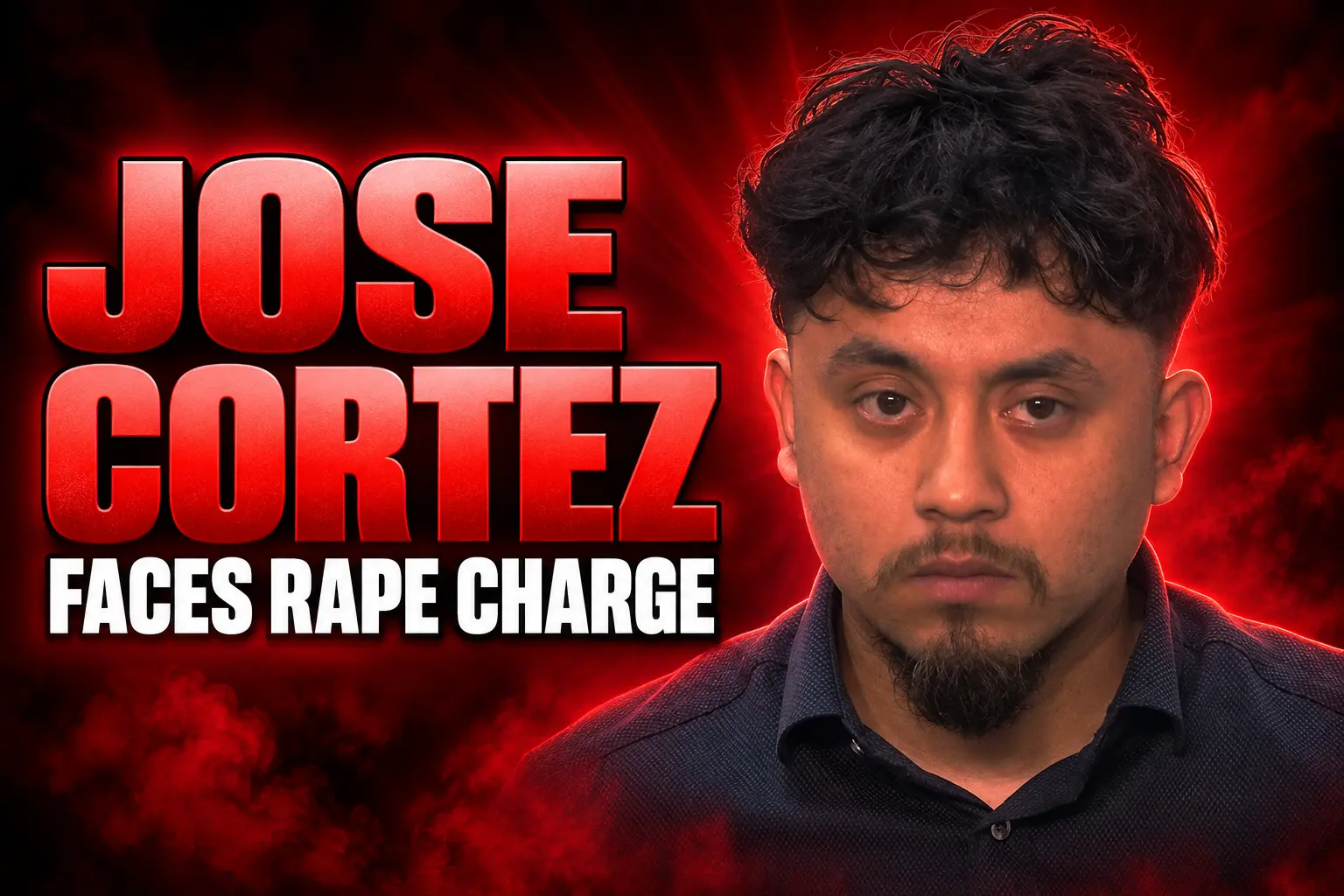
Jose Cortez Faces Fort Wayne Rape Charge Over Sleeping Victim
Jose Cortez faces a Fort Wayne rape charge that rests on Indiana law treating sex with a sleeping person as rape.

Jose Cortez, a 25-year-old Fort Wayne man, faces a rape charge after a victim told police she was assaulted while she slept. Officers were sent to a 911 hang-up on the morning of March 29, 2026, and court records described the next day say she learned what happened only after she woke.
The charging path is Indiana’s unawareness rule. Sex with a person who does not know it is happening is rape under state law, even when the public file describes no shoving, no weapon, and no threat.
Sleep Alone Can Support a Rape Charge
Court records from March 30, 2026, say the woman told officers she was unaware of the assault happening because she was sleeping. That sentence is doing the legal work in this file. Indiana does not require prosecutors to prove force when the other person did not know the sex act was taking place.
She was later treated at the Sexual Assault Treatment Center. There, she said voices from a verbal argument woke her after a witness allegedly saw the assault. The records do not name the witness, do not say who placed the 911 call, and do not describe any relationship between Cortez and the woman.
Police also interviewed Cortez. He told them he “consumed several alcoholic beverages and remembers having sexual intercourse with the victim on a couch,” the same records show. A statement like that can sound, in casual talk, like a claim that sex happened and that he recalls it. On an unawareness charge, memory of the act is also evidence that the act occurred.
None of those March lines is a verdict. Cortez is charged, not convicted, and the public file released then did not include a plea, a bond sheet, or a trial date.
The 911 Hang-Up That Started the Case
The first police contact was not a walk-in report at a station. Officers responded to a 911 hang-up Sunday morning, then spoke with the woman who said she had been raped by Cortez. Hang-up calls are easy to dismiss from a couch. Dispatchers in Fort Wayne have asked people who dial by mistake to stay on the line and say so, because a dropped call is treated as a call that may still need a response.
Someone in that room, or nearby, reached 911 and did not complete the call. The records reviewed in late March do not say whether the caller was the woman, the witness, or a third person. They do say the hang-up put officers on scene, and that the woman’s first account to them was that she had been asleep.
That sequence matters later in court. A delayed report can become a defense theme. A same-morning call, a forensic exam, and a witness who allegedly saw the assault are the state’s answer to that theme, if the case is tried. They are also the reason this file reads as an unawareness case rather than a stranger-in-an-alley force case.
What Indiana Counts as Rape When Someone Is Asleep
Indiana law makes rape a Level 3 felony when someone has sex with a person who is unaware it is happening, and courts have treated sleep as a form of that unawareness. Force is a separate path. The March records in the Cortez case describe a sleeping victim, which is the unaware path, not a published force allegation.
The current rape statute lists four routes to a Level 3 count. A person commits rape by knowingly or intentionally having sexual intercourse, or other sexual conduct defined in the code, when the other person is compelled by force or the threat of force; when the other person is unaware that the sexual intercourse is occurring; when the other person is so mentally disabled or deficient that consent cannot be given; or when the actor disregards physical, verbal, or other visible attempts to refuse. An aggravator such as deadly force, a weapon, serious bodily injury, or a drug given without the victim’s knowledge can raise the same conduct to a Level 1 felony.
INDIANA RAPE CHARGING PATHS
| Path in the statute | What the state has to prove | Default class |
|---|---|---|
| Unaware | A sex act while the other person did not know it was happening, including sleep | Level 3 felony |
| Force or threat of force | A sex act compelled by force or an imminent threat | Level 3 felony |
| Mental disability | A sex act when the other person cannot give consent | Level 3 felony |
| Ignored refusal | A sex act after the other person tried to refuse by words, body, or other visible conduct | Level 3 felony |
A Level 3 felony carries 3 to 16 years in prison, with an advisory sentence of 9 years. That range comes from Indiana’s felony-sentencing statute as applied in Court of Appeals decisions. The March Cortez records call the count a rape charge and do not, in the public summary, print the felony level on the face of the story. Rape as written in the code is a Level 3 offense unless an aggravator in subsection (b) is also charged.
Indiana does not define consent as a standalone element in that statute. The code names force, unawareness, a disability that blocks consent, and ignored refusal. Sleep is how unawareness is most often explained to a jury. In 2022, the Court of Appeals said sleep is understood to be a cause of unawareness, and that illness or intoxication can also get there even if the person never fully loses consciousness.
Although sleep is understood to be a cause of unawareness, our supreme court has suggested that a victim’s illness and intoxication may lead to her being sufficiently unaware for the rape statute to apply, even if the victim never loses consciousness.
Indiana Court of Appeals, Fisher v. State, 2022
Two years later, in a September 6, 2024, opinion, the same court said a victim need not be fully unconscious for the unaware clause to apply. That holding grew out of a couch case in which the woman had been drinking and later remembered parts of the encounter. The Cortez records are simpler on that point: the woman said she was sleeping, and she said she woke to an argument after a witness allegedly saw the assault.
If a pregnancy resulted from an offense under the rape statute, the court must also order restitution for pregnancy and childbirth costs. Nothing in the March Cortez records discusses pregnancy. The clause sits in the same section as the unaware rule, and it travels with any conviction under that section.
Cortez’s Couch Statement and the Alcohol
Cortez’s interview is the other half of the act element. He did not, in the lines released in March, deny that sex happened. He said he had been drinking and that he remembered intercourse with the woman on a couch.
Alcohol in his system is not a defense to having sex with a person who is asleep. It may become a fight about what he knew, what he intended, and how a jury reads “knowingly or intentionally.” Those are mens rea words. They are not a free pass for a drunk defendant when the other person was not awake.
His memory also cuts against a later claim that he has no idea what police are talking about. If the case is tried, the state can use the couch statement to prove the sex act and use the woman’s sleep account, the witness, and the exam to prove she did not know it was happening. The defense can attack all of that, including whether she was actually asleep, whether the witness saw what the records claim, and whether the statement was recorded, complete, or fairly taken.
The public file does not include a full transcript of the interview, a body-camera clip, or a signed waiver. It includes one quoted sentence. That is enough to see the shape of the proof. It is not enough to know how a jury would sort it.
Inside the Fort Wayne Sexual Assault Treatment Center
The woman was taken to the Fort Wayne Sexual Assault Treatment Center the same morning. The center is a forensic-nursing clinic, not a counseling office. Its published mission is to provide medical forensic care and to work with medical providers and law enforcement. The number on its site is 260-423-2222.
A same-morning exam is how a sleeping-victim case picks up physical evidence that a later hospital visit may miss. The center tells patients to get to a safe place, call 911, and avoid steps that destroy evidence.
WHAT THE CENTER TELLS PATIENTS TO AVOID
- Bathing: Do not shower or bathe before the exam, because water can wash away biological evidence.
- Mouth and hands: Do not brush your teeth, eat, drink, or smoke if you can wait, for the same reason.
- Clothes: Do not change clothing, and do not use the toilet and wipe if you can avoid it, so the exam can recover what is still on the body and the fabric.
- The first call: Get to a safe place and dial 911, which is also how the Cortez case opened, through a hang-up that still brought officers out.
The center is careful to say there is no single right way to respond after an assault, and that it is not the place for ongoing therapy. Local survivor guides point people from there to counseling, shelters, and the Fort Wayne Police Victim Assistance program, which lists sexual assault among the crimes it handles and publishes a line at 260-427-1205. Those offices can sit with a victim through interviews and court dates. They do not decide whether a prosecutor files a Level 3 count.
In the Cortez records, the exam room is also where the woman added the witness detail. She told staff that an argument woke her after someone allegedly saw the assault. That is a different statement, in a different room, from the first account to officers. Juries sometimes hear both, and defense lawyers sometimes argue the two accounts drifted. Prosecutors sometimes argue the second account filled in what a person cannot know while asleep: that another person was in the room and saw it.
How a Rape Charge Moves in Allen County
A rape charge in Allen County is filed by the prosecuting attorney and then moves through Superior Court with an initial hearing, discovery, and either a plea or a trial. The office says it handles more than 2,000 felony cases a year. No hearing date, plea, or trial setting for Cortez has been made public since the March records.
Mike McAlexander is the elected prosecutor. He won the office in November 2022 and took it on January 1, 2023, after years as chief deputy. The criminal division, on the office’s own description, also handles about 10,000 misdemeanor cases and 30,000 infractions a year, and it works with Fort Wayne Police, the Allen County Police Department, and the courts. A single rape file is one of those felonies. It is not a special statute with its own secret docket.
What usually happens next, in any adult rape case, is ordinary felony procedure. The accused appears for an initial hearing, counsel is named, the state tenders discovery, and the parties either reach a plea or pick a jury. Sex-offense files often take longer than a theft case because the exam kit, phone records, and witness interviews have to be finished and turned over. None of that schedule for Cortez is in the March public summary, and no later official notice of a plea, dismissal, or verdict has been posted in the same way.
Allen County has seen how hard these trials can be. On September 18, 2026, a jury in a different rape and sexual battery case, involving a 16-year-old and a 2023 incident, deliberated five hours and could not agree. That trial was reset for March 16-19, 2027. It is not the Cortez file. It is a reminder that a charge written on an unaware clause still has to be proved beyond a reasonable doubt to twelve people, and that twelve people sometimes do not get there.
No Public Outcome Since the March Filing
By the last week of September 2026, the Cortez case still had no later public charging update, plea, or verdict attached to the March 30, 2026, records. That silence is not an acquittal. It is also not proof the file is moving, stuck, or about to be dismissed. Criminal cases can sit in discovery for months without a new headline.
WHAT WE KNOW
- The accused: Jose Cortez, 25, listed as a Fort Wayne resident, facing a rape charge tied to a weekend assault.
- The opening: Officers responded to a 911 hang-up on the morning of March 29, 2026, and spoke with a woman who said Cortez raped her while she slept.
- The proof named in March: A Sexual Assault Treatment Center visit, a witness who allegedly saw the assault, an argument that woke the woman, and Cortez’s statement that he had been drinking and remembered sex on a couch.
WHAT IS UNCONFIRMED
- The docket: Bond, custody, defense lawyer, exact statutory subsection, and any plea or trial date have not been made public in the same record set.
- The people around the couch: The witness is unnamed, the 911 caller is unnamed, and no public record released in March describes how Cortez and the woman knew each other, if they did.
- The outcome: No later official notice of a conviction, acquittal, dismissal, or mistrial in this file has been issued.
The March records describe an unawareness case. A sleeping victim, a witness, a forensic exam, and a defendant who remembered the sex act on a couch are the pieces that file put in one place. What Allen County’s courts do with those pieces has not been announced.
Disclaimer: This article is news reporting and legal-context analysis based on public court records and published Indiana law. It is informational only and is not legal advice, a finding of guilt, or a prediction of how any charge will be decided. Readers with a personal stake in a criminal or victim-rights matter should consult a licensed Indiana attorney or a qualified victim advocate before taking action. Names, charges, and case status reflect the public records and statutes cited, dated March 29 and 30, 2026, for the Cortez file and later for the separate authorities named, and those facts can change as a court acts.

The Salary Cap Fight That Can Freeze Baseball’s TV Payday

The 2027 Mercedes GLE and GLS Keep Alabama Busy

Margaret Hamilton Dies at 90 With a Harder Fight Unfinished

Unity Parks Its Engine Inside Google’s Prompt Games

The Hidden Vendor Cut in 403(b) vs 401(k) Plans

Microsoft 365 Auth Fault Took Down Exchange and Teams

IFA 2026’s Weird Gadgets Are Building a Sensor Home

Xbox Caps Game Pass Cloud Gaming at 15 Hours

Squishy Dumpling Toys Recalled After Hiding Illegal Water Beads

Tesla Puts Its Wheel-Free Cybercab on Austin Streets
-
 NEWS1 month ago
Microsoft 365 Auth Fault Took Down Exchange and Teams
-
 GAMING1 month ago
Xbox Caps Game Pass Cloud Gaming at 15 Hours
-
 NEWS1 month ago
IFA 2026’s Weird Gadgets Are Building a Sensor Home
-

 NEWS1 month ago
OpenAI Unveils GPT-6 Astra With a Critical Cyber Label
-
 AUTO1 month ago
Tesla Puts Its Wheel-Free Cybercab on Austin Streets
-

 NEWS1 month ago
OpenClaw 2.0 Ships a Team Workplace With Host-Trust Defaults
-

 NEWS1 month ago
Sony and Warner Sue Anthropic Over Torrented Song Lyrics
-
 LIFESTYLE1 month ago
Squishy Dumpling Toys Recalled After Hiding Illegal Water Beads