The countdown is on — and so is the crackdown. With Mesa County public schools reopening August 6, law enforcement is stepping up speed enforcement around school zones, and this year, they’re not messing around.
Drivers flying through those familiar yellow signs might want to ease up on the gas. Local police say school officials and parents have made it clear: enforcement needs to be visible and firm.
Expect to See Lights, Signs, and Police Bikes — Everywhere
John Ferguson, Police Motor Technician with the Grand Junction Police Department, made one thing crystal clear: when those yellow lights are flashing, the rules change.
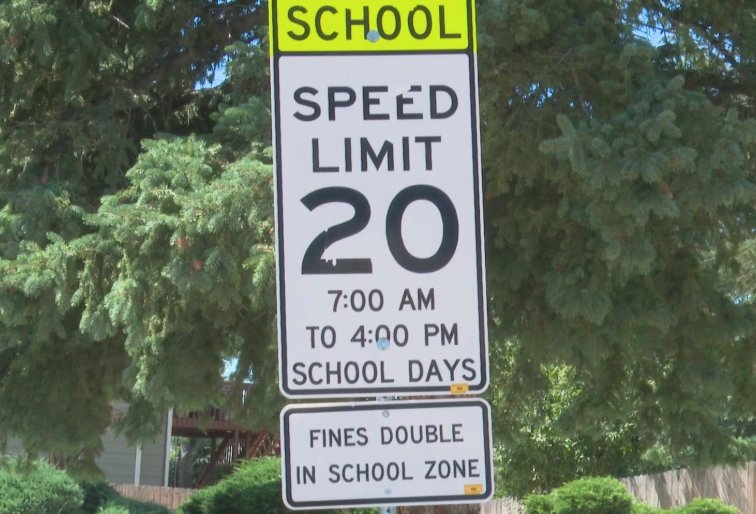
“People need to understand that when the school zones are active — with those flashing yellow lights — the reduced speed limit applies,” he said. “If it’s a private or charter school, they might not have the lights, but signs will still be posted. Either way, it’s enforceable.”
So no excuses.
Drivers who breeze past school zones while distracted or rushing to work could face tickets that aren’t just costly — they’re also considered reckless if kids are present.
And with new families moving into the area, some from out of state, law enforcement wants to make sure everyone’s on the same page before day one.
Enforcement Wasn’t Just a Department Decision
This isn’t a top-down mandate. It came from parents.
Ferguson explained that school officials, family members, and even crossing guards have all pushed for stronger enforcement in recent years. Their message? Enough is enough.
People were fed up watching cars roll through crosswalks while kids were in the middle. Or seeing drivers hit the brakes too late after flying into an active zone.
So police listened.
“We don’t want to write tickets. That’s not our goal,” Ferguson said. “But we will if that’s what it takes to keep kids safe.”
A Refresher: What Counts as a School Zone Anyway?
Let’s be honest — a lot of people aren’t even sure what “counts” as an active school zone.
Here’s what to look for:
• Flashing yellow lights on either side of the road
• Clearly posted speed limits (often 15–20 mph)
• Hours typically aligning with student arrival and dismissal
• Presence of crossing guards or high foot traffic
If you’re near a charter or private school, there might not be flashing lights — but that doesn’t mean you’re off the hook. Legally posted signs are enough. And yes, enforcement still applies.
Tickets Aren’t Cheap — And You Might Get Points
The cost of ignoring school zone laws? It’s more than just a slap on the wrist.
A typical speeding ticket in a school zone in Colorado can cost upwards of $300 — and that’s if you’re lucky.
Here’s a quick breakdown of potential consequences:
| Violation Type | Base Fine Range | Points on License |
|---|---|---|
| 1–9 mph over limit | $150–$300 | 3 points |
| 10–19 mph over limit | $300–$600 | 4 points |
| 20+ mph over limit | $600+ and possible court summons | 6+ points |
| Failure to yield to pedestrian | $150–$500 | 4 points |
And that’s just the financial side. If someone gets injured? You’re looking at potential criminal charges.
Why Police Say This Year Is Different
Mesa County schools, like many across the U.S., are still feeling the aftershocks of COVID-era traffic patterns. During lockdowns, school traffic dropped off. But as schools reopened and routines returned, the roads got busier — and faster.
Ferguson noted that driver habits have shifted. People are more distracted, more impatient, and more likely to treat school zones like regular streets.
“There’s this mentality now — ‘I’m just going to shave off five minutes.’ But five minutes can cost a life,” he said.
Add in construction, newer neighborhoods, and more teen drivers, and the situation becomes a lot more unpredictable.
Advice for Parents, Kids, and Anyone Behind the Wheel
It’s not just drivers that need to adjust. Parents should plan extra time for drop-off. Kids need reminders, too.
Here are a few no-nonsense tips Ferguson shared:
-
Put the phone down. No call, text, or scroll is worth it.
-
Obey the crossing guards. They’re not suggestions — they’re the law.
-
Leave five minutes earlier. Rushing leads to mistakes.
-
Expect traffic near schools. Don’t let it surprise you.
And if you’re new to the area? Look up your school’s exact zone and peak hours. The city has interactive maps for most public schools — no guesswork needed.
A Community Responsibility, Not Just a Police Task
This isn’t about catching people off-guard. It’s about making sure drivers and kids make it home at the end of the day.
Ferguson stressed that while law enforcement will be visible and active, real change comes from everyone doing their part.
“We all share these roads,” he said. “This is about the community stepping up and making sure the kids feel safe walking to school again.”
And with school bells ringing soon, there’s no time to wait.