Archaeologists in Bahrain have just discovered an extraordinarily rare ceramic mask depicting a human face inside a 3,300-year-old tomb. The delicate artifact, only the second of its kind ever found on the island, was placed between the remains of two women and an infant, hinting at deep ritual meaning in one of the Gulf’s most mysterious ancient civilizations.
Second Known Faience Mask in Bahrain History
The Bahrain Authority for Culture and Antiquities announced the discovery on January 14, 2026, from ongoing excavations at Al-Hilla burial mounds in southern Bahrain.
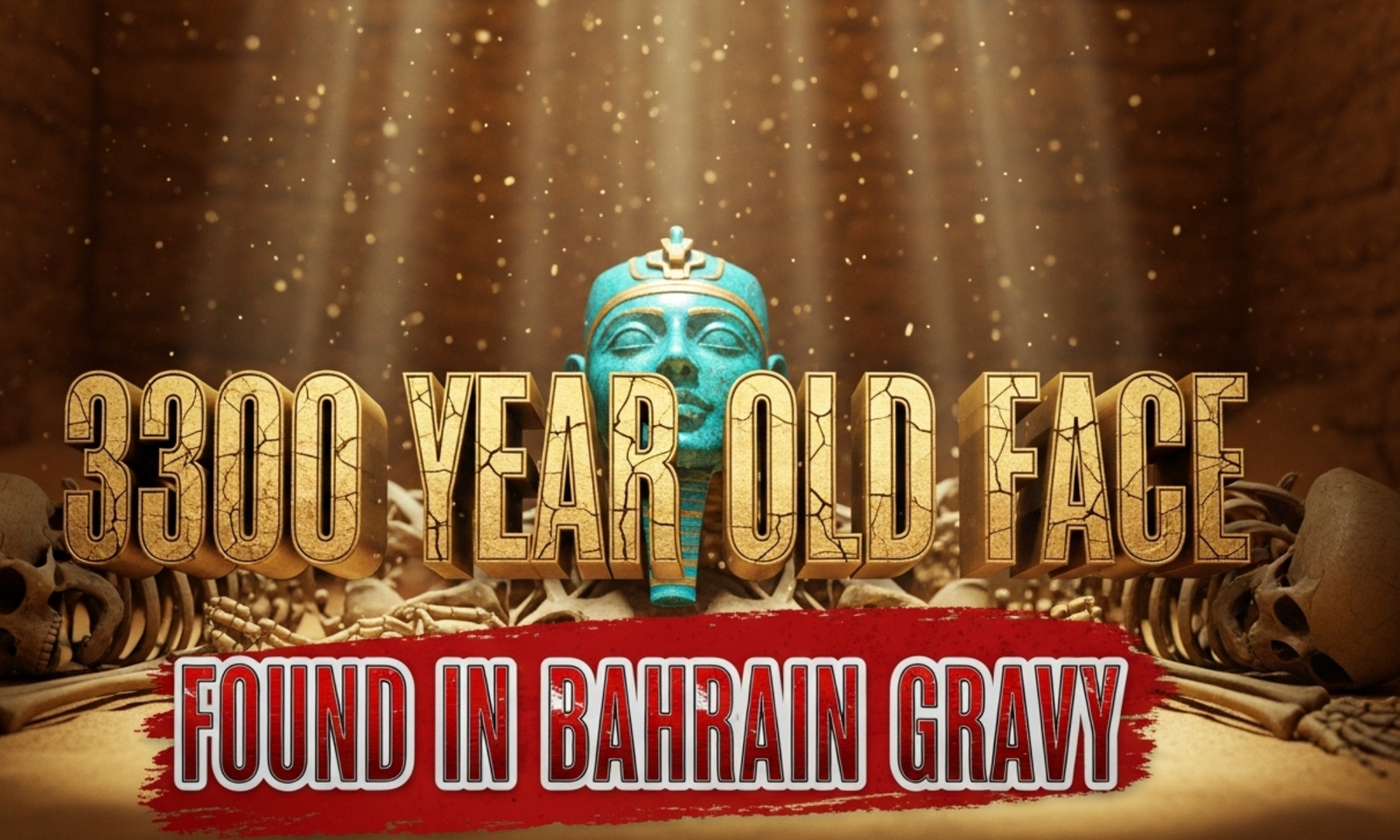
Made of glazed faience in striking turquoise and green tones, the palm-sized mask shows clear eyes, nose, and mouth. Experts date it to the Middle Dilmun period, around 1200 BCE.
“This is an exceptional find that opens new windows into Dilmun funerary practices,” said Salman Al Najjar, Head of Antiquities at the Authority.
Only one other similar faience mask has ever been recorded in Bahrain, making this the second confirmed example in the entire country.
What the Grave Revealed About Daily Life and Death
The mask rested deliberately between the skeletons of two adult females and a baby, all buried together in a single stone-lined tomb.
Among the grave goods were:
- Three seashell rings still on the fingers of one woman
- Two copper kohl applicators for eye makeup
- A large painted pottery jar
- A bronze needle or awl
- Hundreds of tiny carnelian and agate beads
These personal items show that the dead were sent into the afterlife with beauty tools, jewelry, and sewing equipment, exactly the same way people still prepare loved ones for burial today.
Who Were the Dilmun People?
For over two thousand years, Dilmun controlled some of the most valuable trade routes in the ancient world.
Sumerian clay tablets from 2500 BCE already describe Dilmun as a sacred trading paradise “where the sun rises” and “where Enki created pure water.”
Merchants here exchanged Bahraini pearls, dates, and copper from Oman for Mesopotamian grain, Indian ivory, and Afghan lapis lazuli.
The islands freshwater springs bubbling beneath the sea so impressed ancient writers that many scholars now believe Dilmun was the real inspiration behind the Garden of Eden story.
Why This Mask Changes Everything
Until now, archaeologists knew Dilmun people made impressive seals, massive burial mounds, and sophisticated pottery, but almost nothing about how they represented the human face.
This mask proves they created highly expressive portrait art over a thousand years before the Greeks.
Its careful placement among women and a child also suggests it may have served as a protective spirit or even a portrait of one of the deceased.
Researchers stress that detailed scientific analysis of the glaze and clay is still underway, but early results confirm the mask was locally made, not imported.
The discovery comes just months after Bahrain opened its new Pearl Path UNESCO World Heritage trail, putting the country firmly back on the map as one of the birthplaces of global civilization.
For the people of Bahrain today, seeing their ancestors’ face staring back after 3,300 years feels deeply personal.
This small mask reminds every Bahraini that their islands were never a forgotten corner of history. They were, and still are, the beating heart of the Gulf.
What do you feel when you look at a face that hasn’t been seen since the Bronze Age? Drop your thoughts below and share this story using #DilmunMask if you’re as stunned as we are.