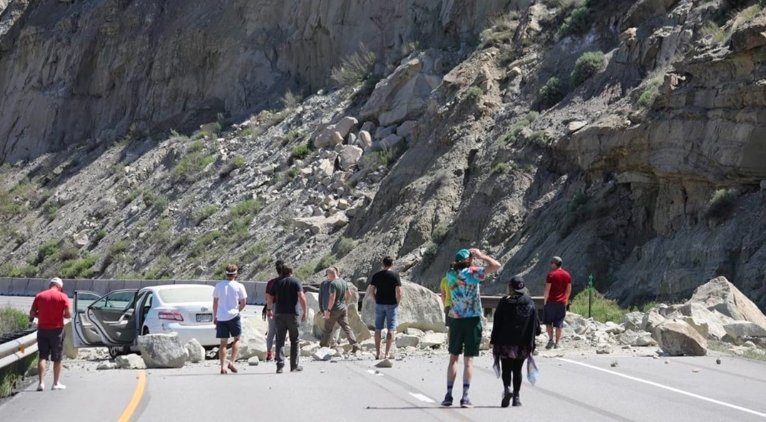
A major rock slide hit Interstate 70 in DeBeque Canyon on January 3, 2026, forcing full closures of eastbound lanes and partial blocks on westbound traffic near mile point 49. The Colorado Department of Transportation and State Patrol acted fast to clear debris and reopen the highway by 11 a.m., with no injuries reported despite one vehicle striking a rock.
What Happened During the Rock Slide
The incident started around 8:30 a.m. when large boulders and smaller rocks tumbled onto the roadway. This blocked the eastbound side completely and left the westbound lanes with limited access. Crews from the Colorado Department of Transportation used heavy loaders to remove the debris.
No one got hurt in the event, but it disrupted travel for drivers heading through this key route in western Colorado. Officials inspected the road and nearby slopes for safety before letting traffic flow again. Past rock slides in the area have shown how unstable these canyon walls can be, especially after recent weather changes.
This closure came amid other travel issues in the region, like fog alerts on January 5 that urged drivers to slow down and use low beams.
Impact on Drivers and Local Traffic
Thousands of vehicles use I-70 daily, making this a big deal for commuters and truckers. The closure lasted about two and a half hours, causing backups and forcing some to find detours. One driver captured video of boulders crashing down, highlighting the sudden danger.
Local residents in nearby towns like Grand Junction felt the ripple effects, with increased traffic on side roads. State patrol noted that while the highway reopened quickly, drivers should stay alert for similar risks in rocky areas.
- Eastbound lanes: Fully closed for debris removal.
- Westbound lanes: Partially blocked but cleared faster.
- Detour options: Limited, with some using local cutoff roads.
- Traffic volume: High, as I-70 connects major Colorado cities.
In comparison, a similar rock slide in 2023 closed parts of I-70 for hours, but crews learned from that to respond quicker this time.
Recent events, such as a semi-truck slide near Vail Pass on January 2, show ongoing winter hazards on this interstate.
Causes and Prevention Efforts
Experts point to natural factors like freeze-thaw cycles weakening canyon walls, which likely triggered this slide. Heavy rains or snow earlier in the week may have played a role, loosening rocks. Colorado sees these events often in mountainous areas, with data showing over 20 major slides on state highways in the past five years.
The Department of Transportation invests in monitoring systems, including sensors and regular inspections, to spot risks early. After this incident, teams checked slope stability to prevent repeats.
| Year | Number of Rock Slides on I-70 | Hours of Closures | Injuries Reported |
|---|---|---|---|
| 2022 | 5 | 12 | 0 |
| 2023 | 7 | 18 | 1 |
| 2024 | 4 | 10 | 0 |
| 2025 | 6 | 15 | 0 |
| 2026 | 1 (so far) | 2.5 | 0 |
This table shows a pattern of incidents, with quick responses helping keep injuries low.
Logical steps like installing rockfall barriers have reduced impacts in high-risk zones. Still, drivers need to watch weather reports and road updates.
Ongoing construction projects, such as those near Floyd Hill, aim to make the interstate safer overall.
Safety Tips for Mountain Driving
To avoid dangers like rock slides, experts recommend checking road conditions before trips. Apps and websites from the state provide real-time alerts.
Stay aware of surroundings, especially in canyons where rocks can fall without warning. If you see debris, slow down and report it right away.
Preparation matters too. Pack essentials like water, snacks, and a phone charger for unexpected delays.
Fog, as seen in recent alerts, adds another layer of risk, so use headlights properly and keep a safe distance from other vehicles.
Looking Ahead for I-70 Travelers
With winter in full swing, more closures could happen if weather worsens. Officials urge planning trips with extra time and considering alternate routes.
This event reminds everyone of nature’s power in Colorado’s rugged terrain. By staying informed, drivers can navigate safely.
Share your experiences with I-70 disruptions in the comments below, and pass this article to friends who travel these roads.