
LIFESTYLE
The Glenwood Fire Woke Her After the Alarms Failed
Theresa Juillerat escaped a Fort Wayne attic fire on January 4, 2026, because the blaze cracked loud enough to stand in for dead smoke-alarm batteries.

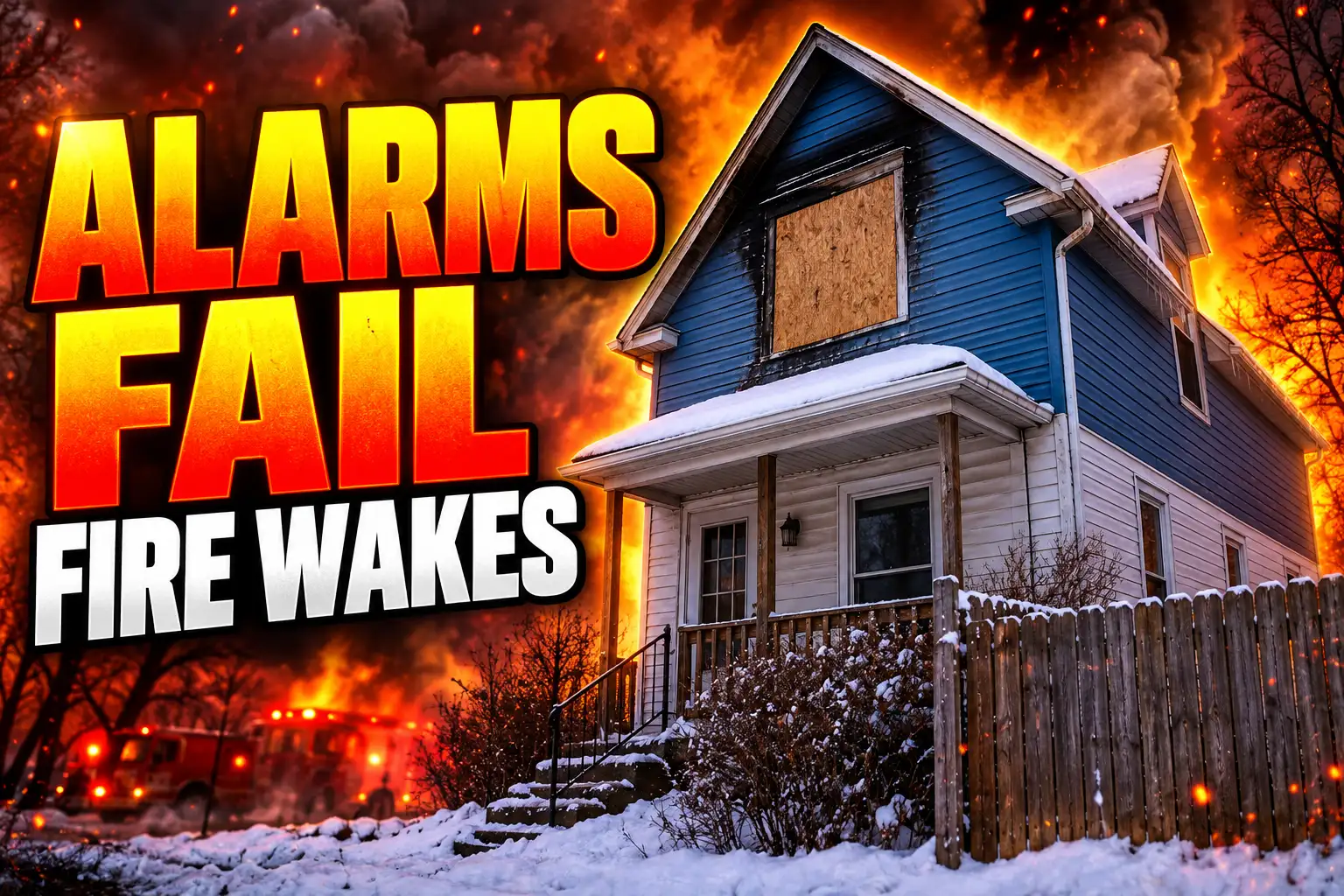
Theresa Juillerat got out of a Glenwood Avenue house fire on January 4, 2026, after an electrical attic blaze woke her with a crack. Her smoke detector batteries were dead, and she estimates she lost 80 percent of what she owned.
Fort Wayne Fire Department crews reached the 1200 block at 7:44 a.m., one minute after the alarm, and had the fire under control by 8 a.m., with no injuries reported.
A Loud Crack Did the Job the Alarms Missed
Juillerat, who had lived in the house for 15 years, had fallen asleep on the first floor. She did not realize the batteries in her smoke detectors had run out. A loud crackling noise upstairs is what pulled her out of sleep, according to the department’s incident report, and she has been blunt about what that sound was worth.
Had it not been for that noise, who knows what the outcome would be
Theresa Juillerat, Glenwood Avenue homeowner
She went upstairs, found smoke, and got out through the garage with her two dogs in the minutes before crews arrived. Fire officials later used her account to press a point they say homeowners skip: routine checks of the alarms that are supposed to do that waking for them. She has said she regrets not thinking about those alarms, and that her mind keeps going to how bad it could have been.
She calls it the scariest moment of her life. The department still listed the fire as electrical in nature, with no one hurt. The warning system in the house had already failed before the first hose line was pulled.
Seventeen Minutes, a Second Floor, and 80 Percent Gone
The Fort Wayne Fire Department incident report, alarm code 704, puts the run on a very short clock. Dispatch went out at 7:43 a.m. to the 1200 block of Glenwood Avenue, near the intersection with Kentucky Avenue. The first companies were on scene at 7:44 a.m. and reported smoke from the attic. They were inside quickly. The fire was under control at 8 a.m., 17 minutes after the alarm.
THE SUNDAY MORNING ON GLENWOOD AVENUE
- January 4, 2026, 7:43 a.m.: The Fort Wayne Fire Department is dispatched to a house fire in the 1200 block of Glenwood Avenue.
- 7:44 a.m.: First companies arrive and report smoke coming from the attic, then make entry and start putting water on the fire.
- About 7:44 to 8:00 a.m.: Juillerat, woken by a crack upstairs, finds smoke, leaves through the garage with her two dogs, and is out before the attack is finished.
- 8:00 a.m.: The fire is under control. The attic and second floor have extensive damage. No injuries are reported. The cause is listed as electrical.
The same report rated fire damage, water damage, and smoke damage each as moderate, while still describing extensive damage to the attic and second floor, the part of the house that had been cooking while she slept downstairs. Indiana Michigan Power was on scene with the Fort Wayne Police Department, Three Rivers Ambulance Authority, and the city’s Neighborhood Code Enforcement office. An electrical finding brings the utility. A damaged two-story house brings the inspectors. The ambulance service went home without a patient.
That is the official save. Juillerat’s own tally is the one that stays with the address: she estimates she lost 80 percent of what she owns. A fire can be under control in 17 minutes and still take the upstairs, the attic, and most of a 15-year household with it.
The Night Before, Her Grandkids Slept Upstairs
On January 3, her grandchildren stayed over and slept in the part of the house where the fire started the next morning. They were gone by the time the attic wiring, or whatever electrical fault the investigators tagged, started to fail. She was alone downstairs with the dogs when the crack came.
That near miss is the detail she has been repeating since the interview she gave on January 12, 2026. The fire did not need a crowded second floor to wreck the rooms. It needed hours with no working detector and a woman asleep on the first floor. She has said she wants the story to stop someone else from learning the same lesson the hard way, and that she is grateful to the crews and to the people who helped her in the days after.
The department’s first public account never mentioned the batteries. It mentioned a sleeping occupant, a crackling noise, two pets, an electrical cause, and no injuries. The batteries, the 80 percent, and the grandchildren arrived when she started talking. Together they turn a clean run sheet into a house that was one sleepover off a very different Sunday.
January Kept Lighting Up the Northeast Side
Glenwood Avenue was not the only northeast Fort Wayne house fire that month, and it was not the only one that found someone sleeping or a detector that did not sound. Two days earlier, on January 2, crews were sent at 9:06 p.m. to a home on St. Joe Center Road and found the first floor in heavy fire. The occupant had been asleep, woke to flames around him, got himself out, and was treated on scene for smoke inhalation. That fire was under control at 9:25 p.m., 19 minutes after the alarm. The cause was left under investigation.
On January 18, companies went to the 3300 block of Eastwood Drive for another electrical fire. Three adults and a child were already out. Crews pulled four pets from the house. The fire was under control in about 15 minutes. Investigators found smoke detectors in the residence that were not functioning. On January 25, at 4:22 a.m., crews were sent back to a house in the 3800 block of Evergreen Lane after an earlier electrical attic fire rekindled, burned through a partially collapsed roof, and left the building with heavy fire, smoke, and water damage. No one was home. That fight took 50 minutes.
NORTHEAST FORT WAYNE HOUSE FIRES, JANUARY 2026
| Date | Location | Cause listed | Who was inside | Alarms |
|---|---|---|---|---|
| January 2, 2026 | St. Joe Center Road | Under investigation | Occupant asleep; smoke inhalation on scene | Not stated |
| January 4, 2026 | 1200 block of Glenwood Avenue | Electrical | Juillerat asleep; two dogs; no injuries | Batteries dead |
| January 18, 2026 | 3300 block of Eastwood Drive | Electrical | Three adults and one child out; four pets rescued | Present, not functioning |
| January 25, 2026 | 3800 block of Evergreen Lane | Electrical (attic fire rekindled) | Vacant | Not stated |
Three of those four runs were tagged electrical. Two of the occupied houses had detectors that did not work, one because the batteries were dead and one because the units were present and silent. The Glenwood fire is the one with a name, a quote, and an 80 percent loss attached. The Eastwood fire is the one that shows the same failure two weeks later, on the same side of town, with children and pets in the mix again.
How Do You Get a Free Fort Wayne Detector?
Owner-occupants who live inside the city limits can have the Fort Wayne Fire Department bring a detector to the house and install it, at no charge, under a Fire Prevention and Safety Grant from the federal Department of Homeland Security. The award paid for 500 smoke detectors and 500 carbon monoxide alarms. Renters and landlords are left off the list. The crew has to do the install. Stations do not hand units over the counter.
The department’s own program page calls working detectors the first line of defense in a home fire and points residents to free smoke and CO detectors with installation included. Mayor Sharon Tucker walked Hickory Grove with firefighters on one of those installs, and the department put in 26 smoke detectors and 16 carbon monoxide detectors on that visit. The U.S. Fire Administration and the National Fire Protection Association advice reprinted there is the same placement rule the Glenwood house needed: inside every bedroom, outside each sleeping area, and on every level, including the basement.
WHO QUALIFIES FOR A FREE DETECTOR
- City limits: The applicant has to live inside Fort Wayne, not just in Allen County.
- Owner-occupants only: The program is closed to renters and to landlords stocking rental units.
- Install required: Firefighters mount the unit at delivery; a station will not issue a box to take home.
- Adult on site: Someone 18 or older must be present and sign a waiver of liability.
Residents without internet can fill out a paper form at any Fort Wayne fire station, or use a computer at an Allen County Public Library branch. Questions go to the Fire Department administrative office at 260-427-1478. The city’s online smoke detector request form is the same intake the stations use. None of that help was in play on Glenwood Avenue at 7:43 a.m. on January 4. The house already had detectors. They did not have batteries that worked.
Most Home Fire Deaths Involve Silent Alarms
Juillerat’s Sunday is the pattern the National Fire Protection Association keeps measuring at national scale. In its report on smoke alarms in U.S. home fires, covering 2018 to 2022, the research division found smoke alarms present in 74 percent of reported home fires. Nearly three in five home-fire deaths, 59 percent of home fire deaths, came from fires in properties with no smoke alarms (43 percent) or with alarms that failed to operate (16 percent). The death rate per 1,000 home structure fires is about 60 percent lower in homes with working alarms than in homes with no alarms or none that operated.
NFPA HOME FIRE ALARM FINDINGS, 2018 TO 2022
- Alarms present: Smoke alarms were in 74 percent of reported home fires, out of an estimated 336,848 home structure fires a year.
- When they work: Present alarms operated in 90 percent of the fires large enough to activate them; hardwired units operated 94 percent of the time, battery-only units 85 percent.
- When they fail: Missing, disconnected, or dead power sources, including dead batteries, were the most common reasons alarms did not operate.
- Battery-only homes: 66 percent of the fatal injuries in homes that had smoke alarms occurred in properties with battery-only units.
Tucker McGree’s May 31, 2024, report is also clear about the other failure, the one that still kills people in houses where the alarm does go off: 28 percent of those fatalities happened when the alarm failed to alert occupants, and 9 percent happened when occupants were alerted and did not get out. Juillerat was alerted by the fire itself. She did get out. The upstairs still went.
Indiana already writes battery duty into rental law. Under the 2026 Indiana Code, a tenant must keep each installed detector functional and, if it is battery operated, replace batteries in the smoke detector as needed. Juillerat owned her house, so that tenant section did not apply to her. The physics did. A dead battery in an owner-occupied two-story is the same dead battery the code assigns to a renter downtown.
The Glenwood Avenue run sheet still reads like a success. On scene in one minute, under control in 17, no injuries, pets out, cause found. The occupant who lived there woke because the fire made a noise her detectors could not, then counted 80 percent of her things gone, one night after her grandchildren had slept in the rooms that burned.
Frequently Asked Questions
How Can Fort Wayne Homeowners Get a Free Smoke Detector?
The Fire Department will contact applicants after a form is submitted and schedule a crew to deliver and mount the unit; hearing-impaired alarms are on the same request track as standard smoke and carbon monoxide devices, and the homeowner has to be present for the install rather than picking up a box at a station.
Where Should Smoke Alarms Be Installed in a Home?
The placement rule the Fort Wayne program reprints from the U.S. Fire Administration and the NFPA is inside every bedroom, outside each sleeping area, and on every level of the home, including the basement, because most fatal fires start at night and occupants need that first warning before the path out is blocked.
Why Do Smoke Alarms Fail to Operate in House Fires?
The NFPA’s 2018-to-2022 home-fire study found that when alarms failed, the usual problem was the power source: batteries that were missing, disconnected, or dead, or hardwired units that had been taken off the circuit, which is why battery-only homes accounted for 66 percent of the deaths in properties that had alarms at all.
What Does Indiana Law Require Tenants to Do With Smoke Detectors?
Indiana Code 32-31-7-5 also bars tenants from disabling a detector and, on a hardwired unit the tenant believes is dead, requires written notice to the landlord under the smoke-detector chapter so the owner can repair it, a split of duties that does not exist for owner-occupants, who are left to test and power the devices themselves.

The Salary Cap Fight That Can Freeze Baseball’s TV Payday

The 2027 Mercedes GLE and GLS Keep Alabama Busy

Margaret Hamilton Dies at 90 With a Harder Fight Unfinished

Unity Parks Its Engine Inside Google’s Prompt Games

The Hidden Vendor Cut in 403(b) vs 401(k) Plans

Microsoft 365 Auth Fault Took Down Exchange and Teams

IFA 2026’s Weird Gadgets Are Building a Sensor Home

Xbox Caps Game Pass Cloud Gaming at 15 Hours

Squishy Dumpling Toys Recalled After Hiding Illegal Water Beads

Tesla Puts Its Wheel-Free Cybercab on Austin Streets
-
 NEWS1 month ago
Microsoft 365 Auth Fault Took Down Exchange and Teams
-
 GAMING1 month ago
Xbox Caps Game Pass Cloud Gaming at 15 Hours
-
 NEWS1 month ago
IFA 2026’s Weird Gadgets Are Building a Sensor Home
-

 NEWS1 month ago
OpenAI Unveils GPT-6 Astra With a Critical Cyber Label
-
 AUTO1 month ago
Tesla Puts Its Wheel-Free Cybercab on Austin Streets
-

 NEWS1 month ago
OpenClaw 2.0 Ships a Team Workplace With Host-Trust Defaults
-

 NEWS1 month ago
Sony and Warner Sue Anthropic Over Torrented Song Lyrics
-
 LIFESTYLE1 month ago
Squishy Dumpling Toys Recalled After Hiding Illegal Water Beads