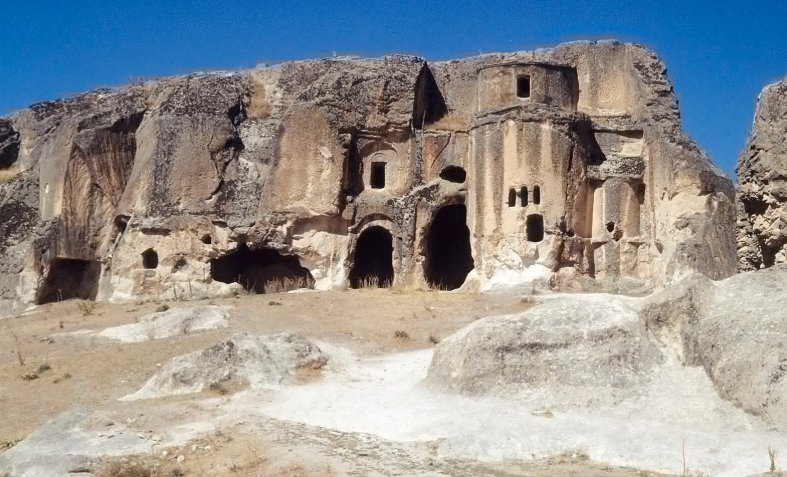
A centuries-old Phrygian rock tomb in Turkey has sparked fury among archaeologists and the public after a local businessman turned the ancient site into a makeshift café — complete with carpets, wooden seating, and even a chimney.
The ancient tomb, listed on UNESCO’s World Heritage Tentative List, now bears scars that experts fear can never fully heal.
A Sacred Site Turned Stone Garden Café
Halil Çakmak, the café owner, says he had “no ill intentions.” He called his café Taş Bahçe — which means “Stone Garden” — and claims he simply wanted to boost local development.
One line: The problem? He drilled into priceless rock, installed lighting, and laid electrical cables inside a tomb that’s more than 3,000 years old.
Photos show diners lounging on Turkish rugs inside the tomb, surrounded by warm lights and makeshift wooden benches. For some, it looked charming — for others, it looked like cultural vandalism.
UNESCO Site Now Carries Permanent Scars
This tomb isn’t just any old cave. It’s part of Turkey’s Phrygian Valley, a region that holds vital clues about ancient civilizations.
Experts have slammed the transformation as “cultural destruction.” Even after Turkey’s Ministry of Culture and Tourism ordered Çakmak to shut down the café, the damage was done.
Short sentence: Holes were drilled. Cables were strung. History was scarred.
What the Experts Say: Damage Done
Turkey’s Association of Archaeologists issued a statement warning that irreversible damage may have occurred. They argue that once ancient rock is drilled or altered, its historical integrity is lost.
Here’s what was changed inside the tomb:
-
Drilled holes for fixtures and wires
-
Carpeted floors covering original stone
-
Chimney installed for heating
One line: All of this in a structure that’s stood since before Alexander the Great.
Locals Divided: Development vs. Destruction
Interestingly, not everyone in the area condemned the café. Some locals argue that the café brought in tourists who otherwise would never have visited the Phrygian site.
Çakmak himself insists he never wanted to harm the tomb’s legacy. He claims he saw the café as a way to “share the tomb’s story” and attract visitors.
But for archaeologists, the line is clear: ancient burial sites are not businesses.
The Bigger Picture: Turkey’s Fragile Heritage
The Phrygian Valley is peppered with rock-cut tombs, monuments, and ancient carvings. Many of these sites are unprotected or under-monitored, making them vulnerable to illegal modifications.
Take a look at just how vulnerable these sites can be:
| Heritage Site | Age | Status |
|---|---|---|
| Phrygian Tomb | ~3,000 years old | UNESCO Tentative List |
| Level of Protection | Limited/Local | Susceptible to unauthorized access |
| Main Threat | Vandalism & misuse | Illegal development |
It’s a cautionary tale for heritage sites around the world.
What Happens Next?
Turkey’s Culture and Tourism Ministry has ordered the café to close and has launched an investigation. Local authorities say they will inspect the tomb for further damage.
Çakmak says he’ll comply — but it won’t change what’s already happened.
One line: No one knows how much of this ancient piece of history is lost forever.