
News
Crews Gain Ground on Colorado-Utah Wildfires as New Blaze Near Montrose Is Snuffed Out

A fresh fire sparked near Montrose is now out, but several others across the region continue to burn—some dangerously close to homes, highways, and national parks.
A wildfire that ignited Sunday afternoon near Kinikin Road and Highway 50 in Montrose County didn’t stick around for long, but it left a temporary trail of closures and power outages in its wake. Thankfully, firefighting teams acted fast, and by Monday morning the blaze was under control.
But that’s just one chapter in what’s turning out to be another intense fire season for Colorado and neighboring Utah. Several other fires—some sparked by lightning, others still under investigation—are still smoldering. And despite strong containment efforts, they continue to test both patience and resources across the Western Slope.
Kinikin Fire Put Out, But It Left a Mark
The Kinikin Fire, though brief, had the kind of impact no one needs on a hot weekend. It broke out early Sunday afternoon—July 27—right off Highway 50 and Kinikin Road, sending smoke into the sky and forcing traffic to a halt.
Firefighters jumped in quickly. Within hours, they’d managed to knock it down. Still, more than 350 residents lost power for several hours.
No homes were damaged, and by Sunday evening, Xcel Energy had restored electricity to the area.
One sentence paragraph? Yes. The cause is still being looked into.
Officials haven’t yet said if it was human-caused or sparked by something else. But as dry conditions continue to grip much of western Colorado, fire risk remains high—especially near major roads and populated spots like Montrose.
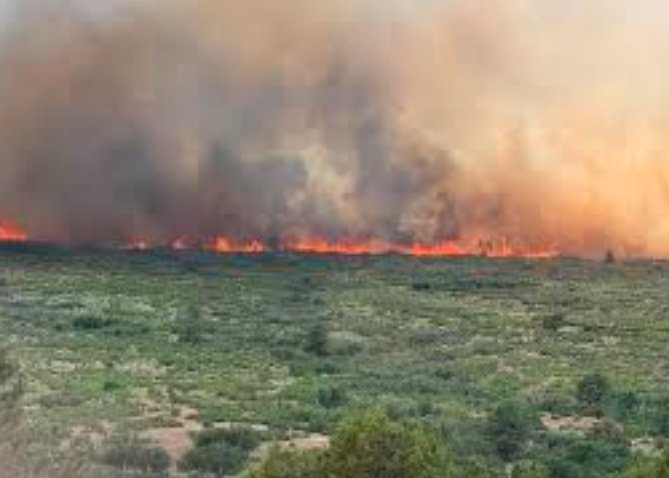
South Rim Fire Inches Toward Half Containment
The South Rim Fire continues to burn deep inside the Black Canyon of the Gunnison National Park. It’s big—4,232 acres—and complicated by rugged terrain and limited access points.
Crews have now contained 41% of the blaze, according to the latest reports from the National Park Service. Progress has been steady, though fire lines are being tested by gusty winds and fluctuating humidity levels.
Interestingly, officials announced that the North Rim of the park—closed earlier due to fire risk—will reopen to the public on July 30. That includes hiking trails, scenic overlooks, and the North Rim Campground.
It’s a calculated risk, and one they say is supported by the location of the fire lines and confidence in ongoing suppression efforts.
Park officials are urging visitors to stay alert, follow closures, and avoid risky behavior that could spark new fires.
Turner Gulch and Deer Creek Fires: Containment Numbers Improving
Two of the largest fires burning in the region are showing signs of settling down, but they’re far from finished.
The Turner Gulch Fire along Highway 141 was sparked by lightning and has been burning steadily. It’s torched 19,432 acres as of Monday and is 54% contained.
Meanwhile, the Deer Creek Fire—which straddles the Colorado-Utah border—has burned 17,724 acres. Containment there has reached an encouraging 77%.
Let’s lay it out clearly:
-
Turner Gulch Fire: 19,432 acres burned, 54% contained
-
Deer Creek Fire: 17,724 acres burned, 77% contained
-
South Rim Fire: 4,232 acres burned, 41% contained
-
Kinikin Fire: Extinguished, area under investigation
-
Wright Draw Fire: 92% contained
-
Sowbelly Fire: 95% contained
The numbers help, but they only tell part of the story. Firefighters are facing hard days—uneven terrain, high temps, and the stress of keeping flames from creeping too close to homes or roadways.
Wright Draw and Sowbelly Fires Nearing Full Containment
Not all the news is grim. Two fires—Wright Draw and Sowbelly—are nearly under control.
The Wright Draw Fire is now 92% contained, and officials expect it could be fully wrapped up within days if conditions hold.
Same goes for the Sowbelly Fire, sitting at 95% containment. Both have been monitored for days, and neither has made significant runs in the past week.
One firefighter on the ground described it as “watch duty with a side of anxiety”—because until a fire hits 100%, there’s always a chance of flare-ups.
It’s the kind of near-finish line that still comes with nerves.
Weather Could Tip the Scales—For Better or Worse
Looking ahead, the forecast for the week is… a bit of a mixed bag.
Temperatures are expected to stay high—hovering in the 90s across much of western Colorado and eastern Utah. But there’s also a chance for isolated afternoon thunderstorms later this week.
And that’s a double-edged sword.
A little rain would be welcome. But lightning? That’s exactly what sparked several of the current fires—Turner Gulch included.
Here’s a quick weather outlook from the National Weather Service, focused on fire-prone zones:
| Region | Forecast Highs | Thunderstorm Risk | Wind Gusts |
|---|---|---|---|
| Montrose County | 91°F | Medium | Up to 20mph |
| Gunnison National Park | 89°F | High | Up to 25mph |
| Delta County | 93°F | Low | Up to 15mph |
| Grand Junction | 95°F | Medium | Up to 22mph |
Crews are keeping watch on weather patterns as closely as they’re tracking fire behavior.
If storms stay dry—producing lightning but no rain—the situation could get worse before it gets better.









Spotify Running Mode hits Android and revives its old tempo experiment

Galaxy Tab S12 Ultra Renders Keep the Notch Fans Hate

Novato Spinning Round House Sells With Six Neighbors for $3.3 Million

Crop Tour Finds Indiana and Nebraska Corn Yields Lagging 2025

Best Buy 60th sale brings Android deals back to its roots

American Airlines reverses seatback screen bet years too late

Iran Hormuz Strikes Force Gulf Oil Onto Costlier Paths

Plague Tale Prequel Day One Joins Game Pass Wave 2 as Witcher Exits

NBA 2K27 opens The City to everyone and rewrites career eras

iOS 26.6.1 Patches 29 Flaws as AI Forces Faster Apple Updates

Double Fine Cuts 23 Jobs Weeks After Xbox Independence

Day-One Big Walk Lifts PS Plus August Beyond Recycled AAA

John Hight Exits Wizards After Digital Reckoning Hits

Curtis Mead’s Red Sox Debut Ends With Fractured Wrist

Moesch and Dressel Rewrite Night One at 2026 U.S. Nationals

Red Sox Squander Hot Streak Chance in 4-3 Loss to Athletics

Boutte’s Quiet Camp Takeover Forces Patriots Receiver Choices

Take-Two CEO Pushes Netflix Subs for GTA 6 Extended Look

Halo Campaign Evolved Skulls Meet Death Barriers That Kill the Hunt

Wildlands Free Update Hands Players the Tools They Already Invented
-

 TECHNOLOGY3 years ago
How to Adjust a Bulova Watch Band – An Easy Guide
-

 News3 years ago
Fred Pentland: Athletic Bilbao’s English mentor who changed the essence of Spanish football
-

 FINANCE3 years ago
Tax Planning for Every Season: Guide to Maximizing Your Tax Benefits
-

 Education3 years ago
African Ministers New Education Plan
-

 BUSINESS3 years ago
What is Entrepreneurial Operating System? A Comprehensive Guide to EOS
-

 Education3 years ago
Innovate Your Learning Journey with Technology and Enhance Education
-

 News3 years ago
Russians formally out of World Athletics Championships
-

 BUSINESS3 years ago
Top 9 Most Expensive American Cities to Rent an Apartment