
News
Mesa County Demands Urgent Fix for Dangerous I-70 Culvert

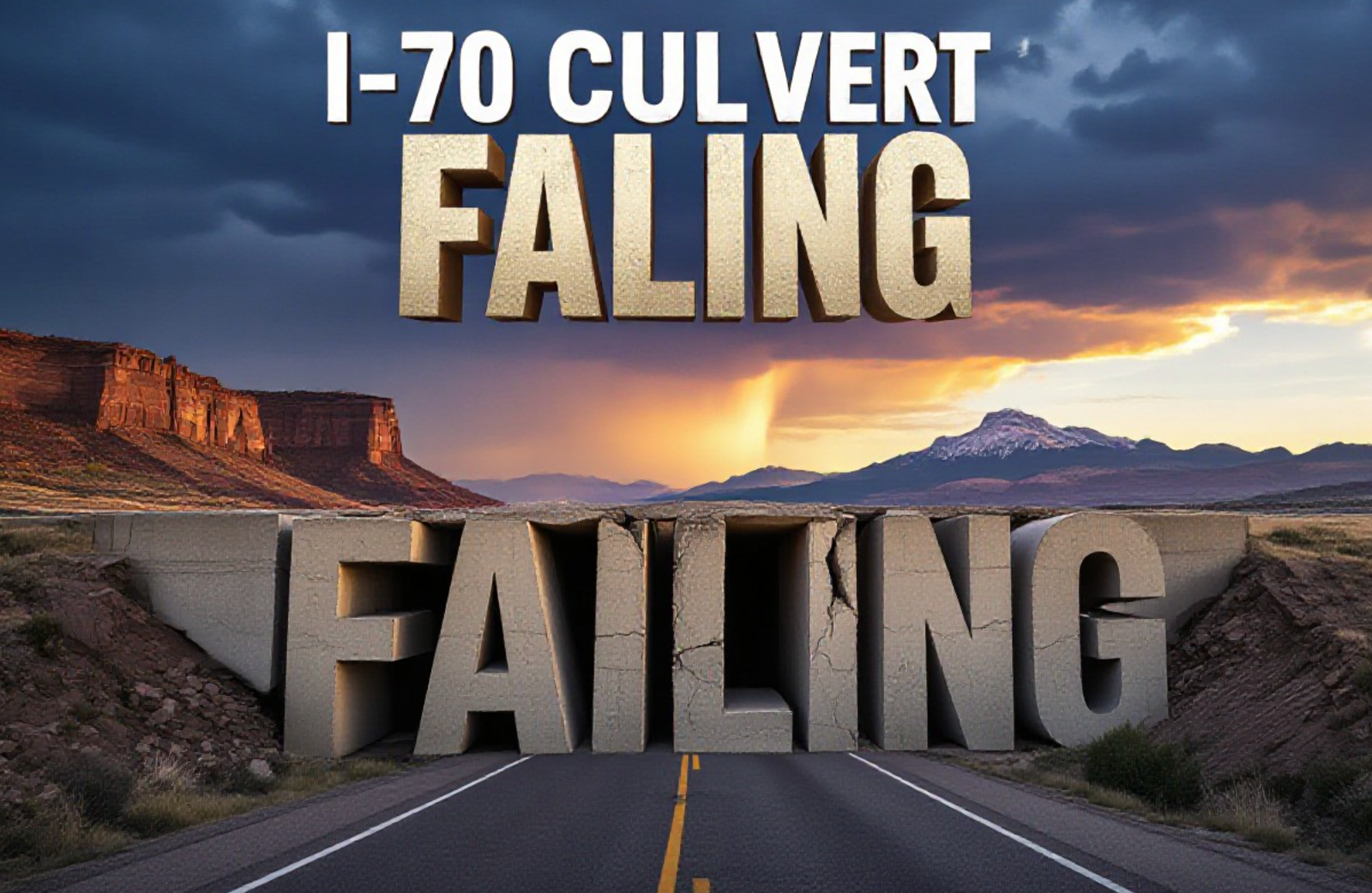
Mesa County commissioners unanimously voted Monday to back a $9.4 million federal grant request that would fully replace a failing box culvert under Interstate 70 near the Mount Garfield trailhead. The 60-year-old structure earned a dismal sufficiency rating of just 22.4 out of 100, with bulging walls, severe cracking, and foundation damage that county leaders say threatens both highway safety and public access to one of western Colorado’s favorite recreation spots.
The culvert is literally falling apart underneath one of the busiest stretches of I-70 in western Colorado.
“It’s not a question of if it fails, it’s when,” Commissioner JJ Fletcher told KJCT. “We’re talking about the main artery for thousands of travelers every day and the only realistic access to a trailhead that sees tens of thousands of hikers, runners, and families every year.”
The Mount Garfield trailhead sits just north of Palisade and draws outdoor enthusiasts from across the Grand Valley and beyond. The steep 4-mile round-trip hike to the summit offers sweeping views of the Book Cliffs, Colorado River, and Grand Mesa. On any spring or fall weekend, the parking lot is packed by 8 a.m.
If the culvert collapses, CDOT would have to close the trailhead access road indefinitely. Worse, a sudden failure could undermine the interstate itself, creating a potentially catastrophic situation for the 30,000 vehicles that travel that section daily.
Why the Culvert Is in Critical Condition
Built in the 1960s when I-70 was extended through the area, the concrete box culvert was designed to handle far less water volume and traffic load than it faces today. Heavy runoff from Mount Garfield, combined with decades of freeze-thaw cycles, has taken its toll.
County engineers documented:
- Side walls bowing inward more than 8 inches in places
- Large vertical cracks running the full height of the structure
- Base slab separation and erosion underneath the foundation
CDOT’s own bridge inspection team rated it “poor” — the agency’s second-lowest classification — and flagged it as a high-priority replacement years ago.
Commissioners Make It Official
In a strongly worded letter sent Monday to U.S. Transportation Secretary Pete Buttigieg, the three commissioners urged immediate approval of CDOT’s PROTECT grant application.
“The consequences of inaction are unacceptable,” the letter states. “This is not just about preserving recreation access — this is about protecting a vital transportation corridor that our regional economy depends on.”
Commissioner Cody Davis called the project “preventative medicine for infrastructure.” He pointed out that waiting until the culvert becomes an emergency would cost taxpayers millions more and risk lives.
What the $9.4 Million Will Actually Do
If funded, the project will:
- Completely remove the old culvert
- Install a larger, modern precast concrete box capable of handling 100-year flood events
- Rebuild the trailhead access road and parking area
- Add safety improvements along the I-70 frontage road
Construction would likely begin in 2026 and take one full season, with lane restrictions on I-70 kept to off-peak hours as much as possible.
CDOT officials stress the culvert is being closely monitored and does not currently pose an immediate safety threat to drivers. But they also acknowledge replacement is the only long-term solution.
A Bigger Picture for Western Colorado
This culvert is just one piece of aging infrastructure along the I-70 mountain corridor. Between Glenwood Springs and the Utah line, dozens of similar structures built in the 1960s and 1970s are reaching the end of their design life.
Local leaders hope federal infrastructure dollars will keep flowing. The Mount Garfield project, if approved, would become one of the first PROTECT grants awarded in western Colorado — setting a precedent for other urgent repairs.
For now, hikers can still reach the Mount Garfield summit. But every heavy rainstorm is a reminder that time is running out for the crumbling culvert holding up both the trail and the interstate above it.
The people of Mesa County just made it clear: they want it fixed before disaster strikes.
What do you think — should federal dollars prioritize projects like this that protect both public safety and outdoor access? Drop your thoughts below.










Halo Campaign Evolved Skulls Meet Death Barriers That Kill the Hunt

Spotify Running Mode Returns After the 2015 Experiment Failed

Amazon AWS Hits Fastest Growth in Years as AI Spend Pays Off

Amazon Bets Platform Beats Models in the AI Race

Apple C2 Modem Edges Into iPhone 18 Pro After Qualcomm Drop

Google Earth Adds Nano Banana 2 to Reimagine Real Places

Apple Upgrade Turns Phones Into Monthly Utility Bills

Asha Sharma Bets Xbox Growth on Console and Four C’s

MacBook Ultra Design Follows Apple’s Familiar Cascade Path

TAG Heuer Carrera x Team Ikuzawa Revives 1970s Roadmaster Stopwatch DNA

Pokémon GO Developer Niantic Rebrands as Scopely Explore

Jaylen Brown Traded to 76ers for Paul George and Four Draft Picks

Doom Studio id Software Cuts Half Its Staff in Xbox Layoffs

Nintendo Switch Online Adds Four Classics and One Japan-Only Title

Jordan Henderson Hospitalized After Wrist Injury at the Azteca

Mexico’s World Cup Run Ends at Azteca as England Hold On 3-2

Meta’s Muse Image Lets Anyone Use Your Instagram Photos in AI

Louis Vuitton Beats Molly Tea in China, Triggers Cultural Backlash

Pink Bearista Cup Returns July 13 as Starbucks Pink Vibes Drops

Samsung Sets Galaxy Unpacked for July 22 in London With a Wider Fold
-

 TECHNOLOGY3 years ago
How to Adjust a Bulova Watch Band – An Easy Guide
-

 News3 years ago
Fred Pentland: Athletic Bilbao’s English mentor who changed the essence of Spanish football
-

 FINANCE3 years ago
Tax Planning for Every Season: Guide to Maximizing Your Tax Benefits
-

 Education3 years ago
African Ministers New Education Plan
-

 BUSINESS3 years ago
What is Entrepreneurial Operating System? A Comprehensive Guide to EOS
-

 Education3 years ago
Innovate Your Learning Journey with Technology and Enhance Education
-

 News3 years ago
Russians formally out of World Athletics Championships
-

 BUSINESS3 years ago
Top 9 Most Expensive American Cities to Rent an Apartment