
News
Colorado Warns Teen Drivers: Drive High, Get a DUI

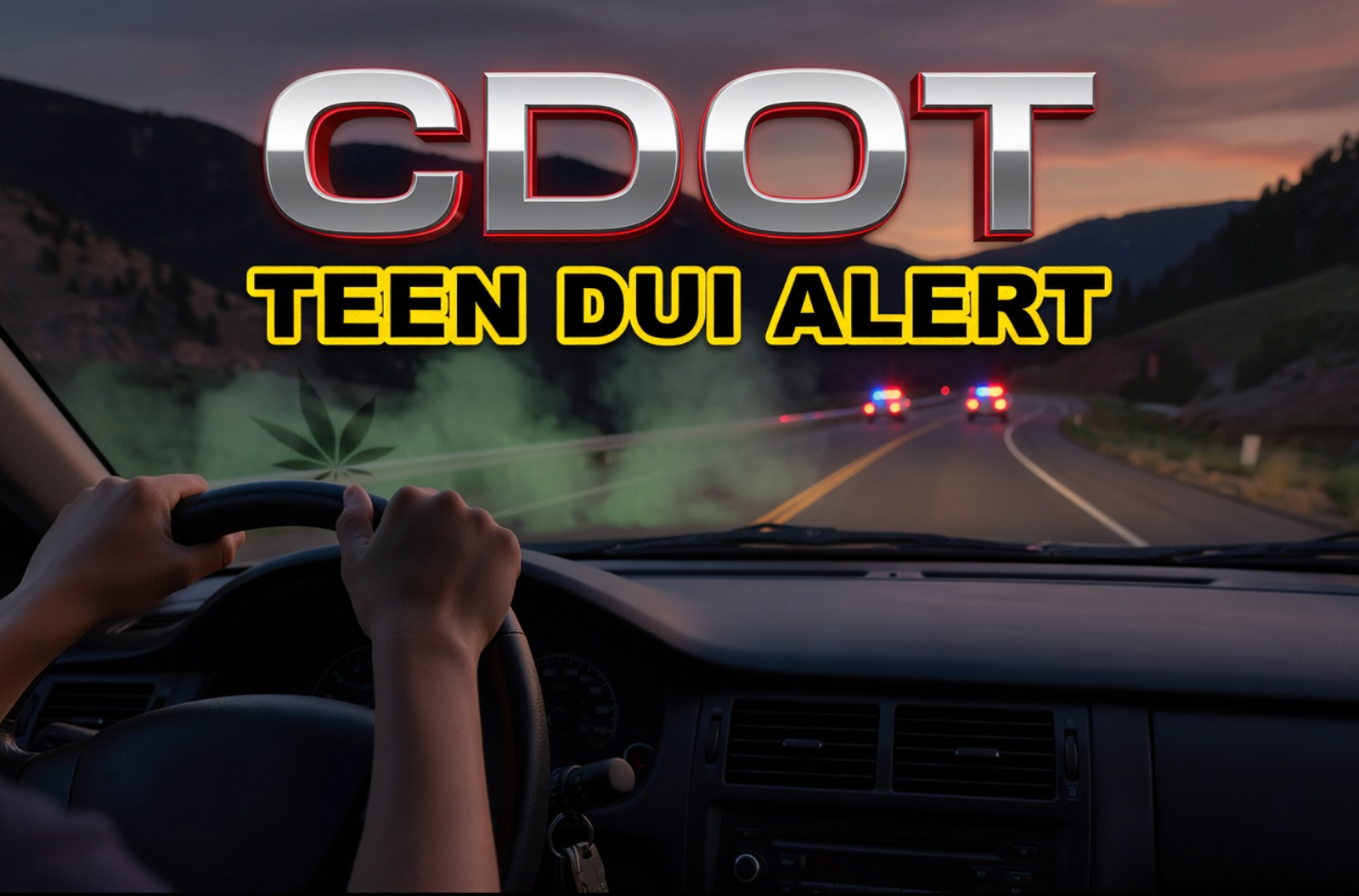
Colorado is moving fast to protect its youngest drivers before summer hits the highways. The Colorado Department of Transportation just rolled out a fresh cannabis education push aimed at teens, with posters, videos, and warnings landing inside driving schools across the state. Officials say the goal is simple: stop a generation from learning bad habits behind the wheel.
CDOT Pushes New Campaign Into Driving Schools Statewide
The agency is sending educational materials to 55 driving schools and 17 driver license offices across Colorado. The campaign targets young drivers between the ages of 15 and 20, the same group that often picks up the keys for the first time this season.
The “Drive High, Get a DUI” campaign highlights the fines and penalties associated with cannabis-impaired driving, and the initiative is especially targeted at teens, who are among the most likely to believe that driving under the influence of cannabis is “not as bad” as driving drunk.
Tamara Rollison, a CDOT spokesperson, said the timing matters because new drivers form habits fast.
“It’s very important for them to know the dangers of cannabis at their young age, but it’s incredibly important for them to realize that it’s dangerous to mix cannabis or any kind of impairing substance with driving. It’s so important and when you’re learning to drive, that’s the time to get into really good, safe habits.”
Why Teens Are the New Focus for Marijuana DUI Education
Non-medical cannabis is illegal for anyone under 21 in Colorado. Yet the numbers tell a worrying story.
Findings from the 2021 Healthy Kids Colorado Survey indicate 40 percent of teens say it would be easy for them to get marijuana, and about 1 in 10 have either driven a vehicle after consuming marijuana or been a passenger in a vehicle driven by someone who had been using marijuana.
Driving instructors flagged a growing problem. Many students believe odorless products, like edibles or THC vapes, make it easier to hide use. That false sense of safety is exactly what CDOT wants to break apart before it spreads any further.
When asked in a CDOT survey if they could drive safely under the influence of cannabis, 37% of Gen Z cannabis consumers said yes, compared with 17% of those ages 25-34. That gap shows how much work still needs to be done.
Summer Crashes and Real Numbers Behind the Warning
Last year, cannabis impairment was suspected in more than a thousand crashes across Colorado. The summer stretch is the worst window of the year.
CDOT calls the time between Memorial Day and Labor Day the deadliest 100 days with crash rates that are 20% higher than the rest of the year, and CDOT statistics show many fatal crashes involve an impaired driver.
Here is what the recent state data reveals about the danger zone for young drivers:
| Key Stat | Finding |
|---|---|
| Teens (16-20) in summer DUI crashes | 240 reported |
| Suspected marijuana impairment among them | 91 cases |
| Colorado road deaths linked to impairment | About 1 in 3 |
| Legal THC limit in Colorado | 5 nanograms |
Sam Cole, CDOT’s Traffic Safety Communications Manager, has previously warned that mixing small amounts of weed and alcohol can be just as dangerous as taking either one alone.
“Just a little bit of cannabis and a little bit of alcohol actually can put you at the legal limit for impairment in the state. That’s why we just make it simple. We say, if you plan to drink, you plan to use cannabis, just don’t mix that with driving.”
What Parents and New Drivers Should Know Right Now
Parents play a huge role in shaping how teens think about impaired driving. Experts say silence sends the wrong message.
Here is a quick reality check every Colorado family should keep in mind:
- A DUI is not just a ticket. It can mean license suspension, fines, community service, and an interlock device.
- Edibles hit harder and last longer. Effects may last well past when a teen thinks it’s safe to drive.
- Mixing substances is the real trap. A small amount of alcohol with THC can push impairment over the legal line.
- Medical cards do not protect anyone. A DUI charge sticks regardless of the source.
- Police are trained. Drug recognition experts look at eye movement, behavior, and roadside tests.
Quick Tip for Parents: Have the conversation before the keys come out. Talk openly about edibles, vapes, and ride shares. Let your teen know calling for a safe ride is never the wrong move.
John Anderson with the Colorado State Patrol Family Foundation said students often raise questions during driver education classes. The teen-focused effort includes banners and signage that will be displayed in both Colorado driver license offices and driving school locations throughout the state, as well as digital and printed materials that can be incorporated into driving education courses.
How Colorado Is Building Safer Habits for the Long Run
CDOT is not stopping at posters. The campaign is part of a multi-year push that began years ago and continues to grow as cannabis becomes more normalized in everyday life.
The agency also runs a free public course called Cannabis-Impaired Driving “Essentials,” which takes less than five minutes to complete. Resources, videos, and tip sheets are all available through DriveHighDUI.com.
Driving school instructors say the message is starting to stick with students who hear it early enough. The hope is that today’s 16-year-old in a learner’s permit class becomes tomorrow’s responsible adult who never thinks twice about calling a rideshare instead of driving high.
As summer kicks off across Colorado, the message from state leaders is clear and personal. A single bad choice behind the wheel can change a life forever, and CDOT wants every teen and every parent to feel that weight before the engine even starts. The state is betting that honest conversations, real numbers, and early education can save lives this season. What do you think about Colorado’s approach to teen cannabis education? Share your thoughts in the comments below and pass this story along to a parent or new driver who needs to hear it.


Warhammer Horus Heresy Super-Heavy Tanks Share a Plastic Chassis

Best Prime Day 2026 Desktop PC Deals, From $524 to $3,299

iOS 27 Wallet Adds 7 New Features, From Bill Splitting to Custom Passes

Colombia Edge DR Congo as Muñoz Books World Cup Knockout Place

Warriors Take Yaxel Lendeborg, the Oldest Pick in the 2026 NBA Draft

Sega’s $49.99 Sonic Classic and Modern Bundles Hit Switch in October

Microsoft Adds 8GB Surface Pro and Laptop at $849 and $949

Star Wars: Galactic Racer Is a Roguelite Racer With a Podracing Skin

Douze Dixièmes Closes Five Months After MIO: Memories in Orbit

Google TV Streamer Update Quietly Introduces Home Speaker Pairing

Gilgeous-Alexander’s Board Game Cease-and-Desist May Backfire

Barcelona Chase Álvarez After Gordon as Salary Cap Looms

Messi to Captain Argentina as Scaloni Bets on Old Guard

Modern Warfare 4 Lands on Switch 2 October 23, Ending Nintendo’s 13-Year Wait

Pulisic Ends Drought but US Defending Clouds 3-2 Senegal Win

French Open Line Call Furor Overshadows Fonseca Upset of Ruud

Stuntman Hollywood Revives the PS5 Stunt Racer After 19 Years

Tomb Raider: Legacy of Atlantis Gets February 2027 Release

Ace Combat 8: Wings of Theve Lands October 2 With a Big Online Bet

Chronic Kidney Disease Now Strikes 788 Million Worldwide
-

 TECHNOLOGY3 years ago
How to Adjust a Bulova Watch Band – An Easy Guide
-

 News3 years ago
Fred Pentland: Athletic Bilbao’s English mentor who changed the essence of Spanish football
-

 FINANCE3 years ago
Tax Planning for Every Season: Guide to Maximizing Your Tax Benefits
-

 Education3 years ago
African Ministers New Education Plan
-

 BUSINESS3 years ago
What is Entrepreneurial Operating System? A Comprehensive Guide to EOS
-

 Education3 years ago
Innovate Your Learning Journey with Technology and Enhance Education
-

 News3 years ago
Russians formally out of World Athletics Championships
-

 BUSINESS3 years ago
Top 9 Most Expensive American Cities to Rent an Apartment