
News
BLM Warns Campers: Follow 7 Leave No Trace Rules

The Bureau of Land Management is sending an urgent message to outdoor lovers heading into the 2026 summer season. With drought gripping nearly all of Colorado and wildfire forecasts looking grim, federal officials want every camper to follow seven simple rules before stepping foot on public land. The warning comes just as fire crews brace for what could be one of the toughest seasons in years.
Why the BLM Is Sounding the Alarm Right Now
Speaking from Grand Junction, Colorado, BLM outdoor recreation planner Zack Kelley said the reminder is timed for a reason. Summer travel is ramping up, and so is fire danger.
“With respect to fire season, fire restrictions can change on a day-by-day basis. So know before you go and know before you’re packing,” Kelley said.
The agency manages roughly 245 million acres of public land across the United States, much of it open to dispersed camping and boondocking. That huge open footprint also means more chances for a single careless move to spark disaster.
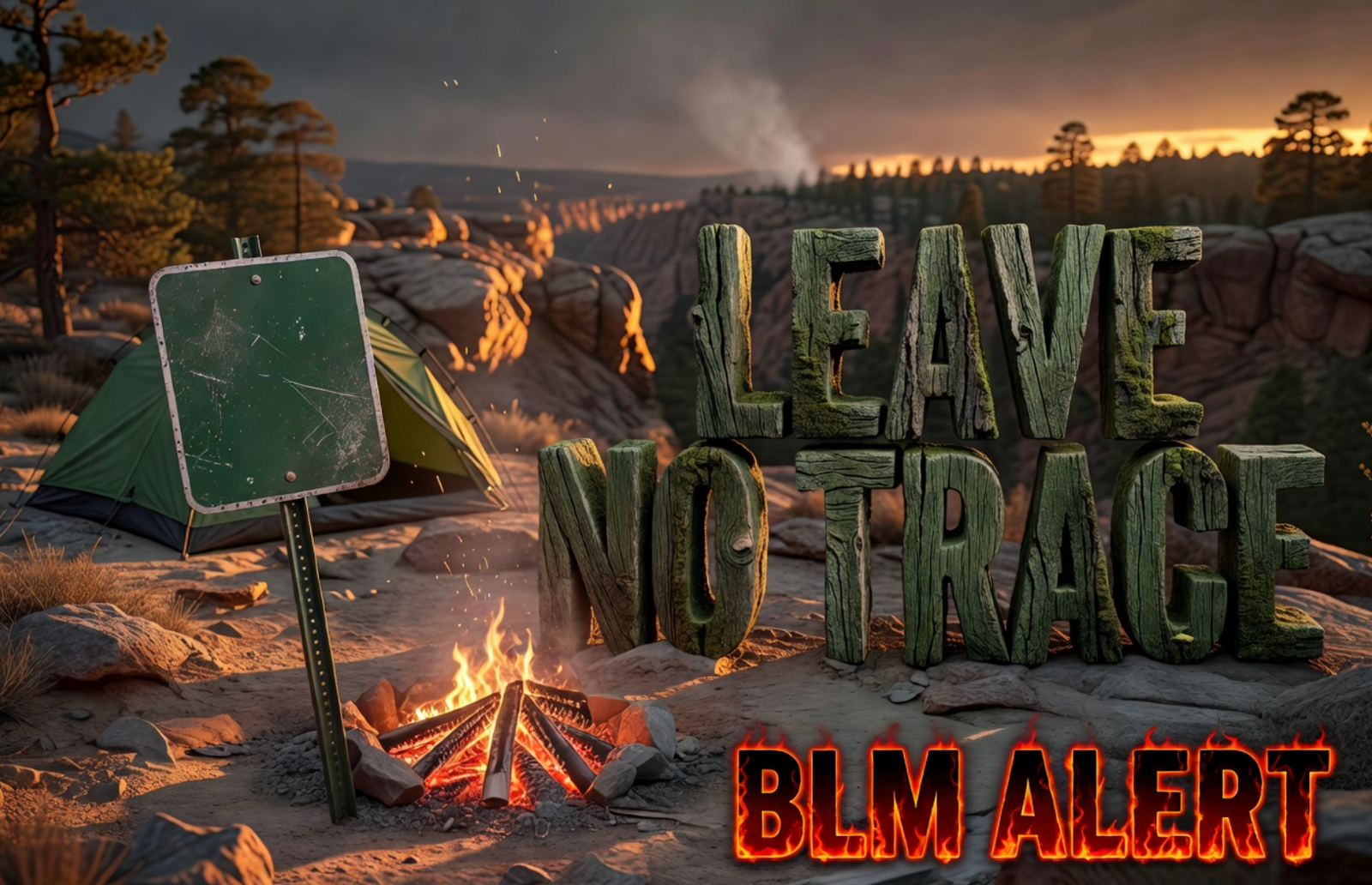
The 7 Leave No Trace Rules Every Camper Must Know
The seven principles were finalized in 1999 by the Leave No Trace Center for Outdoor Ethics, built through a partnership between the U.S. Forest Service, BLM, and the National Park Service. They have not changed since.
Here is the full list, broken down for quick reference:
- Plan ahead and prepare. Check fire bans and weather before you leave home.
- Travel and camp on durable surfaces. Stick to trails, rock, sand, gravel, or dry grass.
- Dispose of waste properly. Pack out every wrapper, scrap, and bag you brought in.
- Leave what you find. Snap a photo instead of pocketing rocks, flowers, or artifacts.
- Minimize campfire impacts. Use propane stoves when possible and douse fires cold.
- Respect wildlife. Use the thumb test to keep a safe distance.
- Be considerate of other visitors. Keep noise down and yield on narrow roads.
Kelley said one of the biggest hidden dangers is something most drivers never think about. Tall, dry brush under a hot vehicle can become a fire starter in seconds.
“Driving over any tall brush, you do run the risk of a bunch of dry grasses getting bunched up around your catalytic converter or your exhaust components, and that can start a wildfire,” he said.
“Everything you bring, you brought it there, so take it out with you. Why would you contribute that to the next person’s experience on your public lands?”
For wildlife, the rule is even simpler. If you cannot cover the animal with your thumb at arm’s length, you are too close and need to back away.
Drought and Wildfire Risk Push the Stakes Higher
The reminder lands during a brutal stretch for the West. Colorado Governor Jared Polis recently warned that the state faces a “significantly increased risk” of wildfire this summer, particularly in June and July.
State data shows 97% of Colorado is now in moderate or worse drought. Officials anticipate as many as 9,000 wildfires this year, well above the usual 6,000 to 7,000.
| Colorado Fire Snapshot 2026 | The Numbers |
|---|---|
| State land in drought | 97% |
| Forecasted wildfires this year | Up to 9,000 |
| Fires already reported in 2026 | Around 170 |
| Wildfires caused by humans (national average) | About 85% |
| Acres burned nationwide so far in 2026 | 1.89 million |
According to the National Interagency Fire Center, the country has already torched 194% of its previous 10-year average for acres burned by late April. State fire officials in Colorado say roughly 90% of wildfires in the state are human caused, while only 7% start from lightning.
That is why a stray cigarette, a hot exhaust, or a half-extinguished campfire matters so much this year.
Smart Steps Every Camper Can Take Before the Trip
Following the seven principles costs almost nothing, but it can keep favorite trails open. Since 2020, the BLM has closed more than 317 miles of backcountry routes near Moab and restricted over 15,000 acres near Zion because of trash, human waste, and overuse.
Officials recommend a short pre-trip checklist that anyone can knock out in 15 minutes:
- Call the local BLM field office or check its website for active fire restrictions.
- Camp at least 200 feet from any water source to protect wildlife.
- Pack a portable propane stove as a backup if open fires get banned mid-trip.
- Carry a sealed trash bag and pack out food scraps, including fruit peels.
- Share your itinerary with someone at home in case of emergency.
The standard stay limit on most BLM dispersed sites is 14 days within any 28-day period. After that, campers must move at least 25 miles to a new spot.
Kelley framed the bigger picture in plain terms. Public lands are a shared inheritance, and how visitors treat them now decides what is left for kids and grandkids later.
“We have to be mindful of how our recreation impacts it for us in the future as well as future generations because we got to inherit it because of people’s thoughtful stewardship of the lands and their resources. So, we have to steward them as well,” he said.
As summer crowds head west, the message from the Bureau of Land Management is straightforward and personal. A clean campsite, a cold fire ring, and a respectful distance from wildlife are tiny acts that protect the wild places people travel hundreds of miles to enjoy. The land does not ask much in return for everything it gives. Share your thoughts in the comments. Are you planning a camping trip this summer, and what is the one Leave No Trace rule you wish more people followed?













Sony and Warner Sue Anthropic Over Torrented Song Lyrics

Microsoft 365 Auth Fault Took Down Exchange and Teams

Honor’s Robot Phone Works, Then Prices Itself Out

Florida Cities Top Retirement Rankings the Scores Cannot Explain

Walmart’s $50 Million Opioid Settlement Closes Case Without Admission

California Sues Over $120 Million Morro Bay Wind Lease Buyout

Gilead Bixlenvo FDA Nod Opens Single Pill Path for Complex HIV Cases

Meta’s $18B Kids Deal Forever Shields Data Used to Spot Under-13s

Lettuce Outbreak Drove Record Cyclospora Spike Across 20 States

Amazon Shaves $20 Off M6 Mac Mini Before It Even Ships

Take-Two CEO Pushes Netflix Subs for GTA 6 Extended Look

Quake Gets 19 Free Maps From MachineGames Quake Club

Destiny 2 Fans Unlock Vaulted Maps After Live Service Ends

Wildlands Free Update Hands Players the Tools They Already Invented

Stripe Bid Shows PayPal Moat Cracked After Years of Slide

Quordle Monday Delivers Gavel Crush Speed Ethos Cleanly

Tyson’s Five-Year Utah Plant Falls to Cattle Shortage Reckoning

Silver Lake Workday Talks Signal Private Floor for Software

Kennedy Lewis Takes Majority Control of The Greenbrier in $500M Deal

Best Buy Marks 60 Years With Sale That Echoes Its Audio Shop Roots
-

 TECHNOLOGY3 years ago
How to Adjust a Bulova Watch Band – An Easy Guide
-

 News3 years ago
Fred Pentland: Athletic Bilbao’s English mentor who changed the essence of Spanish football
-

 FINANCE3 years ago
Tax Planning for Every Season: Guide to Maximizing Your Tax Benefits
-

 Education3 years ago
African Ministers New Education Plan
-

 BUSINESS3 years ago
What is Entrepreneurial Operating System? A Comprehensive Guide to EOS
-

 Education3 years ago
Innovate Your Learning Journey with Technology and Enhance Education
-

 News3 years ago
Russians formally out of World Athletics Championships
-

 BUSINESS3 years ago
Top 9 Most Expensive American Cities to Rent an Apartment