
Archaeologists just pulled a 700-year-old temazcal from beneath a bustling Mexico City neighborhood, and the discovery is rewriting what we thought we knew about Tenochtitlán before the Spanish arrived. This intact pre-Hispanic sauna, found in La Merced, proves the ancient Mexica turned steam, fire, and prayer into medicine for body and soul.
The Temazcal That Survived Seven Centuries
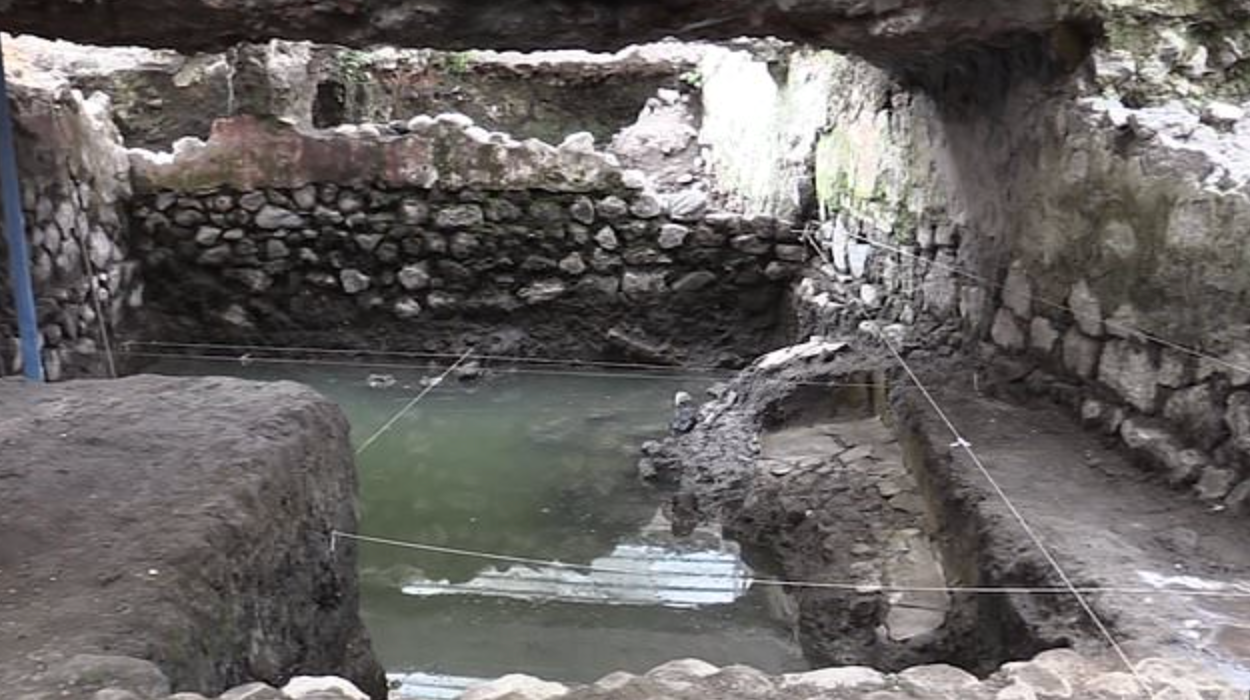
Workers breaking ground for an electricity substation in 2022 accidentally hit stone walls that refused to crumble like colonial bricks. Excavations quickly revealed a complete temazcal foundation: 5 meters long, 3 meters wide, with its bathing pool, hip-high benches, and the fire duct still perfectly aligned.
This is the first temazcal ever found inside the sacred precinct of Tenochtitlán. Every other known example sat outside the ceremonial center. Its location in the ancient neighborhood of Temazcaltitlán (literally “place where the sweat lodges are”) confirms written accounts that Spanish chroniclers dismissed as exaggeration.
The structure dates to 1325–1521, the exact centuries when the Mexica empire rose from lake islands to continental power.
Sacred Steam: More Than Just a Sauna
For the Mexica, the temazcal was pharmacy, church, and maternity ward in one steamy room.
Women entered before and after childbirth to cleanse blood and restore strength. Warriors bathed here after battles to wash away death pollution. Priests used the intense heat to commune with Toci (grandmother earth), Tlazolteotl (eater of filth), and the pulque goddesses linked to fertility and excess.
Steam carried prayers upward. Darkness inside mirrored the womb and the underworld. The midwife or healer, called tlamatquiticitl, guided every session with herbs, copal incense, and songs that still echo in modern temazcal ceremonies across Mexico today.
A Neighborhood Frozen in Time
The excavation uncovered three layers of history stacked like pages in a book.
Under the temazcal lay pure lakebed clay, the same surface the Mexica walked when they first founded Tenochtitlán in 1325. On top of the temazcal, Spanish builders erected a noble house between 1521 and 1620, its walls painted with red motifs that deliberately copied Aztec styles, proof that indigenous elites kept status even under colonial rule.
By the 1700s, the same plot became a tannery, its waste pits filled with cow hides and lime. The smell of death replaced the scent of copal, a brutal metaphor for what conquest did to sacred ground.
Why This Changes Everything
Lead archaeologist Víctor Esperón Calleja calls the site “a gift from the ancestors.” Before this dig, experts believed the Teopan district held only temples and palaces. Now we know common people, nobles, healers, and warriors all shared the same streets and steam.
The discovery also proves Temazcaltitlán was densely populated centuries earlier than textbooks claimed. More than twenty such sweat lodges may still lie under modern sidewalks and markets.
The Living Tradition
Walk into any rural village in Oaxaca, Michoacán, or Puebla today and you’ll still find families firing up temazcales at dusk. Midwives beat drums, pour water over hot stones, and sing the same invocations their ancestors used in the shadow of the Great Pyramid.
This excavation didn’t just unearth stones. It proved that a spiritual technology for healing and rebirth never died, even when empires fell.
The ancestors are still speaking through the steam. All we had to do was listen.
What moves you most about this discovery, the survival of the temazcal itself or the fact that people still use it exactly the same way? Drop your thoughts below and tag #TemazcalVivo if you share this story. The past is very much alive.