
News
Grand Valley Fire Crews Brace for Brutal Wildfire Season

Grand Junction, Colo. — With river flows running at half normal levels and mountain snowpack barely reaching 40 percent of average in some areas, fire officials in the Grand Valley say this could be one of the most dangerous wildfire seasons in years. Crews are already deploying across state lines, clearing brush around homes, and begging residents to do their part before the first lightning strike hits.
The early warning signs are impossible to ignore.
“Usually we get a decent snowpack that keeps things wet into June,” says Stephen Bowers, chief meteorologist with the National Weather Service in Grand Junction. “This year the melt happened weeks early and almost nothing is left above 10,000 feet in the southern mountains.”
That lack of moisture, combined with weeks of warm, windy weather, has pushed much of western Colorado into severe drought. The U.S. Drought Monitor currently rates 87 percent of Mesa County as D2 or worse — the same category that preceded the devastating 2020 Pine Gulch and East Troublesome fires.
Crews Already Fighting Fires Out of State
The Grand Junction Fire Department didn’t wait for trouble at home.
On March 16, GJFD sent a three-person team to South Dakota to battle the 8,434-acre Qury Fire, which was only 27 percent contained at the time. It’s part of a national rotation that regularly sends local firefighters to hotspots across the country.
“We tell the national center what we have available, and they send us where the need is greatest,” says Dirk Clingman, community outreach specialist for GJFD. “Those reps come home with experience you simply can’t get fighting grass fires on the valley floor.”
Every GJFD engine company now carries full wildland gear alongside structural turnout gear. New recruits earn their Red Card certification — the ticket required to fight federal wildfires — before they even finish the academy.
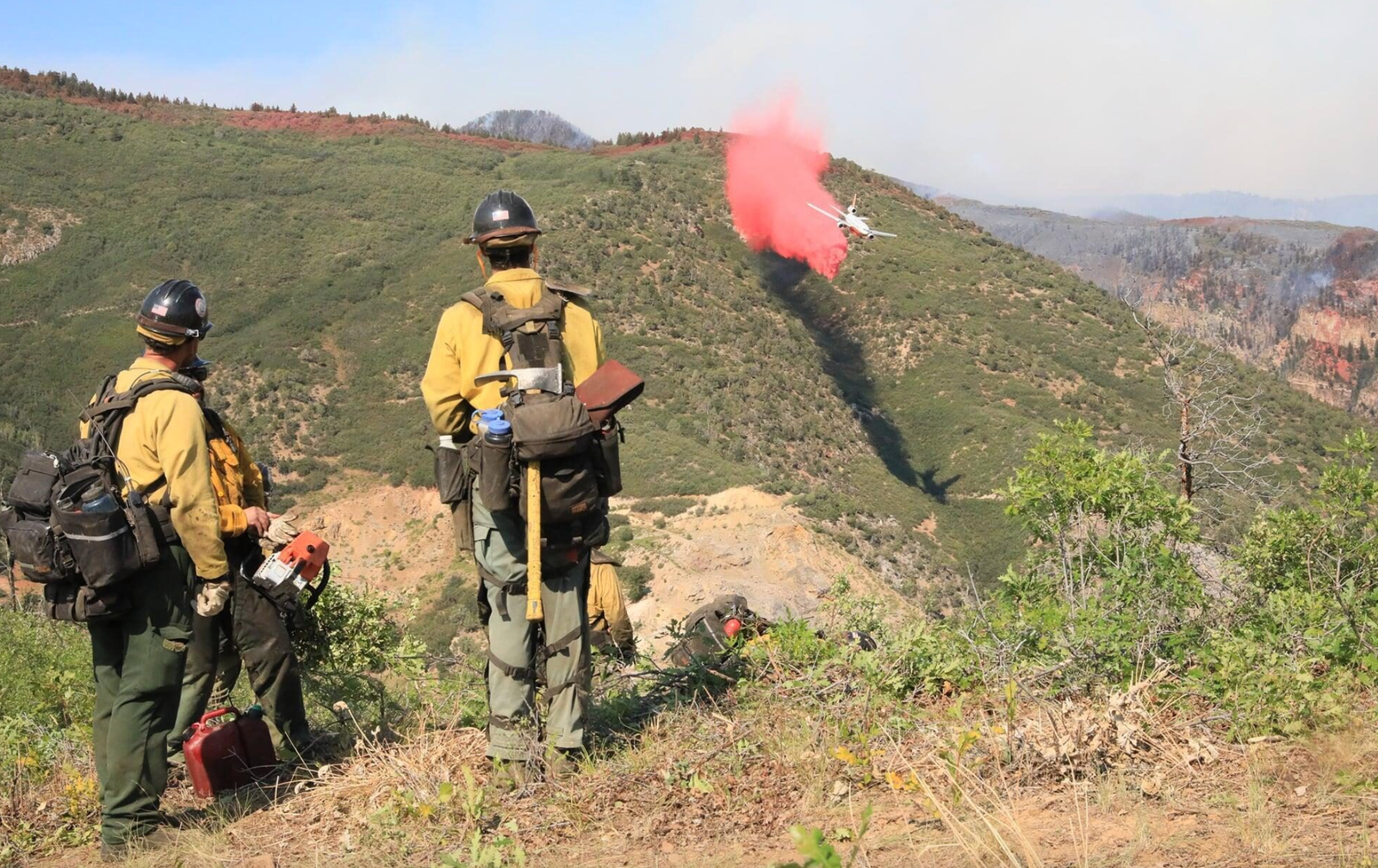
Turning Neighborhoods into Defensible Space
Two miles from downtown Grand Junction, the Mesa County Sheriff’s Office Wildland Team runs a different kind of operation.
Engine Captain Luke Williams and his crew spend their days chewing through gamble oak and juniper with a 20-ton masticator, creating fuel breaks around homes in Glade Park and the Redlands.
“We just finished 27 properties in Glade Park,” Williams says. “Homeowners see that machine eat a 12-inch tree in ten seconds and suddenly they’re a lot more willing to thin the rest of their land.”
The team works free of charge for residents who qualify, but the real goal is changing minds.
“We can’t prevent fire,” Williams tells every landowner he meets. “We can only make sure your house is the one still standing when it’s over.”
His crew’s simple checklist has become the gold standard across the county:
- Clear pine needles and leaves from roofs and gutters
- Move firewood stacks at least 30 feet from the house
- Trim tree branches within 10 feet of chimneys
- Create a 5-foot non-combustible zone around the foundation (gravel, not bark mulch)
New Building Code Targets the Riskiest Areas
Starting April 1, every new home built in Mesa County’s Wildland-Urban Interface must follow Colorado’s new Wildfire Resiliency Code.
That means metal roofs, fire-resistant siding, enclosed eaves, and tempered glass windows in hundreds of neighborhoods from Powderhorn to Palisade.
Mesa County commissioners also shifted $100,000 in federal PILT money to local fire districts this spring — money that will buy new brush trucks, chain saws, and hose lays that can reach remote ridge tops.
This One Belongs to All of Us
Walk through any Grand Valley neighborhood right now and you’ll see the divide: one house surrounded by waist-high grass and junipers touching the siding, the next with clean gutters and a freshly mowed 100-foot buffer.
The difference between those two homes this summer could literally be night and day.
“Collaboration is the only way this works,” Captain Williams says. “Fire doesn’t care about property lines or jurisdictions. Neither should we.”
As red-flag warnings start popping up in March instead of July, the message from every fire chief is the same: the professionals are ready, but they can’t save your house if you wait until flames are at the door.
Get the pine needles off the roof. Move the propane tank. Cut the grass.
Because this year, the season has already started.










Spotify Running Mode hits Android and revives its old tempo experiment

Galaxy Tab S12 Ultra Renders Keep the Notch Fans Hate

Novato Spinning Round House Sells With Six Neighbors for $3.3 Million

Crop Tour Finds Indiana and Nebraska Corn Yields Lagging 2025

Best Buy 60th sale brings Android deals back to its roots

American Airlines reverses seatback screen bet years too late

Iran Hormuz Strikes Force Gulf Oil Onto Costlier Paths

Plague Tale Prequel Day One Joins Game Pass Wave 2 as Witcher Exits

NBA 2K27 opens The City to everyone and rewrites career eras

iOS 26.6.1 Patches 29 Flaws as AI Forces Faster Apple Updates

Double Fine Cuts 23 Jobs Weeks After Xbox Independence

Day-One Big Walk Lifts PS Plus August Beyond Recycled AAA

John Hight Exits Wizards After Digital Reckoning Hits

Curtis Mead’s Red Sox Debut Ends With Fractured Wrist

Red Sox Squander Hot Streak Chance in 4-3 Loss to Athletics

Moesch and Dressel Rewrite Night One at 2026 U.S. Nationals

Boutte’s Quiet Camp Takeover Forces Patriots Receiver Choices

Take-Two CEO Pushes Netflix Subs for GTA 6 Extended Look

Halo Campaign Evolved Skulls Meet Death Barriers That Kill the Hunt

Wildlands Free Update Hands Players the Tools They Already Invented
-

 TECHNOLOGY3 years ago
How to Adjust a Bulova Watch Band – An Easy Guide
-

 News3 years ago
Fred Pentland: Athletic Bilbao’s English mentor who changed the essence of Spanish football
-

 FINANCE3 years ago
Tax Planning for Every Season: Guide to Maximizing Your Tax Benefits
-

 Education3 years ago
African Ministers New Education Plan
-

 BUSINESS3 years ago
What is Entrepreneurial Operating System? A Comprehensive Guide to EOS
-

 Education3 years ago
Innovate Your Learning Journey with Technology and Enhance Education
-

 News3 years ago
Russians formally out of World Athletics Championships
-

 BUSINESS3 years ago
Top 9 Most Expensive American Cities to Rent an Apartment