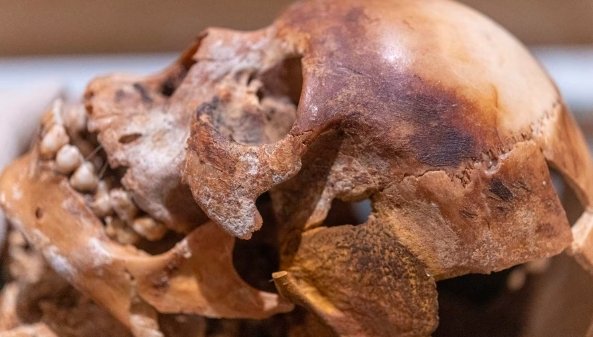
Archaeologists in Spain have discovered the skull of a Celtic warrior killed during a Roman siege in 25 BCE. The find at La Loma site reveals brutal tactics used by Roman forces to intimidate enemies in the Cantabrian Wars.
Discovery Shakes Up History of Roman Conquests
Experts uncovered the skull amid rubble from a collapsed wall at La Loma, a fortified Celtic settlement in northern Spain. This happened during excavations that started in 2020 and continued through recent years.
The warrior, estimated to be between 40 and 50 years old, died in fierce combat. His head was cut off and displayed on the fort’s walls as a trophy. DNA tests confirm he was a local Cantabrian, part of Celtic tribes resisting Roman expansion.
Battle debris around the skull includes arrowheads, spear points, and armor fragments. These items paint a vivid picture of the chaos during the siege.
This find adds to growing evidence of Roman psychological warfare. Similar displays have turned up in other sites across Europe, showing a pattern in how conquerors broke enemy spirits.
The Cantabrian Wars and Roman Strategy
The Cantabrian Wars lasted from 29 to 16 BCE, marking Rome’s final push to control the Iberian Peninsula. Emperor Augustus led the campaign against tough Celtic tribes in rugged northern terrain.
La Loma stood as a key stronghold for the Cantabri people. Romans besieged it with legions, using catapults and archers to overwhelm defenders.
In the battle’s final moments, hand-to-hand fighting gave way to a massive arrow barrage. Victorious Romans then demolished walls and displayed trophies like this skull to warn survivors.
Historians note these wars were among Rome’s bloodiest. They involved guerrilla tactics by Celts and heavy Roman losses before victory.
Recent studies link this event to broader Roman expansion. For instance, similar sieges occurred in Gaul and Britain, where heads were also used as symbols of dominance.
Details from the Skull and Site Analysis
The skull shows clear signs of violence. Fractures suggest a fatal blow, followed by decapitation with a sharp blade.
It lay buried under stones for over 2,000 years, preserved by the site’s remote location in Palencia province.
Archaeologists used advanced tools like 3D scanning to reconstruct the scene. This helped confirm the skull’s placement as a deliberate act.
Key findings from the site include:
- Over 300 projectile points, mostly Roman-style arrows.
- Fragments of Celtic shields and Roman helmets.
- Charred wood indicating fires set during the assault.
A table summarizing artifacts found at La Loma:
| Artifact Type | Quantity | Description |
|---|---|---|
| Arrowheads | 150+ | Iron tips used in final volley |
| Spear Points | 50 | Mix of Celtic and Roman designs |
| Armor Pieces | 100 | Leather and metal fragments from both sides |
| Weapon Handles | 20 | Wooden grips showing heavy use |
These items highlight the intensity of the clash. Experts say the display lasted months, rotting in view to crush morale.
Broader Impact on Modern Understanding
This discovery connects to ongoing research on ancient warfare. It shows how Romans blended military might with terror tactics.
In recent years, similar finds in Italy and France have revealed more about Celtic resistance. For example, a 2024 dig in southern France uncovered Celtic weapons from a related conflict.
The La Loma site now draws global attention. It offers lessons on empire building and cultural clashes that echo in today’s world.
Public interest has spiked, with museums planning exhibits. This could boost tourism in the region, helping local economies.
What This Means for Future Archaeology
Teams plan more digs at La Loma to uncover full battle details. They aim to find more remains and map the entire fort.
Technology like ground-penetrating radar will help locate hidden structures without disturbing the site.
This find reminds us of history’s brutal side. It humanizes ancient warriors, showing their courage against overwhelming odds.
Experts predict more revelations from the Cantabrian Wars era. As climate change exposes sites, new discoveries could rewrite textbooks.
Share your thoughts on this ancient tale in the comments below. Did it change how you see Roman history? Spread the word to fellow history buffs.