
News
Thousands Rally in Grand Junction for No Kings Protest Against Government Overreach

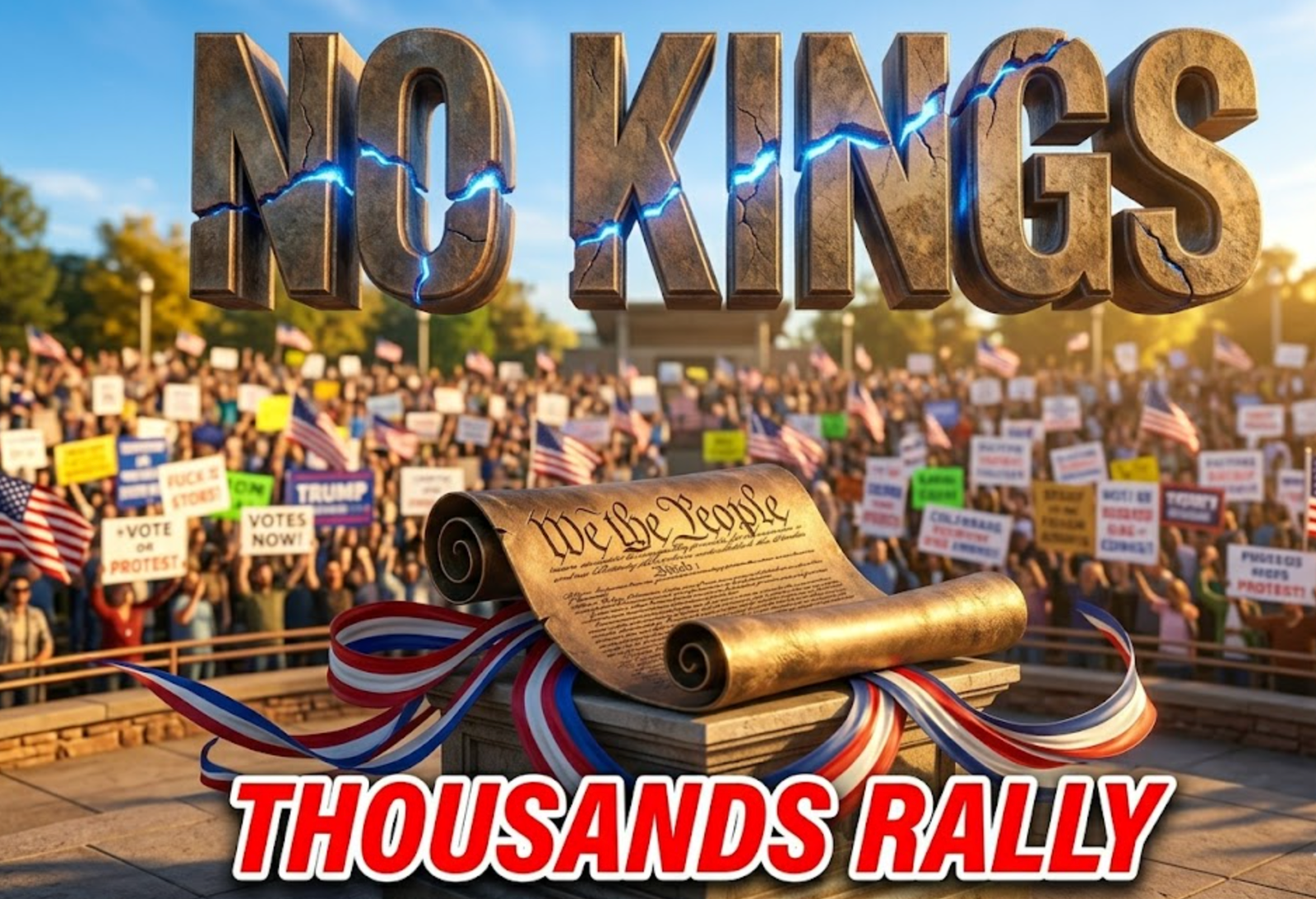
Crowds packed the streets of Grand Junction, Colorado, on Saturday as roughly 3,000 people joined the third wave of No Kings protests sweeping across the nation. The rally, organized by Indivisible Grand Junction, turned Las Colonias Park and Riverside Parkway into a sea of signs, chants, and calls to protect American democracy from what demonstrators describe as unchecked federal power.
The scene was one of the largest political gatherings western Colorado has seen in years, and it carried a message that is echoing in cities big and small across all 50 states.
What Is the No Kings Movement and Why Is It Growing?
The No Kings movement began earlier in 2025 as a grassroots response to growing fears about the concentration of executive power in Washington. What started as scattered local demonstrations has now evolved into a coordinated, nationwide protest effort with three major waves of action so far.
The name itself draws from the founding principles of the United States. Protesters argue that the country was built on the rejection of monarchy and authoritarian rule, and they see the current political climate as a threat to that legacy.
Saturday’s protests marked the third organized wave of No Kings rallies, with events reported in hundreds of cities from coast to coast. Grand Junction, a city of about 65,000 in Mesa County, was among the most notable smaller cities to draw a massive turnout.
The movement has attracted a broad coalition. Democrats, independents, and even some disaffected Republicans have shown up at various rallies, united by a shared concern about executive overreach and the erosion of democratic norms.
Grand Junction Turns Out in Force
The Grand Junction rally kicked off at Butterfly Pond, where organizers delivered speeches before leading a march that wound through the city and ended at the Las Colonias Amphitheater. The amphitheater was already hosting the Si Se Puede Celebration and Car Show, creating an energetic convergence of community events.
Organizers estimated around 3,000 people attended. That figure is striking for a city the size of Grand Junction, especially one located in a traditionally conservative region of Colorado.
No counter-protesters were observed at the event, and the demonstration remained entirely peaceful throughout the day.
People of all ages participated. Some marched on foot while others showed support from passing vehicles, honking horns and waving flags. The atmosphere was described by attendees as hopeful rather than hostile.
Mallory Martin, an organizer with Indivisible Grand Junction, summed up the purpose of the day in clear terms.
“Government overreach is still a thing. We’re still seeing huge amounts of overreach by our federal government, and we are here to say no kings in America and that democracy is really important for us,” Martin said. “We all are believing in the Constitution and wanting to support all of our constitutional rights and not have a king.”
More Than Politics: Building Community in Divided Times
For organizers, the protest served a purpose beyond political messaging. It was about connection.
Martin explained that many left-leaning and independent voters in western Colorado have felt isolated in recent years. In a region where conservative politics often dominate, finding like-minded people can be difficult.
“I have talked to so many people who have thought that as a blue or as an independent left-leaning voter, that they might be in the minority, that they might be alone even,” Martin said. “They’ve felt disconnected from their community because they weren’t sure where to find like-minded people. And this is such a great visible thing of like, you’re not alone here.”
That sense of solidarity was visible throughout the event. Strangers exchanged conversations. Neighbors who had never discussed politics found common ground. Families brought children, turning the rally into a civic lesson as much as a protest.
“You’re not alone here.” — Mallory Martin, Indivisible Grand Junction organizer
Events like these serve as a reminder that political engagement is not limited to election day. For communities that feel underrepresented, showing up in public can be a powerful statement of existence.
Young Voters Step Up to the Mic
One of the most notable aspects of the Grand Junction rally was the strong presence of young people. College students, first-time voters, and Gen Z activists made their voices heard alongside longtime community members.
Layla Carlson, a student at Colorado Mesa University, spoke about why she felt compelled to attend.
“Especially my generation specifically, we are the future of this country. And we are coming of age in this super divided time, in this time that requires all of this knowledge,” Carlson said. “It is incredibly important for young voters to be educated on who they’re voting for.”
Her words reflect a broader trend. Voter registration among 18 to 24 year olds has been climbing in recent election cycles, and protests like the No Kings movement are helping to accelerate that engagement.
Key reasons young voters are showing up in larger numbers:
- Growing concern about democratic institutions and how government decisions affect their futures
- Social media mobilization making it easier to organize and spread awareness
- Economic anxiety around student debt, housing costs, and job markets
- Climate policy frustration driving younger generations to demand accountability
Dean Withers, a Grand Junction resident and political content creator with a significant online following, also attended. He emphasized that the rally should be a space for everyone, not just one side of the political spectrum.
“I believe in a country with no tyranny. I believe in liberty and justice for all, and I believe the current administration in DC is serving to an agenda that is antithetical to those goals,” Withers said. “I want my voice and the voices of everybody else to be heard and challenged in opposition of those goals through peaceful, lawful protest.”
What the No Kings Movement Means for 2026 and Beyond
The timing of this third wave of protests is significant. With midterm elections approaching, organizers are hoping the energy from these rallies translates into tangible political action at the ballot box.
Indivisible, the national organization behind many of these local chapters, was originally formed in 2017 as a guide for grassroots civic resistance. Nearly a decade later, the network has chapters in all 50 states and continues to grow.
In Grand Junction alone, the turnout on Saturday was roughly double what organizers saw during earlier No Kings events. That kind of growth signals a movement that is gaining momentum rather than losing steam.
Political analysts have noted that protests of this scale in smaller, traditionally red-leaning cities could have real implications for upcoming races. Mesa County, which voted heavily Republican in recent presidential elections, may not flip overnight. But increased civic participation in these communities changes the conversation and forces candidates to engage with a wider range of voters.
The challenge for organizers now is sustaining this energy. History shows that protest movements can fade quickly if they do not evolve into organized voter outreach, candidate recruitment, and policy advocacy.
Martin and the Indivisible Grand Junction team say they are already planning next steps, including voter registration drives, town hall events, and partnerships with other community organizations.
Saturday’s rally in Grand Junction was more than a protest. It was a statement that thousands of Americans in every corner of the country are paying attention, showing up, and refusing to stay silent. Whether that energy shapes the 2026 elections remains to be seen, but one thing is clear: the No Kings movement is not slowing down anytime soon. Share your thoughts in the comments below, and if this story resonated with you, join the conversation on social media using #NoKings to let your community know where you stand.









NFL Three-Strike Safety Fouls Now Pull Coaches and Clubs In

Browns Fans Tape Protest Signs to Jim Brown Statue Over Watson

Amazon Pixel 11 Deal Erases the $100 Hike for One More Day

Elden Ring on Switch 2 Turns Its Own Worst Label Into a Portable Win

Ternus Takes the Stage With Apple’s Foldable Debut

Ikea Xbox Yxstaby Turns Controller Thumbstick Into Home Furniture

Pokémon Center Turns Past Worlds Wins Into Bundles and a Pikachu Coin

NFL Scraps Pro Bowl Game to Restore Pure Player Honor

New Twitter.now Bets the Brand Musk Left Behind

Bella Mir’s Famous First Loss Meets the Accountant Who Won

Double Fine Cuts 23 Jobs Weeks After Xbox Independence

Day-One Big Walk Lifts PS Plus August Beyond Recycled AAA

John Hight Exits Wizards After Digital Reckoning Hits

Curtis Mead’s Red Sox Debut Ends With Fractured Wrist

Moesch and Dressel Rewrite Night One at 2026 U.S. Nationals

Red Sox Squander Hot Streak Chance in 4-3 Loss to Athletics

Boutte’s Quiet Camp Takeover Forces Patriots Receiver Choices

Take-Two CEO Pushes Netflix Subs for GTA 6 Extended Look

Halo Campaign Evolved Skulls Meet Death Barriers That Kill the Hunt

Wildlands Free Update Hands Players the Tools They Already Invented
-

 TECHNOLOGY3 years ago
How to Adjust a Bulova Watch Band – An Easy Guide
-

 News3 years ago
Fred Pentland: Athletic Bilbao’s English mentor who changed the essence of Spanish football
-

 FINANCE3 years ago
Tax Planning for Every Season: Guide to Maximizing Your Tax Benefits
-

 Education3 years ago
African Ministers New Education Plan
-

 BUSINESS3 years ago
What is Entrepreneurial Operating System? A Comprehensive Guide to EOS
-

 Education3 years ago
Innovate Your Learning Journey with Technology and Enhance Education
-

 News3 years ago
Russians formally out of World Athletics Championships
-

 BUSINESS3 years ago
Top 9 Most Expensive American Cities to Rent an Apartment