
News
Indiana Governor Signals Major Shift on Marijuana Legalization

FORT WAYNE, Ind. — Indiana Governor Mike Braun has issued his clearest signal yet that the Hoosier state can no longer ignore the wave of marijuana legalization crashing against its borders.
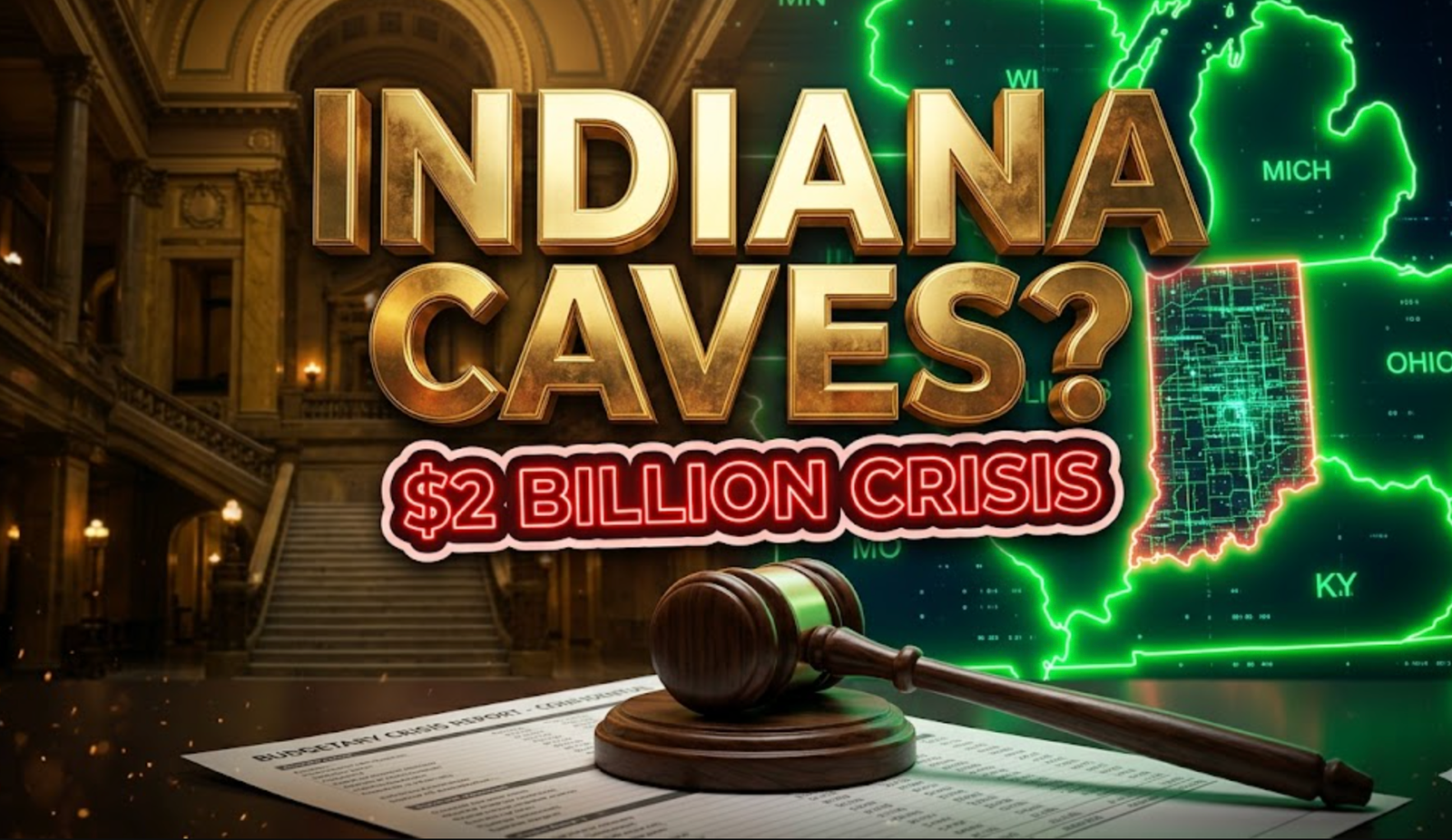
In a candid admission that has sparked fresh hope for advocates and fierce debate among lawmakers, Gov. Braun acknowledged this week that Indiana’s position as an island of prohibition is becoming impossible to maintain. With Michigan, Ohio, Illinois, and Kentucky now operating legal cannabis programs, Indiana stands alone in the region.
“I’m kind of agnostic on that issue,” Braun said during a fireside chat in Indianapolis on Thursday. “But when you’ve got four states surrounding you, you’re probably going to have to address it.”
This pragmatic pivot comes at a critical moment. Indiana is staring down a projected revenue shortfall for the upcoming budget cycle. Meanwhile, its neighbors are collectively raking in over a billion dollars in annual tax revenue from cannabis sales.
The Green Curtain: Indiana Surrounded
The economic contrast between Indiana and its neighbors has never been starker. While Hoosier lawmakers scramble to plug holes in a tightening budget, surrounding states are capitalizing on a massive new revenue stream.
Ohio shattered records in 2025. In its first full year of adult-use sales, the state reported over $1 billion in total cannabis receipts. That money is now funding schools and infrastructure across the state line.
Michigan tells a similar story of explosive growth. The state reported over $330 million in tax revenue and fees during the last fiscal year alone. A significant portion of that revenue comes from Indiana residents crossing the border to make legal purchases.
Indiana is now effectively encircled. Illinois continues to generate billions in established sales. Kentucky has moved forward with a medical-only program.
For years, Republican leadership in the Indiana Statehouse has held the line. But Braun’s comments suggest that the sheer volume of economic activity happening just miles from Indiana homes is forcing a reevaluation.
The Billion-Dollar Budget Hole
The driving force behind this potential policy shift is not just ideology. It is simple math.
Fiscal analysts have warned that the state faces a challenging road ahead. Revenue forecasts for the 2027 budget cycle look grim. Lawmakers are bracing for “budget crunches” that could force painful cuts to essential services.
Republican State Rep. Jim Lucas has long pushed to legalize cannabis in Indiana. He believes the solution to the state’s financial woes is staring them in the face.
“Next year will be a long session budget year, and we’re seeing some budget crunches,” Lucas said. “Part of this that I’ve never looked at has been the cash flow part of it. But that’s something you can’t ignore because those numbers are pretty big.”
Lucas estimates that a regulated adult-use market could inject between $150 million and $200 million annually into Indiana’s economy.
This revenue is currently being donated to Michigan and Illinois by Hoosier drivers. Lucas argues that keeping the industry illegal does not stop consumption. It simply ensures that Indiana sees zero tax benefit from it.
“It’s everything’s on the table the way I see it,” Lucas stated regarding the upcoming budget discussions.
What the People Want
While the Statehouse has remained paralyzed on the issue, the people of Indiana have already made up their minds.
A definitive survey from Ball State University’s Bowen Center for Public Affairs reveals a public that is ready for change. The data paints a picture of overwhelming support that crosses party lines.
Ball State Survey Findings:
- 62% of Hoosiers support legalizing marijuana for both recreational and medical use.
- 25% support legalization for medical use only.
- 13% oppose any form of reform.
These numbers show that nearly 90 percent of the state supports some form of legal access. Despite this mandate, legislative attempts have repeatedly died in committee.
In previous sessions, bills to decriminalize simple possession or establish a medical program were stifled by Republican leadership. Braun’s new stance could be the key to unlocking those committee doors.
Law Enforcement and the Path Forward
Gov. Braun’s newfound openness comes with a significant condition. He has consistently maintained that he will not move forward without the blessing of law enforcement.
“You’re probably going to have to address it,” Braun admitted.
However, he emphasized that any discussion would involve heavy input from police and sheriffs. The Indiana Sheriffs’ Association has historically stood as a staunch opponent of legalization.
Their concerns center on public safety. Opponents fear increased rates of impaired driving. They also worry about youth access to high-potency products.
Critics of legalization argue that the social costs could outweigh the tax benefits. They point to potential addiction issues and emergency room visits as reasons to hold the line.
Lucas remains hopeful that these concerns can be addressed through strict regulation. He plans to push for the discussion to begin in earnest during the next legislative session.
The 2027 budget session will be the ultimate test. With a revenue gap to close and public opinion firmly on the side of reform, the “green wave” may finally breach the Indiana statehouse.










Spotify Running Mode hits Android and revives its old tempo experiment

Galaxy Tab S12 Ultra Renders Keep the Notch Fans Hate

Novato Spinning Round House Sells With Six Neighbors for $3.3 Million

Crop Tour Finds Indiana and Nebraska Corn Yields Lagging 2025

Best Buy 60th sale brings Android deals back to its roots

American Airlines reverses seatback screen bet years too late

Iran Hormuz Strikes Force Gulf Oil Onto Costlier Paths

Plague Tale Prequel Day One Joins Game Pass Wave 2 as Witcher Exits

NBA 2K27 opens The City to everyone and rewrites career eras

iOS 26.6.1 Patches 29 Flaws as AI Forces Faster Apple Updates

Double Fine Cuts 23 Jobs Weeks After Xbox Independence

Day-One Big Walk Lifts PS Plus August Beyond Recycled AAA

John Hight Exits Wizards After Digital Reckoning Hits

Curtis Mead’s Red Sox Debut Ends With Fractured Wrist

Red Sox Squander Hot Streak Chance in 4-3 Loss to Athletics

Moesch and Dressel Rewrite Night One at 2026 U.S. Nationals

Boutte’s Quiet Camp Takeover Forces Patriots Receiver Choices

Take-Two CEO Pushes Netflix Subs for GTA 6 Extended Look

Halo Campaign Evolved Skulls Meet Death Barriers That Kill the Hunt

Wildlands Free Update Hands Players the Tools They Already Invented
-

 TECHNOLOGY3 years ago
How to Adjust a Bulova Watch Band – An Easy Guide
-

 News3 years ago
Fred Pentland: Athletic Bilbao’s English mentor who changed the essence of Spanish football
-

 FINANCE3 years ago
Tax Planning for Every Season: Guide to Maximizing Your Tax Benefits
-

 Education3 years ago
African Ministers New Education Plan
-

 BUSINESS3 years ago
What is Entrepreneurial Operating System? A Comprehensive Guide to EOS
-

 Education3 years ago
Innovate Your Learning Journey with Technology and Enhance Education
-

 News3 years ago
Russians formally out of World Athletics Championships
-

 BUSINESS3 years ago
Top 9 Most Expensive American Cities to Rent an Apartment