
News
Indiana Probes Soaring Energy Bills as Complaints Hit Record Highs

Indiana residents are at a breaking point with skyrocketing energy costs. State regulators launched an urgent investigation Tuesday after receiving a record-breaking wave of customer complaints that has already matched last year’s total volume. The Indiana Utility Regulatory Commission (IURC) dragged top utility executives into a heated meeting at the PNC Center to demand immediate answers and relief for struggling families who are now choosing between heating their homes and buying groceries.
Regulators demand answers after complaints skyrocket
The atmosphere inside the PNC Center was tense on Tuesday as IURC Chairman Andy Zay confronted leaders from the state’s five largest investor-owned utilities. The commission revealed that consumer complaints in just the first three months of 2026 have already equaled the total number of complaints filed in all of 2025.
Northern Indiana Public Service Company (NIPSCO) is at the center of this storm, accounting for more than half of the grievances filed this year. Customers have flooded the commission’s phone lines with reports of bills doubling or tripling, with many citing confusing “delivery charges” that often exceed the cost of the actual energy used.
“The commission has received an unprecedented number of complaints from customers who are struggling to pay their energy bills,” Zay said during the inquiry. “My interest and focus here is on solutions and what utilities can do in the immediate to provide relief.”
Zay emphasized that the balance between utility profits and customer affordability is “dramatically out of whack.” He noted that while the commission wants utilities to be successful enough to keep the lights on, the current financial burden on Hoosier households has become unsustainable.
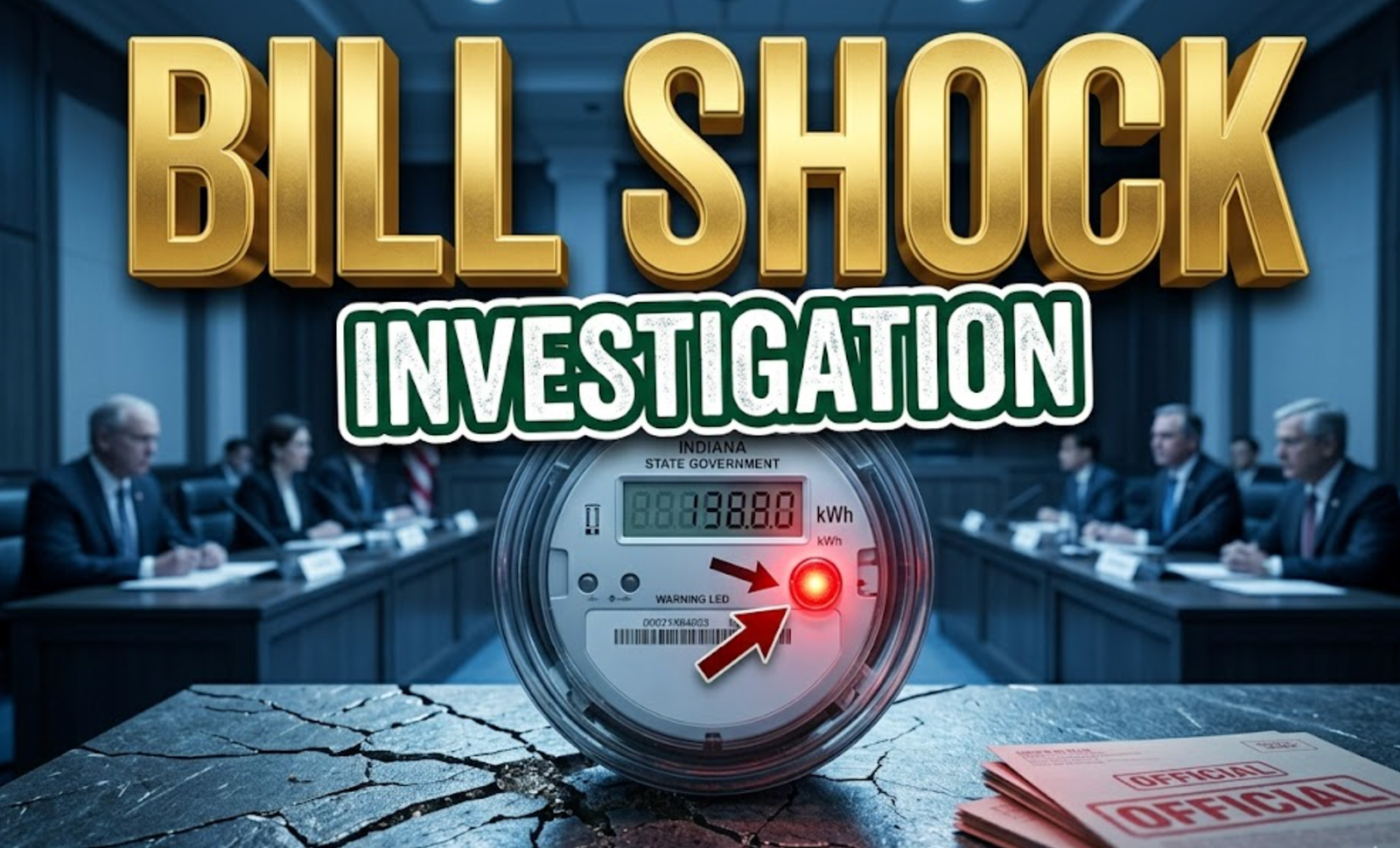
Utilities defend rates and offer transparency
Despite the outrage, utility executives defended their pricing models during the inquiry. Vince Parisi, President and Chief Operating Officer of NIPSCO, argued that the company has remained transparent and operates under strict regulatory frameworks.
Parisi attributed recent bill spikes to a colder-than-average winter and increased usage, rather than arbitrary price hikes. He stated that NIPSCO is focusing on education and direct outreach to help customers navigate these seasonal spikes.
“This inquiry is an important opportunity to have an open, fact-based discussion about energy affordability,” Parisi said. “We operate under one of the most transparent regulatory frameworks in the country.”
However, the defense did not stop at weather patterns. AES Indiana President Brandi Davis-Handy highlighted rising operational costs, specifically pointing to a 185% increase in tree trimming costs along power lines since 2023. She argued that these maintenance tasks are critical for preventing outages during storms but admitted they drive up rates.
Utility Company Responses at a Glance:
- NIPSCO: Blames cold winter and high usage; claims transparency in billing documents.
- AES Indiana: Cites inflation and skyrocketing vegetation management costs.
- Indiana Michigan Power (I&M): Plans to file for a base rate reduction this summer.
Data centers create new economic paradox
A surprising development emerged from Indiana Michigan Power (I&M) during the hearing. While other utilities defended increases, I&M announced plans to file for a rate reduction later this year.
The company credits this potential decrease to the massive influx of data centers into the region. These “large load” customers consume enormous amounts of power, which I&M argues generates enough new revenue to offset costs for residential customers. This proposal is part of their “Customer Benefits Plan” expected to be filed this summer.
“Our customers and the communities we serve are at the center of every decision we make,” the company stated. “We are leveraging growth in our communities to request rate reductions.”
This creates a complex situation for regulators. While I&M suggests data centers are a financial savior, consumer advocates warn that the infrastructure required to support these facilities could eventually lead to higher transmission costs that fall back on regular ratepayers if not carefully managed.
Misinformation spreads on social media regarding costs
Beyond the raw numbers, Chairman Zay expressed deep concern over how customers are receiving information. He argued that the industry has failed to communicate effectively, leaving a void that is being filled by rumors and misinformation on platforms like X (formerly Twitter) and Facebook.
“I just don’t believe the industry as a whole has done a good job in representing ourselves in the community,” Zay admitted. “We’re letting a lot of this conversation be driven, not even through established media, but through social media where there is misinformation.”
The complexity of modern utility bills exacerbates this issue. Riders, trackers, and variable fuel charges make it nearly impossible for the average person to decipher what they are actually paying for. This confusion fuels the anger seen in the “delivery fee” debates trending online, where customers feel they are being charged hidden taxes rather than legitimate service fees.
Public hearings set for direct customer feedback
The IURC has acknowledged that closed-door meetings with executives are not enough. The commission is launching a statewide listening tour to hear directly from ratepayers. Chairman Zay has encouraged all attendees to bring their actual paper bills to these sessions to walk commissioners through their specific grievances.
This is a rare opportunity for residents to put a face to the statistics and force regulators to see the human cost of policy decisions.
Upcoming Listening Session Schedule:
| Date | Location | Time |
|---|---|---|
| Mar 26 | La Porte Civic Auditorium, La Porte | 6:00 p.m. |
| Mar 28 | Syracuse Town Hall, Syracuse | 10:00 a.m. |
| Apr 1 | Elkhart Co. Fairgrounds, Goshen | 6:00 p.m. |
| Apr 2 | Columbus City Hall, Columbus | 6:00 p.m. |
| Apr 6 | New Haven Community Center, Fort Wayne | 6:00 p.m. |
| Apr 7 | Old National Events Plaza, Evansville | 6:00 p.m. |
| Apr 9 | Noblesville City Hall, Noblesville | 6:00 p.m. |
| Apr 13 | Gary Public Library, Gary | 5:30 p.m. |
The energy crisis in Indiana has moved beyond simple economics and become a matter of survival for many families. As the IURC moves from investigation to action, the voices heard in the coming weeks will likely shape the future of energy policy in the state. If you are struggling with your bills, now is the time to speak up—share your thoughts in the comments below or use the hashtag #IndianaEnergyCrisis on social media to join the conversation.









Spotify Running Mode hits Android and revives its old tempo experiment

Galaxy Tab S12 Ultra Renders Keep the Notch Fans Hate

Novato Spinning Round House Sells With Six Neighbors for $3.3 Million

Crop Tour Finds Indiana and Nebraska Corn Yields Lagging 2025

Best Buy 60th sale brings Android deals back to its roots

American Airlines reverses seatback screen bet years too late

Iran Hormuz Strikes Force Gulf Oil Onto Costlier Paths

Plague Tale Prequel Day One Joins Game Pass Wave 2 as Witcher Exits

NBA 2K27 opens The City to everyone and rewrites career eras

iOS 26.6.1 Patches 29 Flaws as AI Forces Faster Apple Updates

Double Fine Cuts 23 Jobs Weeks After Xbox Independence

John Hight Exits Wizards After Digital Reckoning Hits

Day-One Big Walk Lifts PS Plus August Beyond Recycled AAA

Curtis Mead’s Red Sox Debut Ends With Fractured Wrist

Red Sox Squander Hot Streak Chance in 4-3 Loss to Athletics

Moesch and Dressel Rewrite Night One at 2026 U.S. Nationals

Boutte’s Quiet Camp Takeover Forces Patriots Receiver Choices

Take-Two CEO Pushes Netflix Subs for GTA 6 Extended Look

Halo Campaign Evolved Skulls Meet Death Barriers That Kill the Hunt

Wildlands Free Update Hands Players the Tools They Already Invented
-

 TECHNOLOGY3 years ago
How to Adjust a Bulova Watch Band – An Easy Guide
-

 News3 years ago
Fred Pentland: Athletic Bilbao’s English mentor who changed the essence of Spanish football
-

 FINANCE3 years ago
Tax Planning for Every Season: Guide to Maximizing Your Tax Benefits
-

 Education3 years ago
African Ministers New Education Plan
-

 BUSINESS3 years ago
What is Entrepreneurial Operating System? A Comprehensive Guide to EOS
-

 Education3 years ago
Innovate Your Learning Journey with Technology and Enhance Education
-

 BUSINESS3 years ago
Top 9 Most Expensive American Cities to Rent an Apartment
-

 News3 years ago
Russians formally out of World Athletics Championships