With wildland burn season in full swing and Air Quality Awareness Week underway, Mesa County officials are stepping up efforts to keep Grand Valley residents informed — and protected — from shifting atmospheric threats.
The message? Air quality isn’t just a summer or wildfire issue. It’s a daily reality that can turn dangerous fast, especially for vulnerable residents in the basin-like terrain of western Colorado.
Watching the Sky, Every Day
Chase Boddicker, an Environmental Health Specialist with Mesa County Public Health (MCPH), has his eyes on the air every single morning.
His team draws from a variety of sources — NOAA, the Colorado Department of Public Health and Environment (CDPHE), even the Mesa County Sheriff’s Office — to assess whether the air is safe and whether open burning should be allowed.
“We check air quality conditions every single day,” Boddicker said. “Then we assess whether or not we should be allowing burning today or if we should say no — let’s have a no-burn advisory until conditions improve.”
That decision is more than precautionary. It can be the difference between a safe day outdoors and a spike in hospital visits for asthma and other respiratory conditions.
When the Wind Carries More Than Weather
The Grand Valley sits in a natural bowl — a geographic feature that can trap airborne particles like smoke, dust, and ozone.
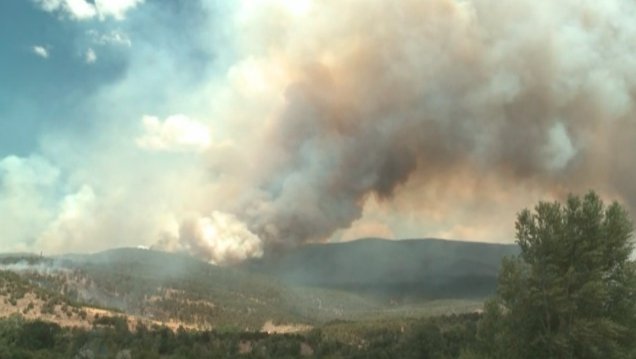
Even when local activity is minimal, Mesa County can still suffer degraded air quality due to outside smoke sources. Boddicker cited common culprits: “Sometimes we get smoke columns that come over to us from Wyoming, Utah, or further out West.”
When those columns descend into the Valley, they linger. And that stagnation creates elevated health risks — especially when paired with warm temperatures and light wind.
Who’s Most at Risk?
According to Boddicker, air quality concerns aren’t limited to a specific age or demographic. But some groups are more vulnerable than others:
-
Young children
-
Elderly adults
-
People with heart or lung conditions
-
Pregnant women
-
Outdoor workers or athletes
“These highly susceptible populations… would be more concerned with air quality than others,” Boddicker said. “But it can happen to anybody at any time.”
What Makes Air Unhealthy?
Poor air quality can result from:
-
Particulate Matter (PM2.5 & PM10): Tiny particles that lodge deep in the lungs.
-
Ozone (O3): Forms in sunlight and can irritate the airways.
-
Smoke & Ash: Often seasonal but dangerous in high volumes.
-
Volatile Organic Compounds (VOCs): Emitted by fuels, paints, and other materials.
Mesa County’s open burn season — which runs through May 31 — increases the likelihood of particulate exposure. That’s why burn advisories are updated daily.
Building a Clean-Air Safe Zone at Home
When outside air gets dirty, the best refuge might be your own living room. But only if it’s properly filtered.
“Try to create a safe space inside,” Boddicker advised. “Protecting indoor air quality… is going to be really important.”
Simple ways to improve home air quality:
-
Use a HEPA-certified air purifier
-
Keep windows and doors shut during bad air days
-
Avoid burning candles or incense indoors
-
Run HVAC systems with clean filters
-
Limit vacuuming and sweeping (which stirs up dust)
For those without a purifier, even a DIY version using a box fan and a furnace filter can make a meaningful difference.
The Numbers, Updated Daily
Mesa County Public Health maintains a live dashboard with the current Air Quality Index (AQI) readings and advisory information. Residents are encouraged to check it before outdoor activity or planned burns.
| AQI Value | Air Quality Level | Health Message |
|---|---|---|
| 0–50 | Good | Enjoy your usual activities. |
| 51–100 | Moderate | Unusually sensitive people should consider limiting prolonged exertion. |
| 101–150 | Unhealthy for Sensitive Groups | Children, elderly, and people with respiratory conditions should reduce prolonged activity outdoors. |
| 151–200 | Unhealthy | Everyone may begin to experience health effects; sensitive groups more seriously. |
| 201–300 | Very Unhealthy | Health alert: everyone may experience more serious health effects. |
The site also provides links to federal and state resources including AirNow.gov and CDPHE’s air quality tools.
More Than Just an App Alert
The county’s air quality page is just one part of a larger public health strategy. MCPH has been working with schools, assisted living centers, and employers to provide guidance on air-sensitive activities. From school recess to construction site safety briefings, air quality now informs real-time decisions.
“We’re trying to push awareness before the air gets bad,” said Boddicker. “If people can adjust habits early — like planning morning jogs when levels are lower — they can avoid some of the worst exposure.”
Looking Ahead to Wildfire Season
Though the current focus is on open burns, wildfire season looms — and with it, a whole new level of concern.
Officials say the spring moisture has delayed vegetation drying, but once temperatures rise, conditions could shift quickly. If wildfires erupt nearby — or in neighboring states — Grand Junction and the broader Valley will once again be in the smoke’s path.
It’s not a question of if, but when.