GRAND JUNCTION, Colo. (KJCT) – Mesa County Commissioners are wading into the national debate over a proposed change to the Endangered Species Act (ESA) that could have ripple effects across Western infrastructure and environmental policy.
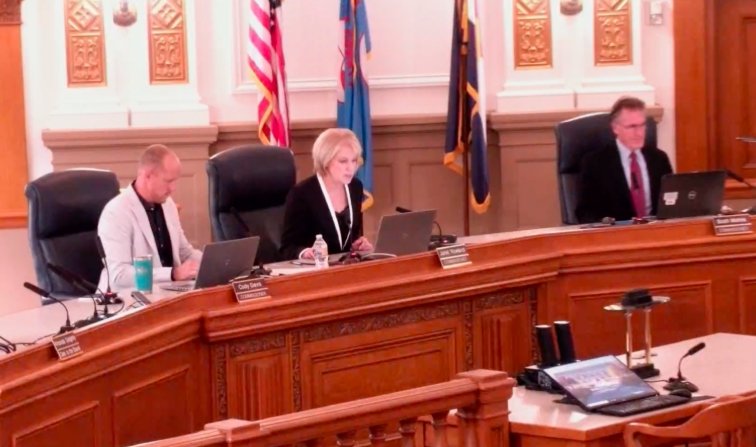
At a meeting on Tuesday, May 13, commissioners unanimously approved a letter to the U.S. Fish and Wildlife Service (USFWS), urging federal officials to extend the public comment period on the proposed rule change—an indication of concern about how the new definition of “harm” could affect local projects.
What’s Changing—and Why It Matters
At the heart of the issue is a federal proposal to rescind the long-standing definition of “harm” under the ESA. For decades, “harm” has been interpreted to include habitat modification—meaning that destroying or degrading the natural habitat of an endangered species can be grounds for legal action, even if the species itself isn’t directly injured.
Now, the USFWS and the National Marine Fisheries Service say they want to revise that interpretation, arguing that the current language is too broad and out of sync with the original legislative intent of the ESA passed in 1973.
Federal officials say the rule change is meant to simplify enforcement and clarify legal gray areas, but local leaders in Mesa County worry that it could go too far, tipping the scales away from environmental stewardship and toward unfettered development.
Infrastructure in the Crosshairs
Mesa County officials didn’t outright oppose the proposed change. Instead, they’re calling for a 30-day extension to the public comment period to better evaluate the potential consequences for local infrastructure.
Their concern? Projects like road expansions, stormwater systems, and bridge construction could get caught in the regulatory crossfire. If habitat modification is no longer considered “harm,” it could either speed up local projects—or open the door to increased environmental degradation, depending on how the rule is enforced.
“Infrastructure is a cornerstone of rural economic development,” one commissioner noted. “But we also live in a region with unique and fragile ecosystems. Any shift in federal policy that touches both has to be examined carefully.”
A Delicate Balance
The commissioners were clear that their position isn’t adversarial. They praised the long-standing relationship between Mesa County and the U.S. Fish and Wildlife Service, emphasizing the need for a balanced approach that respects both environmental priorities and local development needs.
“We value our partnership with the USFWS,” they said in the letter. “We simply want the time necessary to fully understand the scope of this change and how it may affect our ability to manage critical projects while protecting endangered species.”
This marks yet another flashpoint in the ongoing national debate over environmental regulation and local autonomy—especially in the American West, where federal land management policies frequently intersect with county-level infrastructure and land-use planning.
What’s Next?
The fate of the rule change is still uncertain. The USFWS has not yet announced whether it will grant the extension Mesa County is asking for. Environmental advocacy groups are expected to weigh in heavily, arguing that habitat loss is one of the primary drivers of species decline—and that weakening the definition of “harm” could be a step backward in conservation.
For now, Mesa County joins a growing number of local governments asking for more time and more clarity before the federal government finalizes a rule that could have long-lasting impacts on land use and conservation.