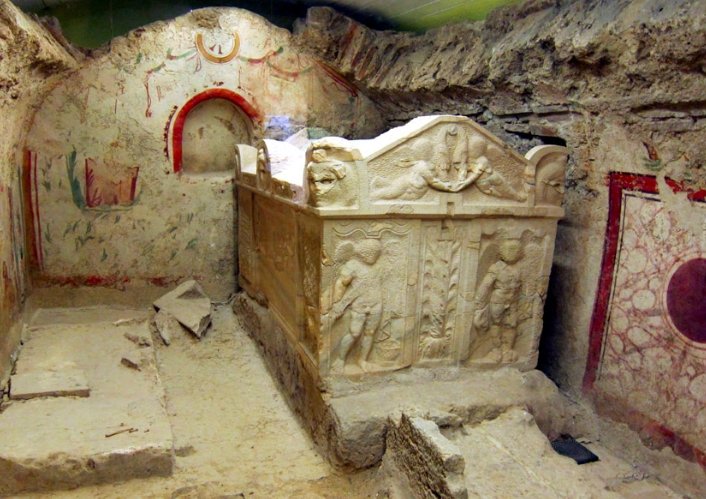
Archaeologists in France have uncovered a stunning Roman mausoleum in Saint Romain en Gal, near Lyon, that closely resembles the tomb of Emperor Augustus in Rome. This 2,000 year old structure, built around 50 CE, was discovered during recent excavations and highlights the elite status of its unknown occupant in ancient Roman Gaul.
Discovery Sparks Excitement Among Experts
The find came to light in August 2025 during routine digs at Saint Romain en Gal, a site rich in Roman history. Teams from local museums and research groups were exploring the area when they stumbled upon the circular monument.
This mausoleum stands out for its size and design. It measures over 49 feet in diameter inside and likely rose about 20 feet high. Experts say its preservation is remarkable, with much of the foundation intact after centuries underground.
The location adds to its importance. Saint Romain en Gal was part of the Roman colony of Vienne, founded by Julius Caesar in 47 BCE. This spot would have been visible to travelers, signaling the power of the person buried there.
Archaeologists note that only a handful of similar structures exist in France. This one is unique due to its circular form and direct ties to imperial Roman architecture.
Ties to Emperor Augustus and Roman Elite
The mausoleum’s design draws clear inspiration from Augustus’ tomb in Rome, a massive monument built in 28 BCE. Augustus, Rome’s first emperor, created his tomb as a symbol of eternal legacy.
Similarities include the circular layout and grand scale. The French structure mimics this to honor a local figure, possibly a wealthy merchant or official in Roman Gaul.
Historians believe this shows how Roman influence spread to provinces like Gaul, now modern France. Elite locals adopted imperial styles to boost their status.
Recent studies link this find to broader Roman burial trends. For instance, tumulus mausoleums were rare but prestigious, reserved for the powerful.
Key Features of the Mausoleum
Experts have identified several standout elements that make this discovery special.
- Size and Structure: The interior spans 49 feet, with walls that once reached 20 feet high, topped by a conical roof.
- Materials Used: Built with local stone, it includes decorative elements like molded bases, showing skilled craftsmanship.
- Location Perks: Positioned on a hill, it overlooked ancient roads, making it a landmark for Roman travelers.
- Preservation State: Unlike many ruins, this one avoided major damage from later construction or erosion.
These features suggest the builder invested heavily, pointing to high social standing.
Historical Context in Roman Gaul
Roman Gaul thrived under emperors like Augustus, who expanded the empire’s reach. Vienne became a key city, with theaters, temples, and homes for the elite.
This mausoleum fits into that world. It dates to a time when Gaul adopted Roman customs, blending local traditions with imperial ones.
Compare it to other finds, like the Roman mosaics unearthed nearby in the 19th century. Those showed daily life, while this tomb reveals death rituals.
Recent events tie in too. In 2024, digs in Lyon found Roman roads and gates, painting a fuller picture of the region’s past. This new discovery builds on that, showing how elites emulated Rome.
| Aspect | Saint Romain en Gal Mausoleum | Augustus Tomb in Rome |
|---|---|---|
| Build Date | Around 50 CE | 28 BCE |
| Diameter | Over 49 feet | About 285 feet |
| Height | Estimated 20 feet | Originally 137 feet |
| Purpose | Elite burial in Gaul | Imperial family tomb |
| Current State | Well-preserved foundation | Ruins, recently restored |
This table highlights the scale differences but shared design ideas.
What This Means for Future Research
The find opens doors for more study. Teams plan to analyze artifacts and soil for clues about the occupant, like bones or inscriptions.
It could reveal more about Roman Gaul’s social layers. Who was buried here? A governor, trader, or veteran? Answers might come from DNA tests or nearby digs.
This echoes global trends in archaeology. In 2025, similar Roman sites in Britain and Italy have yielded treasures, fueling interest in ancient empires.
As research continues, it reminds us how history connects us. Share your thoughts on this discovery in the comments below, and spread the word to fellow history fans.