
News
Mesa County Deputy Disciplined After Sharing Driver’s Info Before ICE Detention

The sheriff’s office has wrapped up its internal review into a traffic stop that led to a young woman’s detention by federal immigration agents. The fallout? A public apology, disciplinary action, and more questions than answers.
Sheriff Takes Responsibility, But Questions Remain
Sheriff Todd Rowell didn’t mince words. “I take full responsibility,” he said in a written statement released July 30, ending weeks of speculation over a June traffic stop that snowballed into a federal detention.
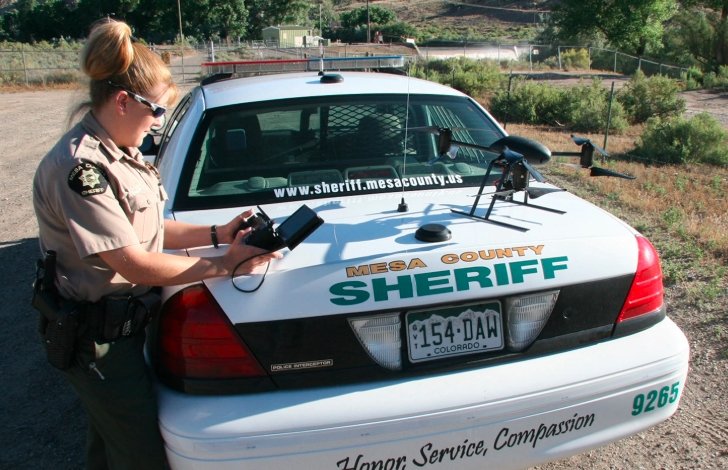
It started with a routine pull-over. Nineteen-year-old Caroline Dias-Goncalves was driving just a bit too close to a semi-truck near Fruita on June 5. Deputy Alexander Zwinck initiated the stop. But what happened next wasn’t routine — not by a long shot.
Without a warrant, Zwinck took a photo of what he believed was Goncalves’ driver’s license. He then sent it to a private group chat made up of local and federal law enforcement officers. Days later, Goncalves was in ICE custody.
Encrypted Chats and Unofficial Channels
Deputy Zwinck didn’t radio it in. He didn’t file a report through official systems first. Instead, he shared Goncalves’ ID photo in a private Signal chat, an app known for end-to-end encryption and secrecy.
This group chat wasn’t small. It included members of:
-
Mesa County Sheriff’s Office
-
Colorado State Patrol
-
Homeland Security Investigations
-
Drug Interdiction Teams from across Colorado
Zwinck claimed ICE wasn’t directly in the chat. But Homeland Security was. And that’s where the trail likely picked up steam.
The Gray Area Between Observation and Profiling
Zwinck told investigators he doesn’t photograph everyone’s ID. He looks for “behavior changes, or abnormalities,” which to him, signal something might be off.
What exactly those “abnormalities” were in Goncalves’ case isn’t clear. But it raises serious concerns about discretionary policing and the invisible line between proactive law enforcement and racial or immigration profiling.
One sentence in his interview stood out starkly:
“I took a photo of her driver’s license… sent that out to a Signal chat group.”
That single act kickstarted a chain reaction.
Sheriff’s Office Wraps Investigation, Issues Discipline
Now that the internal Administrative Review is over, the department has confirmed disciplinary action was taken against Zwinck. But the exact nature of the discipline hasn’t been disclosed.
That’s been frustrating for some in the community. The Sheriff’s Office maintains it can’t legally share details about personnel matters. Still, many are calling for transparency.
The statement also noted that while the deputy violated internal policy, there’s no evidence of criminal wrongdoing. Sheriff Rowell emphasized the need for stricter guardrails to ensure this sort of situation doesn’t repeat.
ICE Wasn’t Watching the Road… But They Were Listening
ICE confirmed they weren’t part of the group chat where Zwinck shared the photo. But that doesn’t mean they didn’t receive the tip secondhand.
This is where things get murky. Information passed between agencies — even informally — can set off formal immigration enforcement. That’s what seems to have happened here.
While Homeland Security has access to national databases, border records, and more, Goncalves’ encounter with the federal agency came just days after Zwinck’s chat message. Coincidence? Possibly. But many believe otherwise.
Legal, But Not Ethical? A Growing Debate
The entire incident shines a light on a legal gray zone that local law enforcement agencies are increasingly navigating across the country.
Is sharing ID information via encrypted chat technically illegal? No, according to internal reviews. But does it violate public trust? That’s a harder question.
Here’s a snapshot comparison of relevant policies across Colorado counties:
| County | Photo Sharing Without Warrant | Encrypted Chat Use Policy | ICE Collaboration Policy |
|---|---|---|---|
| Mesa County | Not explicitly prohibited | No formal policy exists | No formal collaboration |
| Denver County | Prohibited | Prohibited | Sanctuary policy |
| El Paso County | Allowed with discretion | Allowed | Cooperates with ICE |
| Boulder County | Prohibited | Restricted | Limits federal communication |
Some counties have clear guidelines. Others leave a lot up to interpretation — and that can lead to serious fallout.
Goncalves’ Detention: A Flashpoint Moment
Caroline Dias-Goncalves’ case isn’t isolated. It’s part of a broader national conversation about the role of local cops in immigration enforcement.
One small action — a photo sent in a chat — changed the course of a young woman’s life.
Immigration rights groups have pointed to this case as an example of how law enforcement can unintentionally funnel individuals into the federal immigration system, even without direct intent.
Even without ICE in the group chat, the connection between local stops and federal detentions is very real.












Mortgage Rates Climb to an 11-Month High, and Buyers Retreat Fast

FCC Sets August 6 Vote to Erase the 39% TV Ownership Cap

Netflix Heads Into Earnings With Its 2022 Playbook Already Spent

China’s Economy Grows Just 4.3% as Exports Boom and Households Retreat

United Airlines Beats Earnings Estimates Despite $6 Billion Fuel Hit

California’s Plastic Packaging Law Draws Fire From Every Side

xAI Sues a Grok User for CSAM Deepfakes It Struggled to Stop

US Stocks Edge Within 0.5% of a Record as Oil Climbs on War

BlackRock’s Private Markets Bet Pays Off With a Record $15 Trillion in Assets

Kalshi Traders See 93% Odds Gas Tops $4 as Iran Strikes Return

Halo Studios Reverses PS Plus for Halo: Campaign Evolved on PS5

Black Ops 1 and 2 PS5 Ports: $40 Price Tag Has Fans Uneasy

Matt Brown Dismisses Rousey and Paul’s MVP MMA Ratings Win Over UFC

Star Wars: Galactic Racer Is a Roguelite Racer With a Podracing Skin

Julius Randle Traded to Nets as Wolves Reclaim Cap Space for Dosunmu

Sega’s $49.99 Sonic Classic and Modern Bundles Hit Switch in October

Colombia Edge DR Congo as Muñoz Books World Cup Knockout Place

Douze Dixièmes Closes Five Months After MIO: Memories in Orbit

Warriors Take Yaxel Lendeborg, the Oldest Pick in the 2026 NBA Draft

Meta’s Muse Image Lets Anyone Use Your Instagram Photos in AI
-

 TECHNOLOGY3 years ago
How to Adjust a Bulova Watch Band – An Easy Guide
-

 News3 years ago
Fred Pentland: Athletic Bilbao’s English mentor who changed the essence of Spanish football
-

 FINANCE3 years ago
Tax Planning for Every Season: Guide to Maximizing Your Tax Benefits
-

 Education3 years ago
African Ministers New Education Plan
-

 BUSINESS3 years ago
What is Entrepreneurial Operating System? A Comprehensive Guide to EOS
-

 Education3 years ago
Innovate Your Learning Journey with Technology and Enhance Education
-

 News3 years ago
Russians formally out of World Athletics Championships
-

 BUSINESS3 years ago
Top 9 Most Expensive American Cities to Rent an Apartment