
News
Ternus Takes the Stage With Apple’s Foldable Debut
Apple’s Surprise and Shine keynote on September 9 marks John Ternus’s CEO debut with the long-rumored foldable iPhone Ultra and iterative Pros.

Apple locked in Wednesday, September 9 at 10 a.m. PT for its fall product event under the tagline “Surprise and shine.” The session at Apple Park will be the first major keynote led by John Ternus after he becomes CEO on September 1.
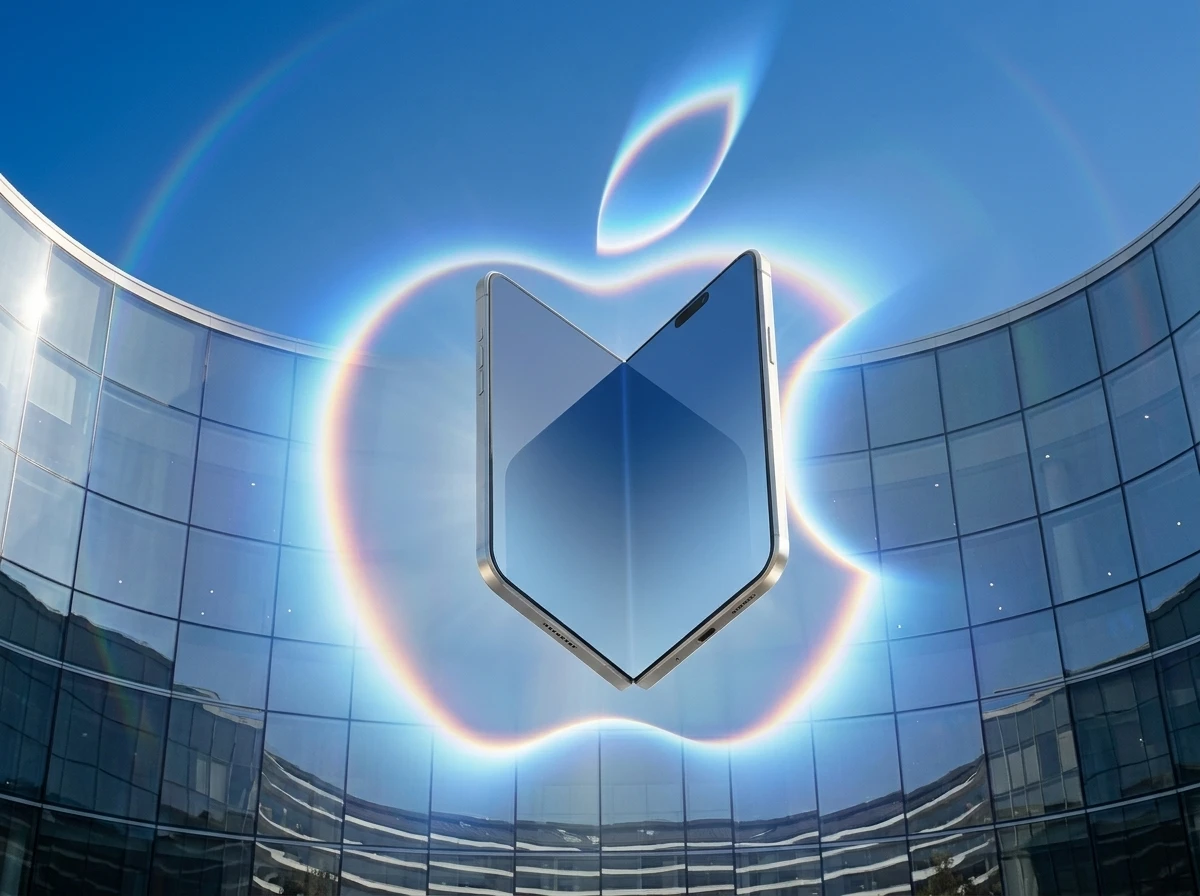
The company posted the date on its official Surprise and shine event page and sent media invites showing a bright Apple logo halo. Livestreams will run on apple.com, the Apple TV app and YouTube.
That single date now anchors the entire fall hardware cycle. Everything from the Mac refresh already announced to the foldable headliner still under wraps is timed around the same morning in Cupertino.
The Date Lands Eight Days After the Handover
Ternus, longtime senior vice president of Hardware Engineering, steps into the top job after Tim Cook’s 15-year run. Cook moves to executive chairman. The board approved the plan in April.
Cook said then that Ternus “has the mind of an engineer, the soul of an innovator, and the heart to lead with integrity and with honor.” Ternus replied that he had been lucky to work under Steve Jobs and to have Cook as mentor, promising to lead with the values that defined the company for half a century.
I am humbled to step into this role, and I promise to lead with the values and vision that have come to define this special place for half a century.
John Ternus, incoming Apple CEO, April 2026 statement
The timing is no accident. Bloomberg’s Mark Gurman noted earlier that Apple wanted Ternus to host the foldable debut he had driven through development. That product ranks as the biggest form-factor shift in the iPhone’s 19-year history.
Eight days separate the formal handover from the keynote. The gap is short enough that Ternus still appears as the engineer who shepherded the device, yet long enough for the title change to take effect before the lights go up.
Similar leadership handoffs elsewhere, such as the quiet year-long CEO handoff at DeepMind, show how companies stage big product moments to define a new chief’s opening chapter.
Why August Macs Cleared the Calendar
Apple did something rare this week: it launched refreshed Mac mini and Mac Studio models with M5 and M6 chips in late August. Those machines do not ship until September 22. In the past decade Apple almost never drops hardware so close to a September iPhone event.
The move frees the September 9 stage. Reports from 9to5Mac and others list five confirmed or near-certain products and as many as nine possible ones. A jammed slate explains the early Mac drop.
By clearing the Macs first, Apple avoids stacking desktop silicon announcements on top of phones, watches and home devices. The September 22 ship date still keeps the new machines inside the same broad window, just off the keynote floor.
- Late August: Mac mini and Mac Studio announced with M5 and M6
- September 9: Surprise and shine keynote reserved for phones and wearables
- September 22: Mac units begin shipping
That sequence leaves the stage open for the densest iPhone-focused show in recent memory.
What the Foldable iPhone Ultra Is Expected to Deliver
Every outlet now centers the same device. Apple’s first book-style foldable, widely called iPhone Ultra or iPhone Fold, is the clear headliner.
Early testers who handled units outside the company told Gurman the closed form slips easily into a pocket, the hinge feels solid and the open layout works like a small iPad. Two compromises stood out: only two rear cameras and a return to side-button Touch ID instead of Face ID.
| Spec | Reported Detail |
|---|---|
| Outer display | About 5.5 inches |
| Inner display | About 7.8 inches, near crease-free |
| Thickness open / closed | ~4.5 mm / 9-9.5 mm |
| Cameras | Dual 48 MP rear, front cameras both modes |
| Chip / RAM | A20 Pro, 12 GB |
| Security | Touch ID side button |
| Expected price | $2,000-$2,500 |
Analyst Ming-Chi Kuo estimates 7 to 8 million units through 2026, far below the 20-22 million combined Pro models. Some supply-chain notes suggest the Ultra could be unveiled on September 9 yet reach shelves weeks later, echoing the staggered iPhone X launch.
At that price the Ultra becomes a halo product. Samsung’s latest Fold starts lower. Apple will lean on Upgrade financing and the software layout advantages of iOS 27 to justify the premium.
The pocketable closed size and near crease-free inner panel are the two traits testers kept returning to. Those traits, paired with the dual-mode front cameras, form the core of the pitch once the keynote begins.
iPhone 18 Pro Models Stay Iterative
The iPhone 18 Pro and Pro Max arrive on the same stage. Design stays close to the 17 series. The real lifts sit inside.
- A20 Pro chip on TSMC’s 2 nm process, rumored 15-18 percent faster and roughly 30 percent more efficient than the A19 Pro
- Variable-aperture main camera that can shift from wide-open for low light to stopped-down for depth
- Smaller Dynamic Island and possible under-display Face ID experiments
- Larger batteries, especially on the Pro Max, plus Apple’s own C2 modem
- New colors including Dark Cherry
Starting prices may climb $100-$200 from last year’s $1,100 Pro floor because memory costs rose sharply. The standard iPhone 18 and any Air follow-on are held for spring 2027, splitting the usual September full lineup.
The A20 Pro continues the custom-silicon path. That path now includes techniques like those explored in reports on why chipmakers stack silicon in 3D to keep performance climbing after traditional node shrinks slow.
Keeping the Pro design language familiar lets Apple put visual attention on the Ultra while still offering measurable gains in chip speed, camera control and battery life to the higher-volume models.
Watches, AirPods and the Home Side
Apple Watch Series 12 and Ultra 4 are treated as locks. Expect a faster S-class chip, refined health sensors and possibly a new band attachment. AirPods 5 with and without active noise cancellation sit high on the probability list per Gurman.
Smart-home devices could round out the show: a HomePad hub display, updated HomePod mini with stronger Siri AI support, a refreshed Apple TV 4K and maybe a security camera. Software launch windows for iOS 27, iPadOS 27 and macOS Golden Gate will almost certainly be named.
- September 1, 2026, Ternus becomes CEO; Cook becomes executive chairman
- September 9, 2026, Surprise and Shine keynote, 10 a.m. PT
- Late September onward, Expected first shipments of Pro models; Ultra timing still fluid
- Spring 2027, Projected window for standard iPhone 18 family
The packed hardware list plus software dates would make this one of Apple’s busiest single-day stages in years.
Naming the software windows on the same morning ties the new devices to the OS features that will make dual screens and refined sensors useful from day one.
Who Feels the Supply and Price Squeeze
Limited Ultra production and higher Pro pricing create clear lines. Early adopters and Apple Upgrade subscribers gain first access to the new form factor. Mass-market buyers wait longer or pay more for iterative Pros.
| Product | Est. 2026 Units | Price Signal |
|---|---|---|
| iPhone Ultra | 7-8 million | $2,000-$2,500 start |
| iPhone 18 Pro + Max | 20-22 million combined | Possible $100-$200 lift |
| Base iPhone 18 | Delayed to 2027 | Standard range later |
Component suppliers that tooled for the thin glass and liquid-metal hinge win near-term volume. Carriers that lock in Ultra allocations early can market exclusivity. App developers face a new multitasking canvas that needs layout work before the device ships in volume.
On X, replies to Greg Joswiak’s announcement post (1.8 million views) mixed pure hype with blunt requests for stable iOS over new form factors. One common thread: a $2,000 phone that arrives late or in short supply will test whether the design praise from testers translates into sustained demand.
The unit gap between the Ultra and the Pro pair is the clearest signal of how Apple is segmenting the year. Seven to eight million units mark a deliberate halo tier rather than a volume play.
How the Halo Tier Shapes the Lineup
The Ultra’s projected volume sits well below the Pro models, yet its price band sits well above them. That spread turns the foldable into a reference product for the rest of the catalog.
Buyers who cannot reach the $2,000-$2,500 start still see the same A20 Pro silicon appear in the Pro and Pro Max. The chip link lets Apple carry performance claims across tiers even while the form factors diverge.
Holding the standard iPhone 18 until spring 2027 further sharpens the contrast. September becomes the month of the expensive new shape and the refined Pros. Spring becomes the month of the broader volume models.
- Ultra: lowest volume, highest price, new form factor
- Pro and Pro Max: highest volume, moderate price lift, familiar design
- Base iPhone 18: deferred volume, standard pricing later
Upgrade financing is expected to soften the Ultra’s entry cost for subscribers already inside Apple’s ecosystem. That channel, more than one-time retail buyers, may decide whether the halo tier finds a steady audience after the first wave.
Why the Dual Screen Demands New Software Work
Testers described the open layout as working like a small iPad. That comparison immediately raises the software bar. iOS 27 must treat the inner 7.8-inch panel as more than a stretched phone display.
App developers already face a multitasking canvas that needs layout work before volume shipments begin. The same dual-screen reality that makes the device feel expansive also multiplies the surface area that must remain responsive and readable.
Apple’s decision to name software launch windows on the keynote stage is therefore practical as well as ceremonial. The Ultra’s hardware advantages only hold if iOS 27, iPadOS 27 and the related frameworks arrive in sync with the first units.
Side-button Touch ID further ties software and hardware together. Face ID experiments on the Pro models may continue in parallel, yet the foldable’s security path is already set. The operating system has to support both approaches without friction.
The First Public Test of the Engineer CEO
Cook’s years grew services past $100 billion and the installed base past 2.5 billion devices. Ternus spent those same years shaping the physical products, from multiple iPad generations to AirPods and durability materials. The September stage now belongs to him.
The April board announcement of the succession already framed Ternus as the product-obsessed engineer. Putting the foldable he shepherded front and center turns that framing into a live demonstration.
Whether the Ultra ships on time, how the software adapts to the dual screens, and whether buyers accept the price will be measured in the weeks after the lights go down at Apple Park. Those numbers, more than any keynote line, will set the tone for the Ternus years.
The stream starts at 10 a.m. Pacific on September 9. Most of the world will watch the same feed. The surprises Apple chooses to show, and the ones it holds back, will define the opening chapter of its next hardware era.


NFL Three-Strike Safety Fouls Now Pull Coaches and Clubs In

Browns Fans Tape Protest Signs to Jim Brown Statue Over Watson

Amazon Pixel 11 Deal Erases the $100 Hike for One More Day

Elden Ring on Switch 2 Turns Its Own Worst Label Into a Portable Win

Ternus Takes the Stage With Apple’s Foldable Debut

Ikea Xbox Yxstaby Turns Controller Thumbstick Into Home Furniture

Pokémon Center Turns Past Worlds Wins Into Bundles and a Pikachu Coin

NFL Scraps Pro Bowl Game to Restore Pure Player Honor

New Twitter.now Bets the Brand Musk Left Behind

Bella Mir’s Famous First Loss Meets the Accountant Who Won

Double Fine Cuts 23 Jobs Weeks After Xbox Independence

Day-One Big Walk Lifts PS Plus August Beyond Recycled AAA

John Hight Exits Wizards After Digital Reckoning Hits

Curtis Mead’s Red Sox Debut Ends With Fractured Wrist

Moesch and Dressel Rewrite Night One at 2026 U.S. Nationals

Red Sox Squander Hot Streak Chance in 4-3 Loss to Athletics

Boutte’s Quiet Camp Takeover Forces Patriots Receiver Choices

Take-Two CEO Pushes Netflix Subs for GTA 6 Extended Look

Halo Campaign Evolved Skulls Meet Death Barriers That Kill the Hunt

Wildlands Free Update Hands Players the Tools They Already Invented
-

 TECHNOLOGY3 years ago
How to Adjust a Bulova Watch Band – An Easy Guide
-

 News3 years ago
Fred Pentland: Athletic Bilbao’s English mentor who changed the essence of Spanish football
-

 FINANCE3 years ago
Tax Planning for Every Season: Guide to Maximizing Your Tax Benefits
-

 Education3 years ago
African Ministers New Education Plan
-

 BUSINESS3 years ago
What is Entrepreneurial Operating System? A Comprehensive Guide to EOS
-

 Education3 years ago
Innovate Your Learning Journey with Technology and Enhance Education
-

 News3 years ago
Russians formally out of World Athletics Championships
-

 BUSINESS3 years ago
Top 9 Most Expensive American Cities to Rent an Apartment