
News
NFL Three-Strike Safety Fouls Now Pull Coaches and Clubs In
NFL and NFLPA put coaches and clubs on the hook for hip-drop, horse-collar and three other high-risk fouls, with one-game bans after three strikes starting 2026.

The NFL and NFL Players Association will suspend any player for one game after three violations among five high-risk health and safety fouls starting with the 2026 season, and they are pulling coaches and clubs into the same accountability net.
In a joint NFL-NFLPA statement detailing the five, the sides said the changes focus discipline on techniques most likely to cause injury rather than isolated mistakes. All players begin 2026 with a clean slate on these fouls, though the strikes carry forward into later seasons.
The package pairs progressive player discipline with coach attendance rules and higher club fines. That three-layer design is the point of the update: isolated contact still draws a fine, while repeated high-risk techniques pull the coaching staff and the franchise into the same review cycle.
Five Fouls Now Carry the Heaviest Weight
The five categories are hip-drop tackle, horse-collar tackle, launching, hit on a defenseless player, and blindside block. Players who accumulate three offenses across these during a season draw the one-game ban. A single violation of one of them returns 50 percent of the fine at season’s end.
Other eligible single offenses return the full fine amount. Coaches must join players for NFL meetings once a player nears the suspension line. Clubs with excessive health and safety violations face higher financial penalties.
- Hip-drop tackle: defender wraps the runner then unweights and drops hips onto the legs
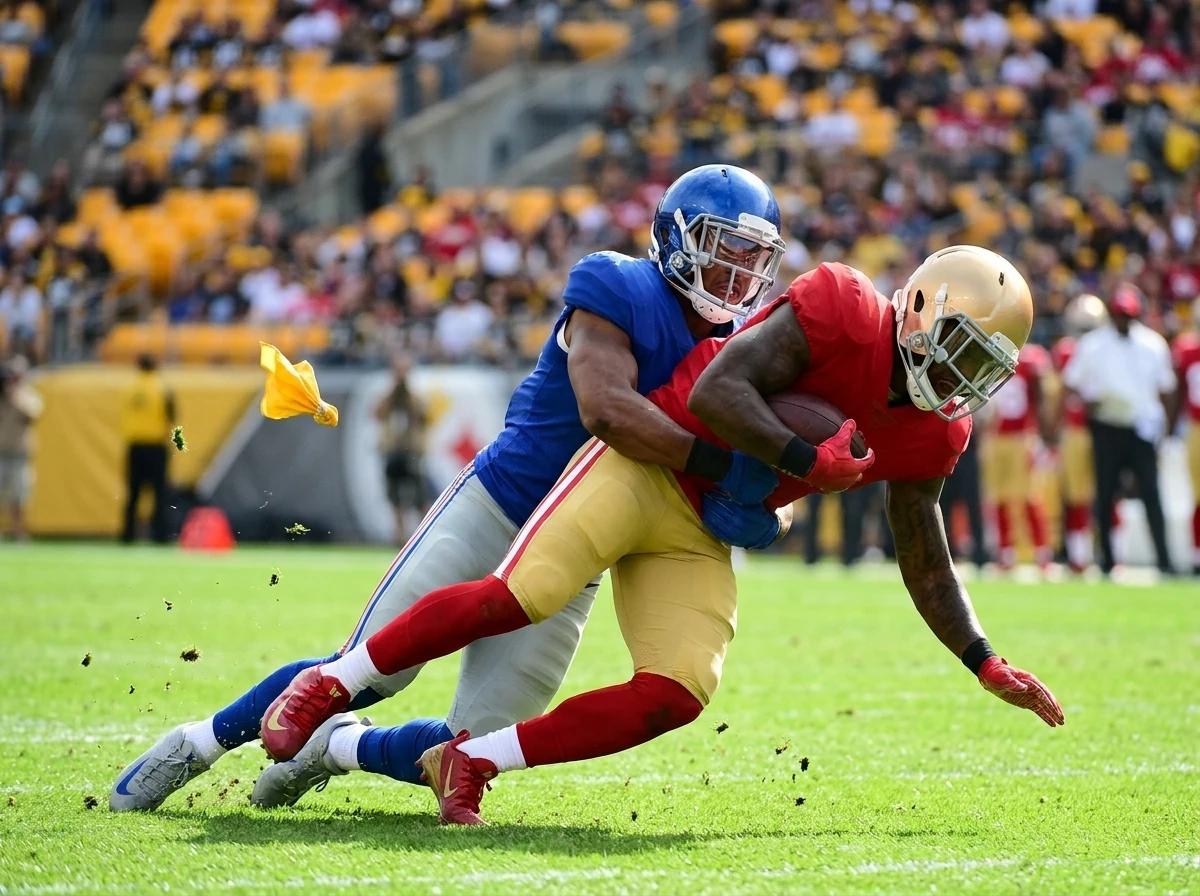
- Horse-collar tackle: grab of the inside collar or nameplate area pulling the runner down
- Launching: leaving the feet to deliver a blow, often to the head or neck area
- Hit on a defenseless player: unnecessary contact against a player unable to protect himself
- Blindside block: block from behind or the side while moving toward one’s own end line
Those five definitions now sit in one discipline bucket. A hip-drop in September and a blindside block in November count the same toward the three-strike line. The joint statement treats the group as a single risk class rather than five separate ledgers.
Former Carolina Panthers and Washington Commanders coach Ron Rivera, a nine-year NFL linebacker with the Chicago Bears, joins the pool of former players who hear on-field discipline appeals.
| Outcome | What the player receives |
|---|---|
| One of the five fouls, then clean | 50 percent of the fine returned at season’s end |
| Other eligible single offense | Full fine amount returned |
| Three of the five fouls | One-game suspension |
Why These Techniques Drew the Target
The league has spent more than two decades stripping high-risk moves from the game. The horse-collar ban arrived in 2005 after a rash of leg injuries, including several by then-Cowboys safety Roy Williams. Expansions followed in 2006 and 2016. Blindside block and defenseless-player protections layered on through the 2010s. The hip-drop tackle was banned for 2024 after data showed it produced injuries at roughly 20 to 25 times the rate of a normal tackle.
- 2005: horse-collar ban after leg-injury cluster tied to Roy Williams tackles
- 2006 and 2016: horse-collar rule expansions
- 2009-2011: blindside block protections expanded
- 2010s-2020: defenseless-player hit rules layered on in multiple steps
- 2018 and later: launching and helmet-use limits tightened
- 2023-2024: hip-drop data drove the 2024 ban after roughly 230 appearances and 15 players missing time in 2023
In 2023 the hip-drop appeared about 230 times and left 15 players missing time. NFL executive vice president of football operations Troy Vincent has described these fouls as putting both the defender and opponent at “really high risk.”
There are some player safety fouls that really put the defender and his opponent at really high risk. We don’t like to remove people from the team or the roster. But we’ve had to put some measures in place to hold the player to greater accountability for himself and for his opponent.
Troy Vincent, NFL executive vice president of football operations
The NFL list of health and safety rules changes since 2002 now runs past 50 entries. This latest step keeps the same direction while adding progressive discipline and team-level consequences. Earlier changes mostly defined illegal contact. The 2026 order adds a cumulative count, a rebate for clean follow-up play, and direct cost for clubs that keep stacking the same five fouls.
Recent Seasons Showed Sparse Flags and Frequent Fines
Enforcement has been uneven, especially on hip-drop. Only a handful of hip-drop penalties have been called on the field across the first two seasons of the ban; most enforcement arrives as post-game fines. In 2025, officials flagged 28 illegal blindside blocks and four horse-collar tackles, according to one compilation of league data.
Under one analysis of the new structure, applying the three-strike threshold to recent seasons would have produced only one suspension in 2024 and one in 2025. That low historical count is exactly why the sides added coach meetings and club fines: the deterrent works through roster pressure and practice habits as much as through the rare ban itself.
| Foul | Key Rule Year | Recent Note |
|---|---|---|
| Horse-collar tackle | 2005 (expanded later) | 4 flags in 2025 |
| Blindside block | 2009-2011 expansions | 28 flags in 2025 |
| Defenseless player hit | Multiple expansions 2000s-2020 | Ongoing fines focus |
| Launching / helmet use | 2018 and later | Higher fine tier possible |
| Hip-drop tackle | 2024 ban | ~3 on-field flags in two seasons; dozens of fines |
First-time personal-foul fines in these categories have sat near $16,000-$17,000 in recent schedules, with second offenses higher, subject to the 10 percent weekly salary cap.
The gap between on-field flags and post-game fines is widest on the hip-drop. Blindside blocks drew far more live flags in 2025 than horse-collar tackles did. The new order does not change the foul definitions; it changes what happens after the third confirmed strike and who else must appear when a player reaches two.
Coaches Sit in the Room When Strikes Mount
The second-order change is the mandatory coach attendance. When a player reaches two of the five fouls, the head coach or position coach joins the video review meeting with the league. That puts the coaching staff’s scheme and teaching methods on the table, not only the player’s technique.
Clubs that rack up excess violations across the roster face increased financial penalties. The joint statement frames the package as shared responsibility: player, coach and club. Rivera’s addition to the appeals pool brings a coach’s eye into the hearing room alongside former players.
Players who stay clean after a single offense get half the fine back. That rebate is the positive lever. The carry-forward of strikes into future seasons is the long-term stick. A player who finishes 2026 with two of these fouls starts 2027 already two-thirds of the way to a suspension.
Once a coach is in the meeting, scheme choices become part of the record. A position group that keeps producing the same foul is no longer only a player problem on paper. Rivera’s dual background as a nine-year linebacker and former head coach gives the appeals pool someone who has coached the techniques and played them.
How Defenses Will Feel the Pressure First
Defensive backs and linebackers who live in open-field tackle situations will absorb the earliest coaching changes. Hip-drop and horse-collar both arise most often when a defender is chasing from behind or the side and needs to stop a runner without a clean shoulder shot. Launching and defenseless hits cluster around receivers and returners.
Some voices on X and among former players have long argued that certain of these moves, especially the hip-drop, can be instinctive rather than calculated, and that consistent real-time officiating remains difficult. The low flag count on hip-drop supports that complaint. The new system answers by shifting more of the cost onto post-game review, progressive discipline and team accountability.
- Open-field chase tackles: highest exposure to hip-drop and horse-collar teaching changes
- Receiver and returner traffic: launching and defenseless-player contact under tighter cumulative count
- Special teams: blindside blocks and hits on returners draw the same three-strike math
Teams that already teach “hawk” or wrap-and-drive techniques without the unweighting drop will have less to rewrite. Others will spend training-camp periods drilling alternatives and reviewing film specifically for these five categories. Special-teams units face the same scrutiny on blindside blocks and hits on returners.
Because strikes carry forward, a defender who ends 2026 with two fouls enters camp the next year already close to a ban. That raises the cost of leaving technique work for midseason film study alone.
Clean Slate, Carryover and the Path to a Ban
- 2026 open: every player starts at zero on the five fouls.
- First offense: standard fine; 50 percent returned if no more occur that season.
- Second offense: coach joins the NFL video meeting; no suspension yet.
- Third offense: one-game suspension.
- Carryover: remaining strikes roll into the next season; path to reduce prior impact is faster and clearer than before.
The sides spent several months negotiating the update. Owners heard the briefing at the Atlanta league meeting on Wednesday. Player representatives voted the day before. The full text of the accountability updates stresses that the package distinguishes isolated mistakes from repeated conduct that puts health at risk.
The clean slate applies only to the 2026 open. After that, the carryover rule keeps prior strikes alive unless a player works them down through the clearer reduction path the sides built into the order. The one-game ban remains the hard stop at three.
Clubs Pay More When Rosters Keep Fouling
Player suspensions grab headlines. Club financial penalties and mandatory coach meetings are the quieter levers. The joint statement ties excess health and safety violations across a roster to higher costs for the franchise itself, not only for the individual who drew the flag or the fine.
That structure pushes technique standards into practice plans and scouting language. A club that already limits hip-drop and blindside habits absorbs less risk under the new schedule. A club that racks up the five fouls across multiple position groups faces the increased penalties the sides wrote into the order.
Rivera’s seat in the appeals pool reinforces the same idea from another angle. Hearings now include a voice that has managed rosters and game plans, not only former players who faced the fouls in live action. Shared responsibility, as framed in the joint statement, runs from the defender to the position coach to the club ledger.
The Rebate Rewards a Clean Rest of Season
The 50 percent return on a single emphasized foul is the main positive incentive inside the player rules. Commit one of the five, stay clean the rest of the year, and half the money comes back. Stack a second or third strike and that rebate path closes while coach meetings and suspension risk open.
Other eligible single offenses still return the full fine amount. The contrast is deliberate: the five high-risk categories carry both the three-strike ban track and the partial rebate, while ordinary one-off mistakes outside that group keep the fuller refund.
First-time fines near $16,000-$17,000 make the half return a meaningful sum under the 10 percent weekly salary cap rules that already limit how large a fine can run. The rebate does not erase the strike for future seasons if further fouls follow; it only refunds money when the rest of that season stays clean on the five.
<|eos|>


NFL Three-Strike Safety Fouls Now Pull Coaches and Clubs In

Browns Fans Tape Protest Signs to Jim Brown Statue Over Watson

Amazon Pixel 11 Deal Erases the $100 Hike for One More Day

Elden Ring on Switch 2 Turns Its Own Worst Label Into a Portable Win

Ternus Takes the Stage With Apple’s Foldable Debut

Ikea Xbox Yxstaby Turns Controller Thumbstick Into Home Furniture

Pokémon Center Turns Past Worlds Wins Into Bundles and a Pikachu Coin

NFL Scraps Pro Bowl Game to Restore Pure Player Honor

New Twitter.now Bets the Brand Musk Left Behind

Bella Mir’s Famous First Loss Meets the Accountant Who Won

Double Fine Cuts 23 Jobs Weeks After Xbox Independence

Day-One Big Walk Lifts PS Plus August Beyond Recycled AAA

Curtis Mead’s Red Sox Debut Ends With Fractured Wrist

John Hight Exits Wizards After Digital Reckoning Hits

Moesch and Dressel Rewrite Night One at 2026 U.S. Nationals

Red Sox Squander Hot Streak Chance in 4-3 Loss to Athletics

Boutte’s Quiet Camp Takeover Forces Patriots Receiver Choices

Take-Two CEO Pushes Netflix Subs for GTA 6 Extended Look

Halo Campaign Evolved Skulls Meet Death Barriers That Kill the Hunt

Wildlands Free Update Hands Players the Tools They Already Invented
-

 TECHNOLOGY3 years ago
How to Adjust a Bulova Watch Band – An Easy Guide
-

 News3 years ago
Fred Pentland: Athletic Bilbao’s English mentor who changed the essence of Spanish football
-

 FINANCE3 years ago
Tax Planning for Every Season: Guide to Maximizing Your Tax Benefits
-

 Education3 years ago
African Ministers New Education Plan
-

 BUSINESS3 years ago
What is Entrepreneurial Operating System? A Comprehensive Guide to EOS
-

 Education3 years ago
Innovate Your Learning Journey with Technology and Enhance Education
-

 News3 years ago
Russians formally out of World Athletics Championships
-

 BUSINESS3 years ago
Top 9 Most Expensive American Cities to Rent an Apartment