
News
Curtis Mead’s Red Sox Debut Ends With Fractured Wrist
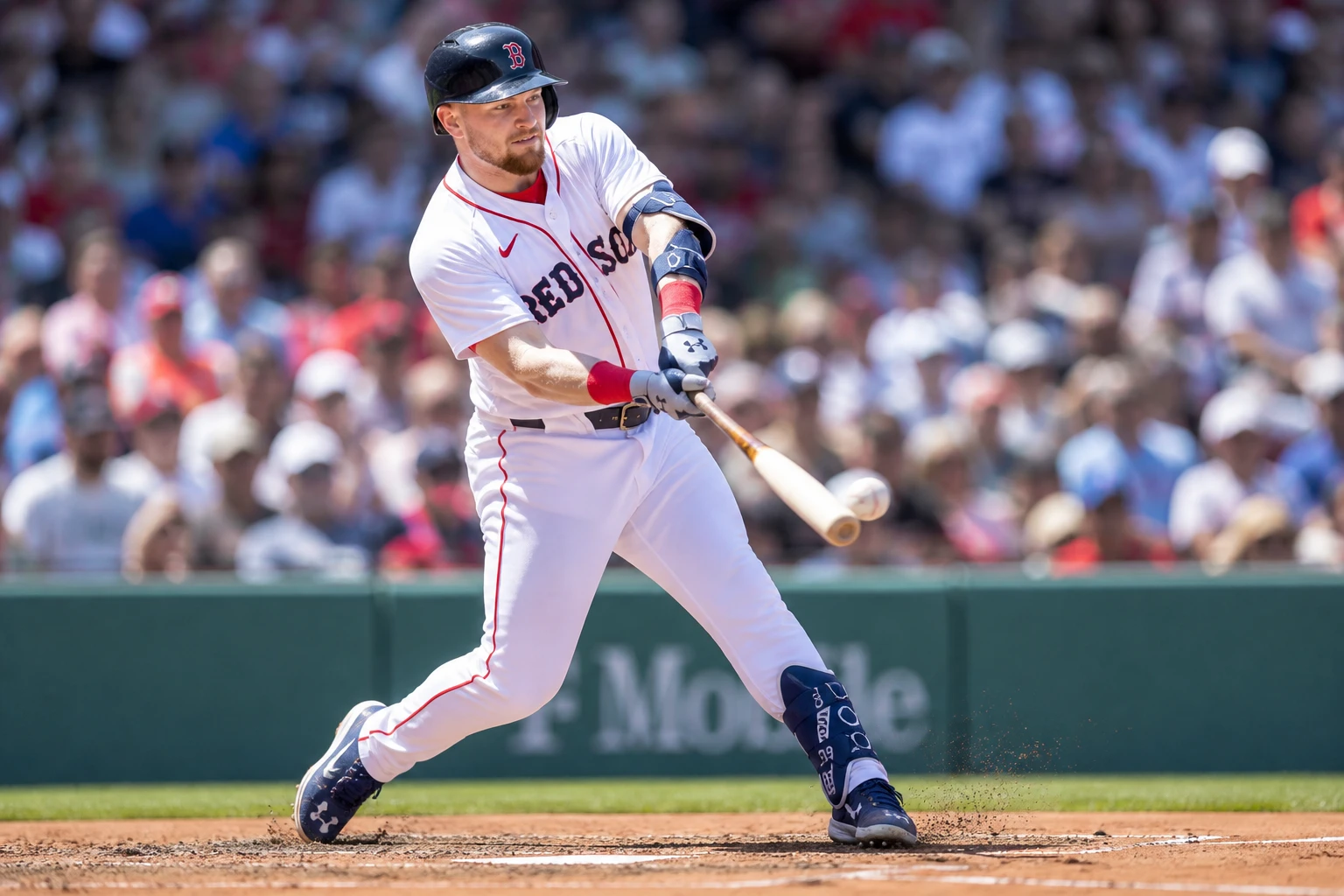
Curtis Mead hits the injured list with a fractured left wrist one day after his Red Sox debut, turning the Early trade into an instant roster problem.

Curtis Mead will land on the 10-day injured list with a fractured left wrist after an MRI confirmed the break one day after his Red Sox debut. The 25-year-old infielder was hit by a pitch in his second plate appearance Monday night against the Athletics and now faces weeks, or possibly the rest of the season, on the shelf.
Nick Sogard is coming up from Triple-A Worcester to fill the roster spot. Caleb Durbin stays at third and Anthony Seigler shifts into a larger role at second.
One Pitch Ends the Debut
In the top of the fourth inning of Boston’s 4-2 win in West Sacramento, Athletics right-hander Jack Perkins drilled Mead on the left wrist with a 94.9 mph fastball. Mead stayed in briefly, then exited in the bottom of the fifth. Initial X-rays at the ballpark came back negative.
He woke up Tuesday stiff and sore. An MRI revealed the fracture. The Red Sox placed him on the IL before Tuesday’s game. He flew back east on a red-eye to see a hand specialist Wednesday.
Yeah, challenging. Super disappointing. It doesn’t feel real, happening in my first game with the Red Sox. There will be a break in between the next one.
Mead said those words to reporters after the diagnosis. He also noted a 2023 history in which negative X-rays later turned into a confirmed break on MRI. Surgery remains possible. Clarity waits on the specialist visit.
The sequence from contact to confirmation left little room for hope once the MRI results landed. A pitch that looked survivable on Monday night became a multi-week absence by Tuesday afternoon.
- Monday night: 94.9 mph fastball strikes the left wrist; Mead stays in briefly, exits in the bottom of the fifth; ballpark X-rays negative.
- Tuesday morning: stiffness and soreness on waking prompt an MRI that confirms the fracture.
- Tuesday pregame: Red Sox place him on the 10-day IL and send him east on a red-eye.
- Wednesday: hand specialist visit to settle cast, surgery, or timetable questions.
Best-case healing for this type of fracture often runs four to six weeks. Longer absences are common. Fantasy managers should plan for a lengthy absence with a real chance the season ends here.
The Trade That Lasted One Night
Boston acquired Mead late Saturday night in a one-for-one swap of Early for Mead with the Nationals. Left-hander Connelly Early, 24, carried a 3.44 ERA through 17 starts this season before elbow inflammation sidetracked him in July. He had resumed mound work and held five years of club control beyond 2026.
Mead arrived mid-breakout. With Washington he posted 17 home runs and an .852 OPS across 87 games, good for a 135 wRC+ in roughly 322 plate appearances. The Nats had refined his approach: less chase, more hard contact, barrel rate more than doubled. He was the everyday third baseman after Brady House’s demotion.
Red Sox chief baseball officer Craig Breslow wanted exactly that profile. Boston ranked near the bottom of MLB in home runs despite a strong pitching staff and a 23-4 stretch that included a 15-game winning streak. The club sought a right-handed power hitter Breslow sought for weeks. Mead fit the bill and carried four years of control after this season. He is not a rental; free agency waits until 2031.
| Player | 2026 Key Line | Control Remaining | Role Intended |
|---|---|---|---|
| Curtis Mead | 17 HR, .852 OPS, 87 G | 4 years after 2026 | 2B/3B/DH bat |
| Connelly Early | 3.44 ERA, 17 starts | 5 years after 2026 | Rotation depth |
The swap was built on complementary shortages. Boston needed a right-handed bat that could handle second, third, or DH. Washington moved a player who had just claimed everyday work after a demotion ahead of him. Early’s five years of control and resumed mound work gave the Nats rotation depth they valued more than Mead’s bat at that moment.
Interim manager Chad Tracy called the injury tough on the kid. The club had embraced Mead quickly. The plan was for him to bat near the top and play second while Durbin held third at a high defensive level.
One night of that plan survived. The rest now sits with the specialist and the calendar.
Sogard and the Thin Infield
Sogard, 28, returns after time at Worcester. In limited big-league action this year he hit .257/.350/.371. At Triple-A he showed more thump: .261 average, five homers and an .826 OPS in 176 at-bats before the call.
The current middle-infield picture looks familiar and thin.
- Caleb Durbin holds third base and has heated up with nine homers in a recent 33-game stretch.
- Anthony Seigler moves into more starts at second and has shown leadoff pop at times.
- Romy González and Andruw Monasterio provide versatility and depth.
- Nick Sogard adds another bat and multi-position glove off the bench or in a platoon.
Trevor Story remains out after sports hernia surgery in May and is eyeing a possible August rehab. Isiah Kiner-Falefa and Marcelo Mayer are both sidelined with forearm stress reactions. The Red Sox have lost middle infielders in sequence all season.
That depth chart leaves little margin. Durbin’s recent power binge and Seigler’s leadoff flashes become everyday necessities rather than pleasant extras. Sogard’s Triple-A thump offers a platoon or bench lift, yet the group still lacks the right-handed middle-of-the-order profile Mead was meant to supply.
MLB Trade Rumors noted the club was already shopping the shortstop market even after the Mead deal. Names floated in recent reports include Zach Neto, CJ Abrams, Gleyber Torres and others. Mead’s absence could sharpen that interest before the August 3 deadline.
Boston’s Middle-Infield Injury Run
The Mead setback follows a familiar script. Story went down May 15. Kiner-Falefa followed about a month later. Mayer soon after. Ace Garrett Crochet has not pitched since April 25 with a shoulder issue that has lingered longer than expected. Outfielder Roman Anthony has been out since early May with a finger tendon tear and has not swung a bat for months.
- April 25: Garrett Crochet sidelined with a shoulder issue that has outlasted early expectations.
- Early May: Roman Anthony exits with a finger tendon tear and has not swung for months.
- May 15: Trevor Story undergoes sports hernia surgery; August rehab remains the target.
- June window: Isiah Kiner-Falefa and then Marcelo Mayer land with forearm stress reactions.
- This week: Curtis Mead’s fractured wrist ends his debut after one game.
Through it all the roster kept winning. Tracy’s immediate mental pivot was back to the group that won 15 straight and 20 of 23. “We’re gonna go play baseball and win a game tonight,” he said.
Mead’s control years give Boston a longer horizon. The short-term cost is real. The lineup loses the right-handed thump it just paid for, and the infield depth chart snaps back to pre-trade form.
The pattern has forced Tracy to treat every call-up and every platoon tweak as temporary infrastructure. The 23-4 stretch and the 15-game winning streak happened inside that same thin depth chart. That history is the club’s chief argument that another empty roster spot need not end the run.
Specialist Visit and the Rest of 2026
Wednesday’s appointment with the hand specialist will decide the next step: cast, possible surgery, or a clearer timetable. Mead said he hopes to play again this season. The club will wait for the imaging and exam.
Studies of major-league hitters hit by pitches on the wrist show that when players return, wrist fractures do not significantly impact short- or medium-term offensive numbers. Median return times in some cohorts sit around five weeks, with many back by seven to nine. Scaphoid and similar fractures often need six to 12 weeks depending on displacement and whether surgery is required.
Those ranges frame the decision tree. A clean best-case path points at four to six weeks. A surgical path or a slower-healing break stretches toward the longer end of the six-to-12-week window and raises the season-ending chance fantasy managers already fear.
What we know
- Fracture confirmed by MRI after negative initial X-rays
- Placed on 10-day IL; best-case heal 4-6 weeks
- Sogard recalled; Durbin and Seigler absorb playing time
- Mead under club control through 2030
What’s unconfirmed
- Need for surgery
- Exact return date or season-ending risk
- Whether Boston adds another infielder before the deadline
On X, reaction mixed hard luck with second-guessing. High-engagement posts from NESN and Underdog MLB spread the fracture news quickly. Some voices called the timing brutally insane bad luck after a weekend trade. Others defended the deal as unknowable risk and pointed out Early was already dealing with elbow inflammation. A few questioned how X-rays missed the break so quickly. The crowd layer underscored the same tension the club faces: the acquisition looked smart on paper until one pitch rewrote the rest of the summer.
Negative X-Rays Can Still Hide a Break
Mead’s own 2023 episode supplied the cautionary note before this week’s MRI ever ran. Negative X-rays at the ballpark did not close the case then, and they did not close it Monday night either.
Wrist fractures after hit-by-pitch events often sit in that diagnostic gap. Initial films miss hairline or non-displaced breaks that only appear once swelling and clinical symptoms push the club toward advanced imaging. The stiff, sore waking on Tuesday was the practical signal that the first round of tests had not told the full story.
That pattern explains why the club moved so quickly from negative X-rays to an MRI to the IL placement before Tuesday’s game. It also explains why surgery remains on the table until the specialist reviews the full picture. The public timeline looked sudden. The internal logic followed a path Mead had already walked once.
Boston Still Owns Four Years of Mead
Free agency for Mead waits until 2031. Four years of club control after this season remain intact no matter what Wednesday’s exam shows. That horizon separates the trade from a pure rental that evaporated on contact.
Early still gives Washington five years of control and a pitcher who had already resumed mound work after elbow inflammation. Both sides retain the long-term pieces they valued on Saturday night. Only the 2026 usage plan has collapsed.
For Boston the implication is patience mixed with urgency. The right-handed power profile Breslow chased for weeks can still arrive in 2027 and beyond if healing holds. The immediate problem is the August 3 deadline and a middle infield already stripped by Story, Kiner-Falefa, and Mayer. Shopping names such as Zach Neto, CJ Abrams, and Gleyber Torres now carries extra weight because the bat that was supposed to bridge the gap is unavailable.
Control years do not fill a lineup card in July. They do change how aggressively a club can treat a lost summer without surrendering the original reason for the deal.
For now the Red Sox return to the formula that produced the long win streak. Mead will rehab. Early will pitch for Washington once healthy. The fractured left wrist after a 94.9 mph fastball turned a debut into a medical file and left Boston searching for the next pivot.
The specialist appointment arrives Wednesday. The deadline follows soon after. Boston’s hottest stretch of the year now carries one more empty roster spot where the new bat was supposed to sit.


Shelby’s $42.9 million Daytona Coupe cashes the bet that beat Ferrari

AI forces Apple into third security drop in three weeks

Lamborghini banks 2027 revenue with sold-out Revuelto SV

Apple’s Labor Day Habit Locks iPhone 18 Pro September Dates

Frogwares Ships Sinking City 2 After Years of Air Raids

AirTag 2 Hits Near Lows Just as Travel Season Peaks

McLaren Pop Art F1 GTR Hits $34.6 Million and Resets the Tier

Spotify Playlist Notes Bring Back Liner Notes for Streaming

AirPods Max 2 hit $429 and finally close the value gap

Star Citizen private demo of Siege of Orison still wiped the devs

Guardians Rout Twins With Seven Homers, Leave Joe Ryan One Shy of Record

Rainout Gives Red Sox Two Shots at a Franchise-Record Win Streak

Caitlin Clark Skips the WNBA 3-Point Contest for a Third Straight Year

Double Fine Cuts 23 Jobs Weeks After Xbox Independence

John Hight Exits Wizards After Digital Reckoning Hits

Day-One Big Walk Lifts PS Plus August Beyond Recycled AAA

Curtis Mead’s Red Sox Debut Ends With Fractured Wrist

Moesch and Dressel Rewrite Night One at 2026 U.S. Nationals

Red Sox Squander Hot Streak Chance in 4-3 Loss to Athletics

Boutte’s Quiet Camp Takeover Forces Patriots Receiver Choices
-

 TECHNOLOGY3 years ago
How to Adjust a Bulova Watch Band – An Easy Guide
-

 News3 years ago
Fred Pentland: Athletic Bilbao’s English mentor who changed the essence of Spanish football
-

 FINANCE3 years ago
Tax Planning for Every Season: Guide to Maximizing Your Tax Benefits
-

 Education3 years ago
African Ministers New Education Plan
-

 BUSINESS3 years ago
What is Entrepreneurial Operating System? A Comprehensive Guide to EOS
-

 Education3 years ago
Innovate Your Learning Journey with Technology and Enhance Education
-

 News3 years ago
Russians formally out of World Athletics Championships
-

 BUSINESS3 years ago
Top 9 Most Expensive American Cities to Rent an Apartment