
News
After Bloomin’ Babies Closes, Natural Birth Advocates Try to Bridge the Gap

Western Colorado’s only freestanding natural birth center has closed—and for many women seeking low-intervention births, that’s left more than just a logistical gap. It’s reshaped the entire care landscape for mothers who want a different kind of birth.
Three months after Bloomin’ Babies Birth Center quietly shuttered its doors, a patchwork of nurses, midwives, and natural birth advocates are working to stitch together solutions—but for now, the alternatives come with trade-offs.
“Where Do I Go Now?”
For women like Alaina Marquez, a former birth assistant at Bloomin’ Babies, the closure wasn’t just a professional disruption. It hit close to home for the many expecting mothers she’d worked with—some of whom had already planned deliveries at the now-shuttered center.
“Women are left with two options now—home birth or the hospital,” said Marquez. “But neither of those options provide exactly what a birthing center did.”
Bloomin’ Babies had filled a unique middle space—offering certified midwives and low-tech support for deliveries outside of a hospital, but with more structure than a home setting. Its closure, prompted by falling birth rates, leaves Grand Junction as the largest city in western Colorado without a freestanding birth center.
And the ripple effects are already being felt in communities across the region.
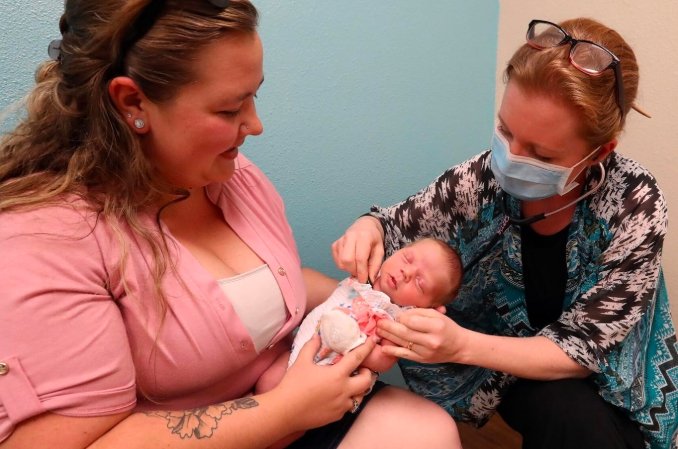
Hospitals Shift to Fill the Void
In response to the closure, area hospitals are trying to adapt.
Some nurses and doctors are working more closely with midwives to integrate lower-intervention approaches inside clinical settings. Marquez noted that local hospitals have started creating environments that mimic some of what natural birthing centers offered—dimming lights, reducing monitoring, and allowing mothers more control over their movements and birthing positions.
“Less machines in the room, less beeping, less pressure,” she said. “If a mom was high-risk, she could move to another room nearby. They’re trying hard to meet us halfway.”
But not every hospital in Colorado is on board.
Rural Gaps in Natural Birth Access
While Grand Junction’s two hospitals have begun incorporating midwife-led protocols, mothers in more remote communities aren’t as lucky.
“A lot of other towns, their hospitals are not supportive of natural birth,” Marquez explained. “They’re very intervention-based. I think a lot of women feel helpless.”
In smaller towns without local midwives or natural birth options, it often means long drives during labor, or settling for a birth that doesn’t align with their values.
Here’s how birth care access now breaks down across the region:
| Area | Closest Birth Center | Home Birth Access | Hospital Natural Birth Support |
|---|---|---|---|
| Grand Junction | None (Bloomin’ Babies closed) | Yes (local midwives) | Increasing support |
| Delta | None | Limited | Minimal |
| Rifle | None | Occasional access | Traditional model |
| Montrose | None | Some midwives | Limited options |
The Cost of Home Births
For many families, home birth seems like the most viable alternative to a birth center—but there’s a financial catch.
“Home birth is self-pay,” Marquez said. “If you have insurance, it’s probably not going to cover that.”
Most insurance companies in Colorado still don’t cover home births unless they’re conducted under very specific guidelines—and even then, reimbursement can be murky. That’s left expectant mothers weighing financial decisions at the same time they’re making health choices.
Some turn to payment plans or birth savings accounts. Others abandon the idea entirely and settle for hospital-based care.
The Colorado Birth Collective Steps In
As institutions struggle to adapt, grassroots networks have become crucial.
The Colorado Birth Collective, a resource hub run by birth workers across the state, has stepped into the breach—offering everything from informational sessions to emotional support. It has become a lifeline for many women looking for low-intervention care or trying to plan home births with limited resources.
“There’s still a strong sense of community,” said one member of the group. “But right now, we’re operating in crisis response mode.”
A Future Center? Hopes Rise—But Remain Uncertain
Despite the disruption, there is cautious optimism in the air. Marquez says she’s heard “whispers” of another birth center potentially opening—but so far, no concrete plans have emerged.
“People want this,” she said. “We just need the funding, the right team, and the regulatory support.”
The challenges are steep: rising insurance premiums, regulatory hurdles for non-hospital births, and the underlying issue of declining birth rates that led to Bloomin’ Babies’ closure in the first place.
Still, many advocates remain hopeful.
Beyond a Birth Plan: A Broader Movement
What’s clear is that this isn’t just about a single center closing—it’s about what kind of maternity care women in western Colorado can access at all.
Low-intervention birth is not a fringe movement. It’s a philosophy shared by a growing number of women who want control, flexibility, and support in the most personal moment of their lives.
For now, the road forward may be uncertain—but the voices calling for change are only growing louder.











Spotify Running Mode hits Android and revives its old tempo experiment

Galaxy Tab S12 Ultra Renders Keep the Notch Fans Hate

Novato Spinning Round House Sells With Six Neighbors for $3.3 Million

Crop Tour Finds Indiana and Nebraska Corn Yields Lagging 2025

Best Buy 60th sale brings Android deals back to its roots

American Airlines reverses seatback screen bet years too late

Iran Hormuz Strikes Force Gulf Oil Onto Costlier Paths

Plague Tale Prequel Day One Joins Game Pass Wave 2 as Witcher Exits

NBA 2K27 opens The City to everyone and rewrites career eras

iOS 26.6.1 Patches 29 Flaws as AI Forces Faster Apple Updates

Double Fine Cuts 23 Jobs Weeks After Xbox Independence

Day-One Big Walk Lifts PS Plus August Beyond Recycled AAA

John Hight Exits Wizards After Digital Reckoning Hits

Curtis Mead’s Red Sox Debut Ends With Fractured Wrist

Moesch and Dressel Rewrite Night One at 2026 U.S. Nationals

Red Sox Squander Hot Streak Chance in 4-3 Loss to Athletics

Boutte’s Quiet Camp Takeover Forces Patriots Receiver Choices

Take-Two CEO Pushes Netflix Subs for GTA 6 Extended Look

Halo Campaign Evolved Skulls Meet Death Barriers That Kill the Hunt

Wildlands Free Update Hands Players the Tools They Already Invented
-

 TECHNOLOGY3 years ago
How to Adjust a Bulova Watch Band – An Easy Guide
-

 News3 years ago
Fred Pentland: Athletic Bilbao’s English mentor who changed the essence of Spanish football
-

 FINANCE3 years ago
Tax Planning for Every Season: Guide to Maximizing Your Tax Benefits
-

 Education3 years ago
African Ministers New Education Plan
-

 BUSINESS3 years ago
What is Entrepreneurial Operating System? A Comprehensive Guide to EOS
-

 Education3 years ago
Innovate Your Learning Journey with Technology and Enhance Education
-

 News3 years ago
Russians formally out of World Athletics Championships
-

 BUSINESS3 years ago
Top 9 Most Expensive American Cities to Rent an Apartment