
News
Tariffs Shake Markets: What Retirement Savers Should Know as Volatility Spikes

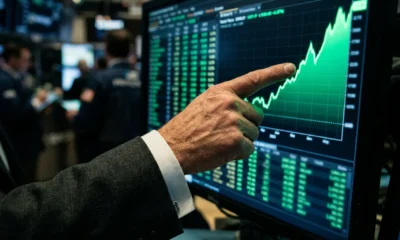
GRAND JUNCTION, Colo. – With new tariffs announced by President Trump rattling markets, long-term investors across the U.S. are seeing their retirement account balances swing wildly. It’s sparking new questions—and more than a little anxiety—about what to do next.
Stocks took a serious blow last week, with the S&P 500 logging its worst weekly performance since the chaos of March 2020. And while some are bracing for impact, others are simply staring at their 401(k) balances and hoping the worst is over.
Tariffs trigger turbulence, but experts urge calm
The market’s been acting like it drank three espressos too many—nervous, jittery, and constantly overreacting. And while it might be tempting to jump ship, many financial pros say this isn’t the time to make panicked decisions.
Ford Keeler, a seasoned financial advisor in Grand Junction with over three decades under his belt, says the key is understanding what kind of investor you are—and where you are in your retirement timeline.
“We’re seeing a lot of sharp moves, but short-term movement doesn’t mean long-term disaster,” Keeler said. “Most people are in the market for the long haul. You have to zoom out.”
Of course, that’s easier said than done when your IRA loses thousands in a matter of days. But Keeler’s advice? Take a breath before making any drastic moves.

Market timing rarely works—especially now
The idea of pulling money out of a falling market sounds logical on paper. But history shows it’s rarely a winning strategy.
Keeler puts it bluntly: “Are you retiring tomorrow? Then sure, maybe you should’ve been a little less aggressive. But if you’re not cashing out next week, don’t make short-term moves based on short-term noise.”
In fact, data consistently shows that those who yank their money out during downturns often miss the rebound. The stock market isn’t polite enough to send a save-the-date for its recovery.
Here’s a breakdown from Bloomberg data:
| Action Taken | Average 10-Year Return |
|---|---|
| Stayed Invested | 9.1% |
| Pulled Out After Drop | 3.4% |
| Tried to Time Re-entry | 2.6% |
| Increased Contributions During Drop | 11.2% |
That last row? It’s the kicker. Those who kept buying when prices were down ended up with the best gains over time.
A few hard truths about emotions and money
Let’s be real—watching your retirement account nosedive sucks. Even if you know you shouldn’t panic, it still keeps people up at night. Fear and money are deeply tied.
Keeler’s seen it a hundred times.
“People don’t mind risk when the market’s going up. But when it dips, suddenly everyone wants to pull out,” he said. “That’s the emotional rollercoaster of investing.”
So, what’s the smart move?
Sometimes, doing nothing is the hardest—but wisest—thing to do.
One-line pause here.
Still, that doesn’t mean you should ignore your portfolio altogether.
Smart tweaks without the panic
For those closer to retirement—or just feeling queasy about the volatility—there are some level-headed moves to consider. Keeler recommends checking your asset allocation, not throwing the whole plan out the window.
Here’s what you might want to look at:
-
If you’re 60+ and still have 80% in stocks, you may want to ease back.
-
If your timeline is 10+ years out, volatility is less of a threat and more of a buying opportunity.
-
Talk to a pro if you’re unsure—don’t guess based on headlines.
That last point might sound like a cliché, but it matters more now than ever. With geopolitical tensions high and trade policies changing quickly, getting solid advice is worth the time.
Long-term thinking wins (almost) every time
Keeler believes we’re in for a rocky road in the short term—but not a crash-and-burn scenario. His message: be patient.
“This market will correct itself. They always do,” he said. “People who stay invested are almost always glad they did.”
He’s not wrong. Historical downturns—from the dot-com bust to the Great Recession—have eventually been followed by record highs. The S&P 500, for instance, has averaged about 10% annual returns over the last 50 years.
That doesn’t mean it’s smooth sailing. But it does mean the game isn’t over just because the scoreboard looks ugly for a week—or a month.
Investors are nervous—but not fleeing (yet)
In Grand Junction and beyond, advisors like Keeler are getting a lot of calls. Concerned clients. Worried retirees. Young investors seeing their first real taste of turbulence.
But so far? Most people are staying put.
“People are watching, sure,” Keeler said. “But they’re not panicking like they did in 2008 or even during the COVID drop. There’s more awareness now about how markets behave.”
One small paragraph, one small truth.
Still, with the 2025 election season heating up and global markets reacting to every policy shift, the rollercoaster might just be getting started.
But as Keeler likes to say—“If you’ve got time, let it ride.”











Walmart’s $50 Million Opioid Settlement Closes Case Without Admission

California Sues Over $120 Million Morro Bay Wind Lease Buyout

Gilead Bixlenvo FDA Nod Opens Single Pill Path for Complex HIV Cases

Meta’s $18B Kids Deal Forever Shields Data Used to Spot Under-13s

Lettuce Outbreak Drove Record Cyclospora Spike Across 20 States

Amazon Shaves $20 Off M6 Mac Mini Before It Even Ships

SpaceX Louisiana Port Tests Debt Markets on Orbital AI Scale

Microsoft High Lifts Indexes as Small Caps Crack Support

Apple Replays 2015 Saturday Midnight Preorder for iPhone 18 Pro

Updated COVID Shots Clear FDA but Access Friction Hits High-Risk Groups

Take-Two CEO Pushes Netflix Subs for GTA 6 Extended Look

Wildlands Free Update Hands Players the Tools They Already Invented

Quake Gets 19 Free Maps From MachineGames Quake Club

Destiny 2 Fans Unlock Vaulted Maps After Live Service Ends

Quordle Monday Delivers Gavel Crush Speed Ethos Cleanly

Stripe Bid Shows PayPal Moat Cracked After Years of Slide

Tyson’s Five-Year Utah Plant Falls to Cattle Shortage Reckoning

Silver Lake Workday Talks Signal Private Floor for Software

Kennedy Lewis Takes Majority Control of The Greenbrier in $500M Deal

Best Buy Marks 60 Years With Sale That Echoes Its Audio Shop Roots
-

 TECHNOLOGY3 years ago
How to Adjust a Bulova Watch Band – An Easy Guide
-

 News3 years ago
Fred Pentland: Athletic Bilbao’s English mentor who changed the essence of Spanish football
-

 FINANCE3 years ago
Tax Planning for Every Season: Guide to Maximizing Your Tax Benefits
-

 Education3 years ago
African Ministers New Education Plan
-

 BUSINESS3 years ago
What is Entrepreneurial Operating System? A Comprehensive Guide to EOS
-

 Education3 years ago
Innovate Your Learning Journey with Technology and Enhance Education
-

 News3 years ago
Russians formally out of World Athletics Championships
-

 BUSINESS3 years ago
Top 9 Most Expensive American Cities to Rent an Apartment