
FINANCE
Starter Homes Are Rebounding in the South, Yet Sales Keep Falling
Realtor.com data show starter home inventory is rebuilding in the South, yet sales under $350,000 are falling faster than every other price tier.

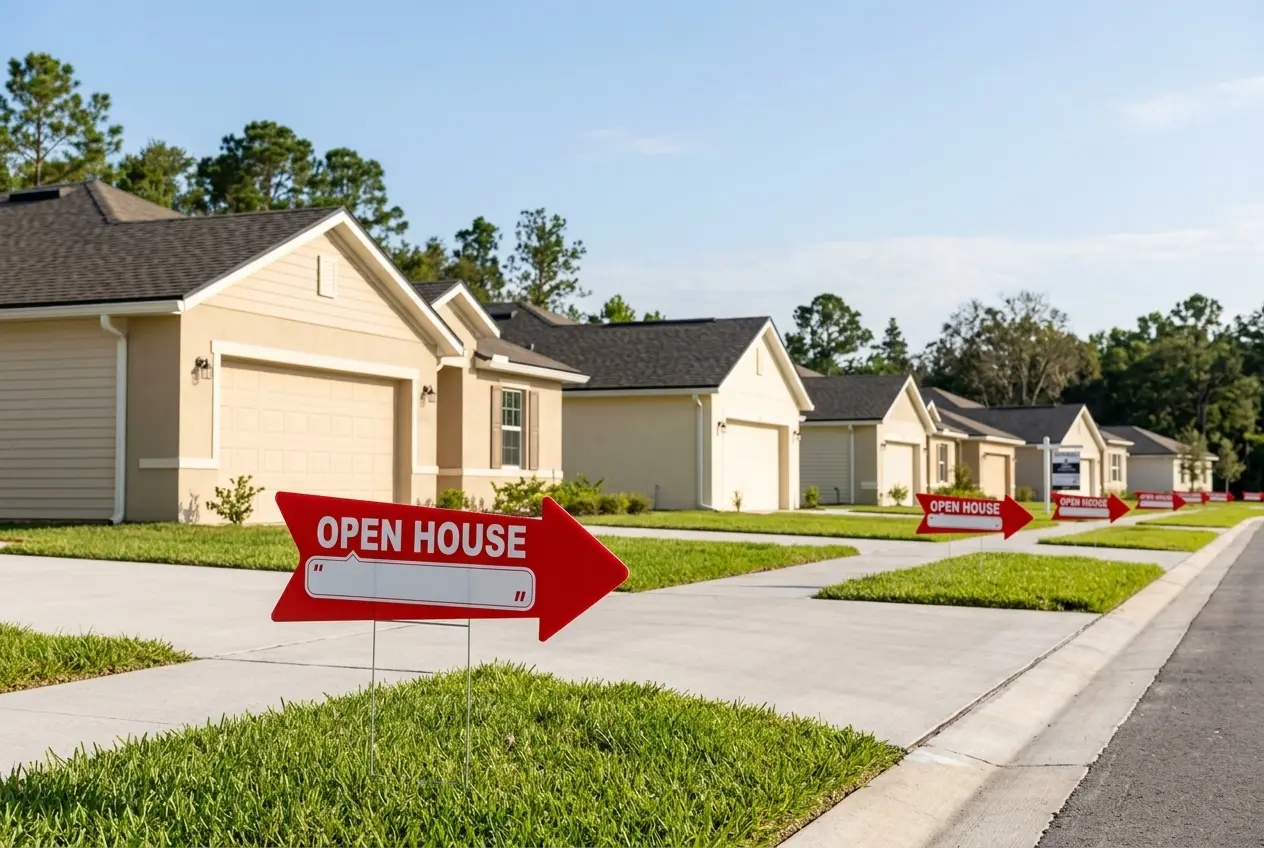
Builders added 220,000 starter homes to the U.S. market since 2022, and prices for the cheapest homes in the South and West are actually falling from their peak. Sales of those same homes are dropping anyway. A new analysis from Realtor.com, the real estate listing company, found that purchases of homes priced under $350,000 fell about 10% year over year in April and are down 7.2% for the year, a steeper slide than any other price tier in the market.
That is the twist buried inside an otherwise hopeful set of numbers. The typical starter home now costs $344,000, up from $256,000 in 2019, while the share of listings priced under $350,000 has fallen from 55% to 37.6% over the same seven years. The income needed to qualify for one has jumped from $43,000 to $78,000, and monthly payments are up more than 80%. Supply is finally coming back in parts of the country. Actual sales are not following it.
Builders in the Sun Belt Engineered the Only Real Recovery
Almost all of the improvement traces back to new construction, concentrated heavily in one part of the country. Hannah Jones, senior economist at Realtor.com, told FOX Business the shift has been driven by homebuilders working the entry-level price point just as demand cooled off.
“Builders in Texas, Florida, and the Carolinas drove the South’s recovery by bringing supply to market just as demand moderated,” Jones said.
The South has added roughly 170,000 affordable listings since the 2022 trough, and its typical starter-home threshold has slipped 3.5% from its peak. The West posted an even sharper pullback, down 7.3% since 2022, though Jones noted the relief is concentrated in inland metros like Phoenix, Denver and Colorado Springs rather than the California coast. Nationally, the typical starter-home price is down about 4.2% from 2022, a figure that only makes sense once the regional split becomes clear: the Midwest is up 10% since 2022 and the Northeast is up 12.6%, with its threshold now near $444,000 and just 29.7% of listings priced under $350,000.
More Homes for Sale Has Not Meant More Homes Sold
This is where the good news curdles. Despite the inventory gains, sales of starter homes have not kept pace, and the shortfall is sharpest in the very places building the most.
The South, despite leading the country in affordable-inventory growth, still saw its sub-$350,000 sales fall 7.3% year over year in April. The Midwest fared worse, posting the steepest affordable-sales decline of any region at 13.5%. The Northeast was the only region where sales fell across every single price tier, not just the entry level. The West was the lone bright spot, with sub-$350,000 sales roughly flat for the year.
| Region | Starter Threshold Now | Change Since 2022 Peak | Affordable Sales, April (YoY) |
|---|---|---|---|
| South | $311,000 | -3.5% | -7.3% |
| West | $480,000 | -7.3% | Roughly flat |
| Midwest | $264,000 | +10.0% | -13.5% |
| Northeast | $444,000 | +12.6% | Fell across every tier |
Median household income has risen about 28.3% since 2019, from roughly $69,000 to $88,100, while the income needed to qualify for a starter home climbed more than 80%. That gap, more than any single region’s construction pipeline, explains why cheaper listings are not converting into closed sales.
Is the Mortgage Lock-In Effect Actually Breaking?
Homeowners who refinanced or bought during the era of ultra-cheap borrowing are still the biggest obstacle to new supply, and the data on how fast that is changing depends on who you ask.
Jones put a number on it: “Lock-in is still very much in play nationally, with almost 70% of outstanding mortgages at 5% or below.” The Federal Housing Finance Agency’s own mortgage database puts the figure at 66.7% as of the first quarter of 2026, down from a peak of 85.6% in 2022 but still a majority of the entire market. Just 22.1% of outstanding mortgages now carry a rate of 6% or higher, up from a low of 7.3% back when rates first spiked.
- Hannah Jones, Realtor.com: life-event-driven turnover is “happening at the margins, keeping the market cranking, but hasn’t meaningfully unlocked existing inventory more broadly yet.”
- Coldwell Banker’s spring agent survey: 39% of agents say the lock-in effect is no longer meaningful or only a minor factor, with early cracks showing “particularly in the Midwest and in the West,” according to one in three sub-5% sellers still planning to list this spring.
Construction data hints at the same regional split. The Census Bureau’s latest single-family housing starts figure for June came in at 895,000 on a seasonally adjusted basis, barely moved from May, while single-family permits nationally are down 4.3% year to date. Regionally, single-family starts are down 14.3% in the Northeast and 7.1% in the Midwest so far this year, the exact two regions where builders never mounted the kind of response the South and West did.
Today’s First-Time Buyer Looks Like Yesterday’s Move-Up Buyer
The squeeze has changed who is actually buying a first home, not just what it costs. The average first-time homebuyer is now 40 years old, and the first-time buyer share of the market dropped to 30% a year ago before recovering somewhat to 35% in May.
“The profile has shifted toward higher-income households who can qualify at current rates, because lower-income buyers have largely been priced out,” Jones said.
More households are pooling resources, living with parents longer to save, or relocating to more affordable markets. The practical effect is that today’s starter home buyer increasingly resembles the move-up buyer of a decade ago.
Jones described three coping strategies showing up across the data:
- Pooling income with a partner, roommate or family member to qualify for a larger mortgage
- Staying in a parent’s home longer to build savings for a down payment
- Relocating outright to a cheaper metro area instead of waiting out the market
For buyers trying to clear the qualification bar in the meantime, getting preapproved before house hunting begins has become less of a formality and more of a first filter, since so much of today’s market comes down to whether a lender will sign off at all.
Mississippi Is Affordable. Rhode Island Is Not.
Zoom in from region to state and the divide gets sharper still. A separate analysis by LendingTree, the online loan marketplace, found Mississippi ranks first in the country for first-time-buyer affordability, with 61.8% of nonhomeowner households able to afford a typical starter home there. West Virginia followed at 58%, then Arkansas at 54.3% and Alabama at 54.1%, all markets where the average starter home runs well under half the national price.
“It’s safe to say that most people don’t get raises of $7,099 each year,” Matt Schulz, LendingTree’s chief consumer finance analyst, said, referring to the gap between the median nonhomeowner’s income and what buying actually requires nationally.
Rhode Island sits at the opposite end, with just 16.5% of nonhomeowner households able to afford a starter home there, the worst mark in the nation. The Midwest still holds the title of most affordable region in raw dollar terms, but Jones was blunt about the trend line: prices there are up 10% since 2022, and the region is “losing that edge” even as it remains cheaper than the coasts.
The Next Few Years Look Slow, Not Sudden
Realtor.com’s own outlook does not promise a fast fix. The report frames the coming years as a gradual normalization rather than a reset, as the lock-in effect fades in stages, new construction keeps adding to inventory, and household formation patterns shift underneath it.
An underlying shortage of roughly 4 million homes remains the structural ceiling on how much better things can get in the near term, regardless of what happens to mortgage rates. Younger, lower-income first-time buyers without existing home equity are likely to stay the most squeezed group in the market, even as headline inventory numbers keep improving.
Frequently Asked Questions
What Qualifies as a Starter Home in 2026?
Realtor.com defines a starter home as one priced under $350,000 nationally, or under 80% of a metro area’s median list price, whichever applies locally. Price growth has been most severe at the smallest end of that category: two-bedroom listings are up 77.2% in price since 2019 and three-bedroom listings are up 51.4%, both well ahead of the overall market, according to Jones.
Which States Are Most Affordable for First-Time Buyers Right Now?
Mississippi, West Virginia, Arkansas and Alabama currently offer the best odds nationally, per LendingTree’s analysis, with roughly half or more of nonhomeowner households able to afford a typical starter home in each. Rhode Island ranks worst in the country, at just 16.5%.
How Does Today’s Affordability Compare With Past Decades?
The home price-to-income ratio eased to about 4.9 in 2025 from a peak of 5.2 in 2022, but it remains well above the 2017-2019 average of 4.1. For context, the median home cost just $96,800 against a median household income of $31,000 back in 1990, even with mortgage rates near 9% to 10% at the time.
Will Mortgage Rates Fall Enough to Change the Math?
Most forecasts say no, not dramatically. The Mortgage Bankers Association projects rates averaging around 6.5% through the rest of 2026, while the National Association of Home Builders expects a similar path, with rates potentially easing toward 6.23% by year end. Neither group expects a return to the sub-4% rates common before 2022.


Guardians Rout Twins With Seven Homers, Leave Joe Ryan One Shy of Record

Jersey Mike’s IPO Pays Blackstone More Than It Raises for the Chain

Archer’s Military Pivot Takes Flight With Anduril’s Thunder Aircraft

Dan Ives Sticks With His $350 IBM Target While HPE Banks the Fallout

Bristol Myers Squibb Joins Nvidia’s Pharma AI Supercomputer Arms Race

Starter Homes Are Rebounding in the South, Yet Sales Keep Falling

Domino’s Posts Higher Profit as Its Franchisees Feel the Squeeze

AMC’s Record Quarter Lifts the Stock 20%, but Dilution Caps the Rebound

Space Force’s Rocket Contracts Balloon to $30 Billion for Golden Dome

Nvidia Is Quietly Betting Against OpenAI’s Push to Ban Kimi K3

Halo Studios Reverses PS Plus for Halo: Campaign Evolved on PS5

Star Wars: Galactic Racer Is a Roguelite Racer With a Podracing Skin

Black Ops 1 and 2 PS5 Ports: $40 Price Tag Has Fans Uneasy

Matt Brown Dismisses Rousey and Paul’s MVP MMA Ratings Win Over UFC

Julius Randle Traded to Nets as Wolves Reclaim Cap Space for Dosunmu

Sega’s $49.99 Sonic Classic and Modern Bundles Hit Switch in October

Colombia Edge DR Congo as Muñoz Books World Cup Knockout Place

Warriors Take Yaxel Lendeborg, the Oldest Pick in the 2026 NBA Draft

Douze Dixièmes Closes Five Months After MIO: Memories in Orbit

Warhammer Horus Heresy Super-Heavy Tanks Share a Plastic Chassis
-

 TECHNOLOGY3 years ago
How to Adjust a Bulova Watch Band – An Easy Guide
-

 News3 years ago
Fred Pentland: Athletic Bilbao’s English mentor who changed the essence of Spanish football
-

 FINANCE3 years ago
Tax Planning for Every Season: Guide to Maximizing Your Tax Benefits
-

 Education3 years ago
African Ministers New Education Plan
-

 BUSINESS3 years ago
What is Entrepreneurial Operating System? A Comprehensive Guide to EOS
-

 Education3 years ago
Innovate Your Learning Journey with Technology and Enhance Education
-

 News3 years ago
Russians formally out of World Athletics Championships
-

 BUSINESS3 years ago
Top 9 Most Expensive American Cities to Rent an Apartment