
AUTOMOBILE
Teen E-Motos Draw Hells Angels Label and Risk Legal Ebike Gains
Media calls teen e-moto riders new Hells Angels, but scattershot rules and online gray-market sales threaten the real low-speed ebike boom more than they fix.

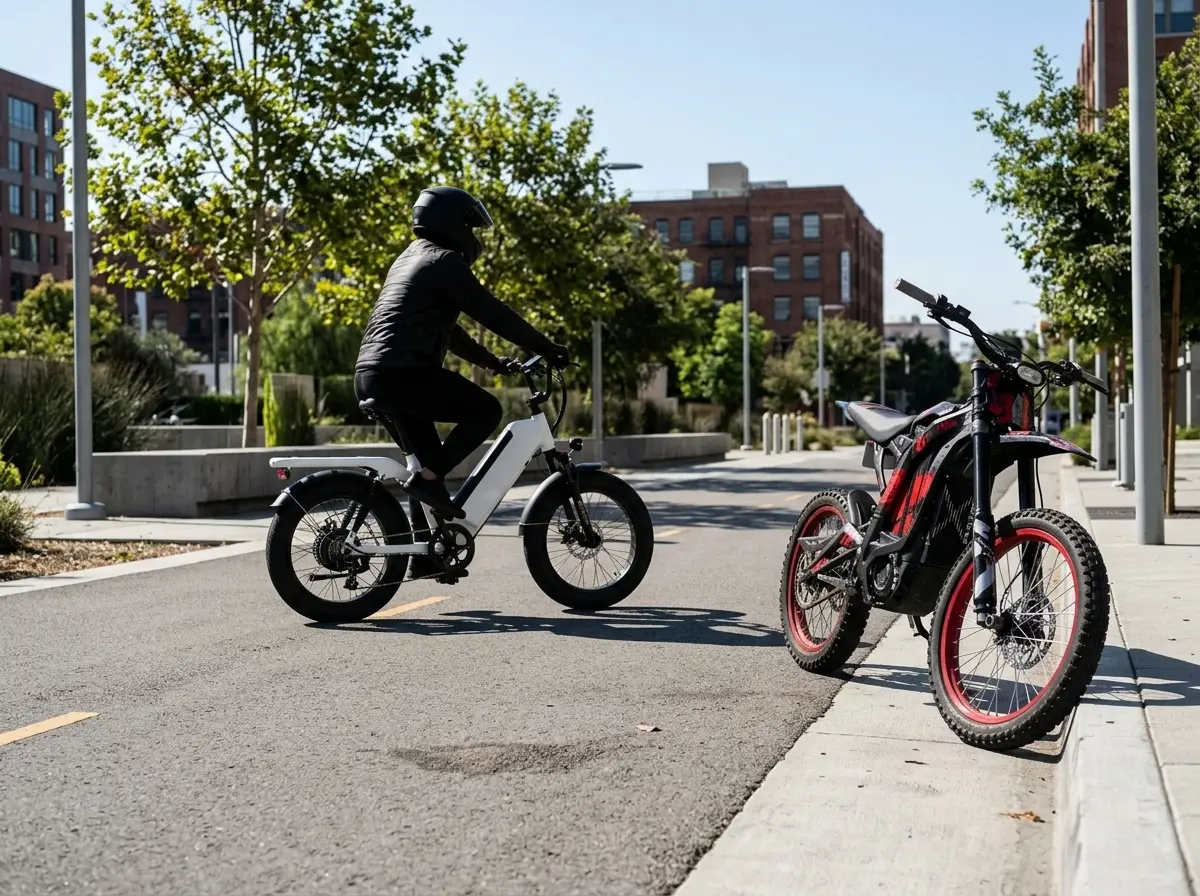
Teens on high-power electric motorcycles marketed as ebikes have drawn “new Hells Angels” headlines and specialized prosecutor units after fatal crashes and parent charges in California. The vehicles often lack pedals, exceed 750 watts and hit car-like speeds, yet the regulatory scramble now risks tarrying legal class 1-3 ebikes that millions use for short trips.
Local DAs, state AGs and city mayors are moving fast on sales and parental liability. Bike advocates say the real second-order cost is bureaucratic friction and public fear that could push riders, including teens seeking freedom, back into cars.
What Separates a Legal Ebike from an E-Moto
Federal rules treat low-speed electric bicycles as consumer products, not motor vehicles, when they meet clear limits. The Consumer Product Safety Act definition requires fully operable pedals, a motor under 750 watts and a top speed under 20 mph on motor power alone for a 170-pound rider.
Most states and California layer on three classes that still keep the bikes bike-like for road and path use.
| Type | Motor limit | Assisted top speed | Throttle? | Pedals required | Typical licensing |
|---|---|---|---|---|---|
| Class 1 ebike | 750 W | 20 mph pedal-assist only | No | Yes | None (all ages often) |
| Class 2 ebike | 750 W | 20 mph | Yes | Yes | None (all ages often) |
| Class 3 ebike | 750 W | 28 mph pedal-assist | Usually no | Yes | Age 16+ helmet common |
| E-moto / illegal “ebike” | Often 1,000-2,000+ W | 40-60+ mph | Yes | Often no | Moped/motorcycle license, registration, insurance |
Vehicles that breach those lines become mopeds or motorcycles under state codes. Modifying a legal bike past the limits can also reclassify it and expose the owner to charges.
Prosecutors Target Parents and Retailers First
In May 2026 Orange County District Attorney Todd Spitzer launched the RIDE SAFELY unit to review juvenile and adult cases, explicitly including parents who knowingly let children ride illegal e-motorcycles.
- Early 2026: OCDA files child endangerment against three parents; one mother faces involuntary manslaughter after her 14-year-old on an illegal e-moto fatally struck an 81-year-old Vietnam veteran.
- Same period: Felony charges against a Yorba Linda father whose 12-year-old suffered serious injuries after running a red light on a bike modified to 60 mph.
- April 14, 2026: California Attorney General Rob Bonta and Bay Area DAs issue the California Attorney General consumer alert on e-bike classes, warning that anything over 28 mph pedal-assist or 20 mph throttle, over 750 W, or without pedals is not an ebike.
- May 2026: Amazon announces it will stop selling non-compliant high-speed models into California after the alert and crash coverage.
- August 5, 2026: New York City Mayor Zohran Mamdani sends cease-and-desist orders to 42 online retailers over devices exceeding city limits (ebikes over 750 W or 25 mph, heavy fast scooters), with $2,000 fines per later sale.
Spitzer’s office cited more than 100 U.S. deaths linked to e-bikes and e-motos and a 430% injury rise in Southern California over four years, with children 11-14 accounting for 61.7% of e-moto crashes despite age bans.
Injury Numbers Climb Faster Than Traditional Bikes
A July 2026 UC San Diego analysis of California Highway Patrol SWITRS data found e-bike collisions rose from two in 2018 to 1,506 in 2024. Traditional bicycle collisions stayed roughly flat. The study covered 4,035 e-bike and 58,332 traditional bike collisions.
- 1,506 reported e-bike collisions in California in 2024 alone
- 15.6% of injured e-bike riders were 14 or younger, versus 10.2% for traditional bikes
- Higher share of moderate-to-severe injuries for e-bike riders
- Unsafe speed and improper turning violations more common on e-bikes
Lead author John Austin, MD, a UC San Diego surgery resident, noted the crash forces can resemble motorcycles more than pedal bikes and called for helmet use, supervision and education to keep pace with adoption. Overall mortality was similar across the full period, though 2024 showed a divergence for e-bikes.
Researchers cautioned that some e-motos are visually misidentified as ebikes in reports, muddying the split between legal and illegal machines.
Online Listings Keep Feeding the Gray Market
Retailers who sell only legal bikes report constant calls and visits from parents and teens seeking dirt-bike-style machines that Amazon, Walmart and similar platforms still surface under “ebikes for teens.”
Brett Thurber, co-owner of The New Wheel shops in the Bay Area, says he turns those customers into education sessions on hazards and legal options. Many still buy the faster illegal model online minutes later. Listings routinely mix “off-road motorcycle” language with street videos of wheelies and teen riders, even when the product is supposed to be an off-highway vehicle requiring registration.
- Sponsored results advertise 2,000 W “electric bikes” for teens and adults with claims of mountain trails and city streets
- Some California-bound listings now block shipping or add policy notices after Amazon’s state restriction
- New York’s 42-retailer action covers Amazon, Walmart, Target, Temu, Wayfair and others
- Parents often lack bike experience themselves and cannot spot the power or pedal differences
Kendra Ramsey, executive director of the California Bicycle Coalition, calls the result a “big information gap.” Her group co-sponsors SB 1167 bill clarifying e-bike marketing rules, which would make it illegal to advertise higher-powered motorcycles or mopeds as electric bicycles and require clear disclosure of licensing needs.
Legal Commuters Catch the Backlash
Dillon Fitch-Polse, co-director of the BicyclingPlus research collaborative at UC Davis, worries authorities are answering the gray area with barriers that deter riders of every age. People will either ride illegally or lose the freedom an ebike gives for errands, school runs and short work trips.
Legal ebikes surged in the pandemic as cheaper batteries met demand for outdoor, car-free movement. Advocates stress most users are not pack racers. They are replacing local car trips with lower-cost, lower-emission machines that still require effort and fit existing bike infrastructure.
Scattershot rules, registration talk and media framing that collapses all electric two-wheelers into one menace make that substitution harder. Thurber and Ramsey both argue precise enforcement against deceptive sellers beats broad new limits on the bikes that already meet federal and state definitions.
The Far Larger Threat Still Drives Cars
Federal data compiled by the U.S. Consumer Product Safety Commission show 19 pedestrians killed in collisions with ebike riders across the entire United States from 2017 through 2024. That figure is roughly the average daily pedestrian death toll caused by motorists in a recent year.
The CPSC micromobility deaths report 19 pedestrian fatalities sits inside a much larger traffic violence picture. Ebike proponents note that most fatal crashes involving legal or illegal electric riders still involve automobiles. U.S. roads remain deadlier for vulnerable users than those in peer wealthy nations, driven by vehicle size, speed and design choices.
It’s really sad to me that we have normalized so much traffic violence in society.
Fitch-Polse said officials take the easier path of blaming teenagers on trendy vehicles instead of fixing the systemic conditions that make streets dangerous.
Thurber frames the toll of injured and killed young bike riders as a societal failure. The fix he wants is streets redesigned to protect vulnerable users, not a return to chauffeured car trips that erase the autonomy kids just gained.
Packs on the Street Fuel the Anger
Public conversation on X and local forums runs hot with videos of teens popping wheelies in traffic, scattering when lights flash, and riding in groups that force cars to brake. Parents who own the machines often learn the worst details only after a near-miss or arrest. Some posters who once considered buying one for their own children reverse course after watching the packs.
That on-the-ground irritation is real and helps explain why DAs now charge parents and mayors hit retailers. It does not erase the distinction between a 750-watt class 2 bike that stops assisting at 20 mph and a 2,000-watt machine that can outrun many cars. Nor does it change the math that cars still kill pedestrians at a vastly higher daily rate.
California’s SB 1167 and New York’s retailer letters try to close the marketing loophole at the source. Whether those steps stay precise enough to spare the legal fleet will decide if the ebike boom keeps replacing car miles or becomes collateral damage of the e-moto panic.
The kids chasing thrills will keep finding ways to go fast. The question is whether the rest of the riding public loses a practical tool while the heavier vehicles that dominate the death statistics keep rolling largely unchanged.


Judge Strips Google’s Last App Store Friction After Epic Demo

Fold 8 Success Makes Its Dusty Hinge Costlier Than Ever

Silver Lake Workday Talks Test PE Appetite for AI-Hit Software

Wholesale Prices Flat but Wage Lag Keeps Households Squeezed

Teen E-Motos Draw Hells Angels Label and Risk Legal Ebike Gains

Apple’s Siri Pay-Per-Use Plan Rewrites News Licensing Rules

Cramer Calls Cisco Plunge a Buy as AI Orders Surge

Play Points Platinum Quietly Cuts Pixel 11 Prices Again

Quincy Gas Station Sold the $1.04 Billion Powerball Ticket

Microsoft Scraps Failed Copilot Features in Forced App Merge

ZA/UM Lays Off 32 Staff as Zero Parades Wins Reviews, Not Players

EA’s New In-Game Ad Platform Skips the Games That Need It Most

Mortgage Rates Climb to 6.55%, the Highest Level in Nearly a Year

Colby Covington Stuns Tsarukyan as Askren Retires in Tears at RAF 11

Netflix Heads Into Earnings With Its 2022 Playbook Already Spent

Spain’s Diaspora-Rooted Squad Wins Over New York Ahead of the Final

NHL’s Monday Matinee Push Puts Capitals Fans on the Clock

DeChambeau’s Two-Shot Penalty Rewrites the Open’s Weekend Draw

Guardians Rout Twins With Seven Homers, Leave Joe Ryan One Shy of Record

England Beats France 6-4 to Claim World Cup Bronze Medal
-

 TECHNOLOGY3 years ago
How to Adjust a Bulova Watch Band – An Easy Guide
-

 News3 years ago
Fred Pentland: Athletic Bilbao’s English mentor who changed the essence of Spanish football
-

 FINANCE3 years ago
Tax Planning for Every Season: Guide to Maximizing Your Tax Benefits
-

 Education3 years ago
African Ministers New Education Plan
-

 BUSINESS3 years ago
What is Entrepreneurial Operating System? A Comprehensive Guide to EOS
-

 Education3 years ago
Innovate Your Learning Journey with Technology and Enhance Education
-

 News3 years ago
Russians formally out of World Athletics Championships
-

 BUSINESS3 years ago
Top 9 Most Expensive American Cities to Rent an Apartment