
News
Apple’s Siri Pay-Per-Use Plan Rewrites News Licensing Rules
Apple’s nine-figure talks with publishers use pay-when-used terms for Siri AI, shifting risk from fixed fees and testing a new model for AI news deals.

Apple is negotiating multiyear deals that would pay news publishers only when their stories power answers from the upcoming Siri AI, according to a Wall Street Journal report, with a possible nine-figure budget under discussion.
The variable structure marks a clear break from the fixed licensing fees that have defined most AI-media pacts so far. Siri AI is due later this year with iOS 27.
The talks turn on a simple trade. Apple wants fresher material for a rebuilt assistant. Publishers want a revenue path that tracks actual use rather than a one-time rights sale.
What the Publisher Talks Cover
People familiar with the matter told the Journal that Apple has approached publishers in recent months. The goal is access to current news and information that can feed the rebuilt assistant.
Payments would flow when content is used, not as a flat annual guarantee. Apple declined to comment when asked by the Journal and by TechCrunch.
The company has already run similar experiments inside Apple News+ and earlier AI training rights, yet the Siri plan is more explicit about usage metering.
- Deal length: multiyear agreements
- Payment trigger: content actually surfaced by Siri
- Budget discussed: nine figures (hundreds of millions of dollars)
- Timing: Siri AI launch window later in 2026
Those terms would let Apple scale spend with real demand instead of locking in large guaranteed outlays before the product proves itself with users.
Metering also gives Apple a clean audit trail. Each surfaced answer can be tied back to a licensed outlet, which matters after earlier summary failures. Publishers, for their part, gain a line item that rises or falls with how often their work is retrieved.
The multiyear frame still offers some planning horizon. It does not, however, replace the certainty of an upfront check. That distinction will shape who signs and who waits.
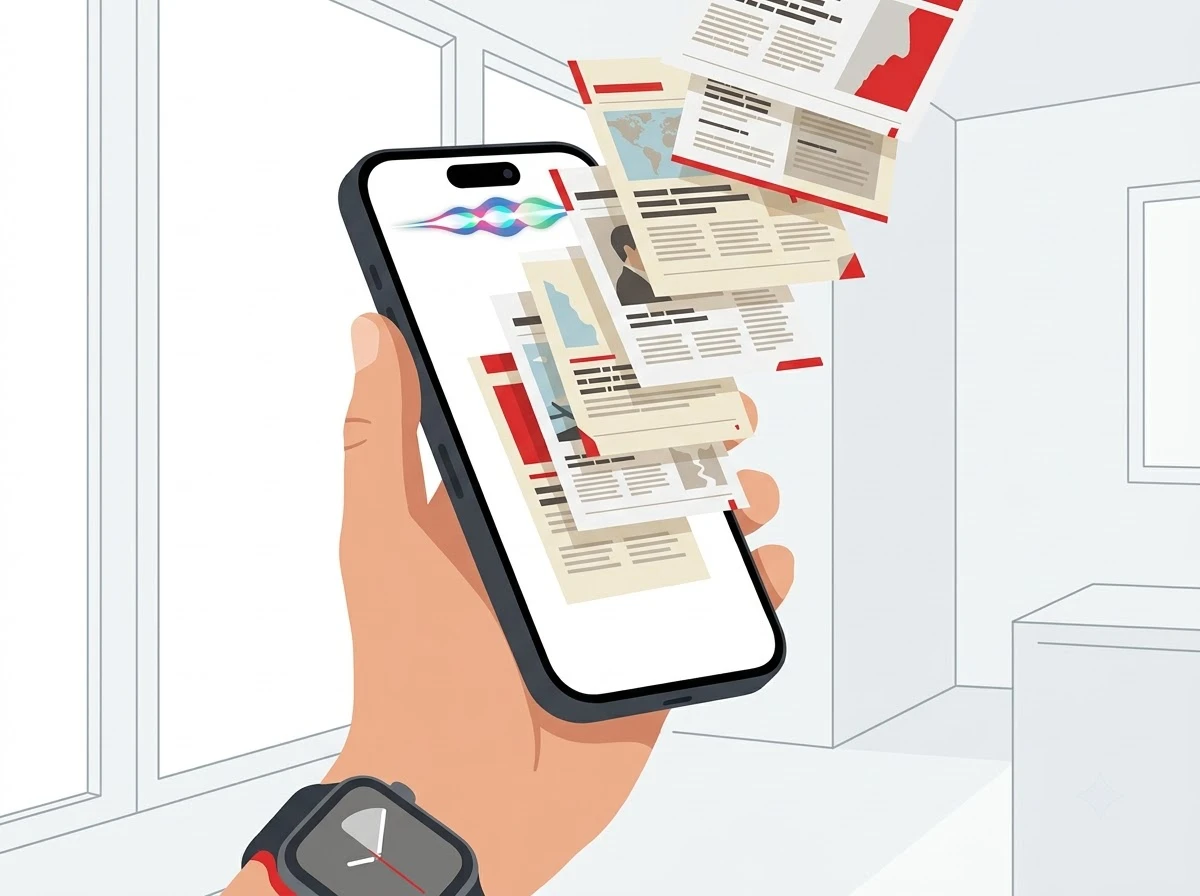
Usage Fees Flip the Usual AI Contract
Most high-profile AI licensing deals so far have offered publishers certainty. OpenAI’s five-year pact with News Corp was valued at more than $250 million, including cash and technology credits. An earlier OpenAI global partnership with Axel Springer was reported in the $25 million to $30 million range for training and display rights.
Reddit’s multiyear arrangement with Google has been described as roughly $60 million a year. Those contracts generally buy broad access up front.
Apple’s proposal keeps the money contingent. Publishers get paid only for the pieces that actually answer a user’s question. That protects Apple’s budget if Siri usage stays modest. It also creates a direct performance score for every article.
| Deal type | Payment style | Example scale |
|---|---|---|
| OpenAI-News Corp | Mostly guaranteed multiyear | Over $250 million / 5 years |
| OpenAI-Axel Springer | Upfront plus variable back-end | ~$25-30 million reported |
| Reddit-Google | Annual licensing | ~$60 million / year |
| Apple Siri proposal | Pay only when used | Nine-figure total budget discussed |
The difference is not semantic. A fixed fee lets a publisher plan hiring and coverage. A usage fee forces the publisher to produce content that Siri’s ranking and retrieval systems favor.
Under a guaranteed model, a slow year for the assistant still pays the same. Under Apple’s approach, quiet months mean quieter invoices. That shifts product risk from the buyer to the supplier of the facts.
Technology credits and broad training rights, common in earlier pacts, play a smaller role here. The Siri talks center on live answers, not bulk corpus access for model training alone.
Who Stands to Collect and Who May Wait
Large outlets with high-volume breaking coverage and clear factual packaging sit closest to the meter. A story that answers “what happened in the overnight markets” or “who won the vote” is more likely to be called than a long investigative feature.
Smaller or niche publishers face a colder math. Their pieces may never surface enough times to justify the legal and technical work of a deal. Some may decide the variable upside is too thin and stay out.
Publishers already inside Apple News+ have existing relationships and format experience. That history could speed negotiations, yet past complaints about revenue shares and data access still linger in the industry.
- High-traffic national and wire services gain the clearest path to repeated payments
- Specialty titles must prove their material answers frequent Siri queries
- Outlets in litigation with other AI firms may use Apple talks as leverage elsewhere
- Any deal will still leave brand safety and attribution questions for Apple to manage
Crowd discussion on forums has already split between applause for paying creators and dark jokes that the money simply funds the tool that eventually replaces the publisher.
Wire-style copy has a structural edge. Short, declarative leads and stable named entities are easier for a retrieval system to match to a spoken query. Long narrative work can still matter, but it may land fewer metered hits per hour of reporting.
Leverage cuts both ways. An outlet already suing another AI firm can treat an Apple term sheet as a benchmark in separate talks. Apple, meanwhile, can point to its nine-figure budget discussion without promising any single partner a fixed share of it.
Apple’s Earlier Media Experiments Set the Baseline
Apple News+ launched in 2019 with a 50-50 subscription split that many publishers found opaque. Some partners later left. The company also secured AI training rights in certain prior content agreements.
Those arrangements proved Apple can write checks and handle publisher formats. They also showed the friction that appears when money feels uneven or when data stays locked on Apple’s side.
- 2019: Apple News+ debuts with curated magazines and newspapers under a revenue-share model
- Later years: Selected deals expand to include AI training rights for Apple models
- 2024-2025: Notification summary features draw criticism after inaccurate news headlines appear; Apple pulls back news summaries for an extended period
- 2026: Fresh outreach for live Siri AI news access under variable terms
The Apple News Partner Program ad revenue split still offers publishers 70 percent of Apple-sold ads and 100 percent of their own, yet subscription economics remain a separate conversation. Siri adds a third meter.
Each prior chapter left a residue. Opaque splits bred distrust. Training-rights clauses taught both sides how to negotiate model use. The summary pullback raised the cost of any future hallucination tied to news.
Variable Siri fees try to answer those lessons at once. Payment follows use, formats are already familiar to News+ partners, and licensed sources create a paper trail when an answer is challenged.
Siri Needs Fresh Facts Before Fall Arrives
Apple introduced the rebuilt assistant at WWDC in June as a conversational system with personal context, onscreen awareness, and Siri AI broad world knowledge features. Official materials stress up-to-date answers drawn from the web.
We’re excited to introduce Siri AI, a dramatically more capable and conversational assistant designed to help users find information and get things done throughout the day.
Craig Federighi, Apple’s senior vice president of Software Engineering, said the system will combine broad knowledge with personal context. The product ships as a beta later this year for English-language users on compatible devices, with more languages to follow.
Past Apple Intelligence news summaries produced false headlines that embarrassed the company. That history raises the stakes for licensed, attributable sources. A pay-per-use feed gives Apple both fresher material and a paper trail of which outlet supplied which claim.
Related coverage on this site has tracked how heavy Siri AI use tied to iCloud+ could reshape subscription tiers, and how the iOS 27 public beta Siri AI rollout already faces regional timing differences. Hardware side notes include the Apple Watch Siri AI powered in part by Google arrangement that showed Apple’s willingness to mix external models when needed.
English-first timing concentrates early demand on outlets that publish heavily in that language. Later language support will widen the pool, but the first invoices will reflect the initial cohort of users and queries.
Personal context and onscreen awareness make stale or generic answers more obvious. When the assistant already knows the user’s calendar and the app on screen, a wrong headline stands out faster. Licensed current news is one way to narrow that gap before the beta widens.
A Possible Template for the Next Wave of Deals
If the variable structure sticks, other AI platforms may copy the risk-shifting language. Guaranteed nine-figure checks become harder to justify when one major buyer proves it can meter every retrieval.
Publishers that excel at concise, high-frequency factual updates stand to gain a new revenue line. Those optimized for long-form exclusives or investigative depth may see the Siri channel as secondary at best.
The model also creates a quiet feedback loop. Content that Siri surfaces often earns more, so publishers may start writing with retrieval systems in mind. Headlines, lead paragraphs, and structured facts become more valuable than ambient brand storytelling.
- Platforms gain a precedent for paying only on retrieval rather than on access alone
- High-frequency factual desks gain a metered revenue path tied to assistant demand
- Long-form and investigative teams may treat Siri as a secondary channel
- Editorial calendars could tilt toward query-friendly packaging without dropping deeper work
Nothing is signed. The talks could produce a handful of flagship partners, a broader program, or quiet stalls. Apple’s cash position lets it experiment without existential pressure. Publishers operating on thinner margins will calculate the same numbers more carefully.
A handful of flagship deals would still move the market. Rivals would face pressure to explain why their own guarantees remain large if Apple’s metered spend proves adequate. A broad program would spread that pressure faster. Stalls would leave the older fixed-fee pattern in place a while longer.
Metered Access Creates a Direct Scorecard
Pay-when-used terms turn every Siri answer into a measurable event. An article either helps complete a response or it does not. That binary is sharper than a flat license that covers a whole archive whether or not any story is shown.
For Apple, the scorecard limits waste. Budget follows demonstrated demand inside the assistant rather than forecasts made before launch. If early English-language beta traffic is light, outlays stay light. If usage climbs after wider release, the nine-figure discussion has room to grow with it.
For publishers, the same meter is both opportunity and filter. Repeated retrieval of market moves, vote tallies, and other high-frequency facts can stack payments across a multiyear term. Work that rarely matches a spoken query may generate goodwill and brand presence without generating cash.
The scorecard also interacts with Apple’s earlier experiments. News+ taught the company how subscription splits feel to partners. Training-rights clauses taught both sides how model use is bargained. Metered Siri answers add a third accounting layer that only moves when the product does.
- Query arrives: Siri seeks a current, attributable fact
- Licensed source selected: retrieval favors clear packaging and freshness
- Answer surfaced: the outlet’s piece helps power the response
- Payment triggered: usage, not mere access, moves money
That chain is the mechanism behind the break from fixed fees. It does not require Apple to pre-commit the full discussed budget, and it does not require a publisher to win a large guarantee before any user asks a question.
Brand Safety Questions Follow Every Answer
Even a clean usage fee leaves harder issues on the table. Attribution, tone, and the risk of a wrong detail still fall to Apple when the assistant speaks. Licensed partners reduce some of that exposure, yet they do not erase it.
Past inaccurate news headlines under Apple Intelligence made the point in public. Pulling summaries bought time. A pay-per-use news feed is meant to supply fresher claims and a record of which outlet supplied them when something goes wrong.
Publishers carry a mirror risk. Their brand appears inside a conversational answer they do not fully control. A clipped lead or a stripped headline can misrepresent the original piece even when the underlying reporting is sound. Deal language will have to address how credit appears and how corrections propagate.
Those questions sit alongside the commercial math rather than replacing it. High-traffic wires may accept the trade for repeated payments. Niche outlets already unsure about volume may see brand exposure without clear upside as another reason to stay out.
Apple’s mix of internal work and external models, including the Apple Watch arrangement that drew on Google, shows the company will assemble capability from more than one source. News licensing fits that pattern: buy the facts where needed, meter the cost, and keep the assistant’s surface under Apple’s design rules.
The Meter Is Running Either Way
Apple needs current news that does not hallucinate. Publishers need cash that does not evaporate when traffic moves to chat interfaces. The pay-when-used proposal sits between those two needs and forces both sides to prove value in real time.
Whether that contest produces healthier journalism or simply rewards the already loudest outlets is the open question the deals will answer once the first invoices land.
Until then, the talks themselves set a marker. Multiyear terms, a nine-figure budget discussion, and a strict usage trigger are now on the record. Rivals, partners, and holdouts all have the same public outline to measure against as Siri AI moves from announcement toward beta.


Sony and Warner Sue Anthropic Over Torrented Song Lyrics

Microsoft 365 Auth Fault Took Down Exchange and Teams

Honor’s Robot Phone Works, Then Prices Itself Out

Florida Cities Top Retirement Rankings the Scores Cannot Explain

Walmart’s $50 Million Opioid Settlement Closes Case Without Admission

California Sues Over $120 Million Morro Bay Wind Lease Buyout

Gilead Bixlenvo FDA Nod Opens Single Pill Path for Complex HIV Cases

Meta’s $18B Kids Deal Forever Shields Data Used to Spot Under-13s

Lettuce Outbreak Drove Record Cyclospora Spike Across 20 States

Amazon Shaves $20 Off M6 Mac Mini Before It Even Ships

Take-Two CEO Pushes Netflix Subs for GTA 6 Extended Look

Quake Gets 19 Free Maps From MachineGames Quake Club

Destiny 2 Fans Unlock Vaulted Maps After Live Service Ends

Wildlands Free Update Hands Players the Tools They Already Invented

Stripe Bid Shows PayPal Moat Cracked After Years of Slide

Quordle Monday Delivers Gavel Crush Speed Ethos Cleanly

Tyson’s Five-Year Utah Plant Falls to Cattle Shortage Reckoning

Silver Lake Workday Talks Signal Private Floor for Software

Kennedy Lewis Takes Majority Control of The Greenbrier in $500M Deal

Best Buy Marks 60 Years With Sale That Echoes Its Audio Shop Roots
-

 TECHNOLOGY3 years ago
How to Adjust a Bulova Watch Band – An Easy Guide
-

 News3 years ago
Fred Pentland: Athletic Bilbao’s English mentor who changed the essence of Spanish football
-

 FINANCE3 years ago
Tax Planning for Every Season: Guide to Maximizing Your Tax Benefits
-

 Education3 years ago
African Ministers New Education Plan
-

 BUSINESS3 years ago
What is Entrepreneurial Operating System? A Comprehensive Guide to EOS
-

 Education3 years ago
Innovate Your Learning Journey with Technology and Enhance Education
-

 News3 years ago
Russians formally out of World Athletics Championships
-

 BUSINESS3 years ago
Top 9 Most Expensive American Cities to Rent an Apartment